August 22, 2022
Quick Links
- Perils of Perfectionism
- Aggression Turned Inward
- A Broken Soul
- A Broken World
- A Broken People
- Kintsugi
- Putting the Pieces Together
Disclaimer: The contents of this essay may be triggering. Please reach out if you have any safety concerns. 988 is the number for the National Suicide Prevention Lifeline. If you have imminent safety concerns, please call 911 or go to nearest hospital emergency room.
The wound is the place where the light enters you. – Rumi

When something breaks, it is no longer considered immaculate and becomes adorned with battle scars that make it special and “one of a kind” in its brokenness. At least this my rationalization when things break in my life, such as my phone with a cracked screen, with its unique fractal pattern that gives a felt texture with each swipe and scroll of the finger. As long as things are not completely destroyed, broken objects can be renewed with some elbow grease and some tender loving care, and can continue to serve a purpose in our lives.
However, in our consumer culture, when something breaks, we are quick to replace or upgrade. It hasn’t always been like this. With statements like, “they don’t build it like they used to,” older generations yearn for those halcyon days when things were built to last, and when things did break, the call to action was not to discard but to repair and mend.
This dynamic applies not only to objects but also how people treat themselves, expecting unblemished perfection in every corner of their lives, lines on their resumes, and curves of their bodies. We present picture perfect images of our lives on social media, impose pressures on ourselves to achieve and win accolades, and swipe left on one’s favorite dating app until a perfect match can be found.
Perils of Perfectionism
Voltaire writes that “perfection is the enemy of good” because perfection is unattainable and disingenuous to the imperfect nature of humans, yet we live in a culture that rewards and reinforces the pursuit of perfection.
This critique on perfectionism is not only philosophical but practical. There is an interesting mathematical phenomenon, referred to as the Pareto Principle, that shows up in a wide range of contexts and situations in which only 20% of a cause determines 80% of an outcome, and it takes the remaining 80% of a cause to reach those last percentage points of perfection, highlighting the role of diminishing returns.
Gleanings from the Pareto principle is partly responsible for the soaring success of Facebook’s early years, as their developmental mantra during that time was “move fast and break things.” Their goal was not to create a complete or perfect product but releasing one that was good enough before anyone else, with room to grow. And grow they did into the biggest social media platform that the world has ever seen.
It is important to recognize that our energy, time, and health are not limitless. And so, is it worth expending all our resources to achieve those final percentage points of perfection? The answer to this question is obviously subjective. In the book Outliers, Malcolm Gladwell quotes neurologist Daniel Levitin, “it takes 10,000 hours to truly master anything.” This principle is exemplified in the documentary “Jiro Dreams of Sushi,” which is about an elderly Japanese chef many consider to be the Michael Jordan of sushi chefs, whose restaurant has been awarded the most prestigious 3-star Michelin rating. Despite having reached his master level, at the time of the documentary, he continues to spend every day practicing and honing his skills to make the perfect piece of sushi.
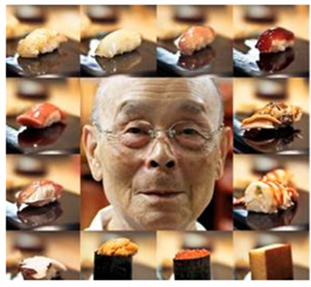
Jiro’s singular dedication to his craft is truly inspirational; however, for mere mortals like myself whose passions are diverse and still developing, is it wise dedicating “10,000 hours” to perfecting one craft? And at what point is the pursuit of perfection turn into an unhealthy obsession that creates imbalance in our lives? And when we are mindful of all the starving souls in the world, doesn’t even the perfect piece of sushi become a little less appetizing?
For many, it may be the pursuit of imperfection that is more adaptive. One expression of imperfection is failing to achieve a particular a goal. Despite the fear of failure, there are many benefits to failing. Failing keeps us hungry and humble to keep learning and growing. It forces us to take an honest look at ourselves, including our limitations, weaknesses, and vulnerabilities. Failing has us change course and look for creative solutions when faced with obstacles and temporary setbacks. And the experience of bouncing back from failure reveals how strong and resilient we truly are. On the flipside, success can lure us into complacency and inflate the ego, so that we are looking over our shoulders or down on others. More than success, it is our bouncing back from failures that should be the metric for progress, “fall down seven, get up eight.”
Aggression Turned Inward
Despite the benefits of failing, it is common for people to fear failure and have such an aversion to it that they go to great lengths to prevent it from happening. This fear pushes people to go beyond their limits and neglect basic needs like sleep and rest; project false images to give appearances of success; and compromise their morals and relationships to get ahead. This fear produces overachieving individuals who place immense pressure on themselves in order to sustain their perfectionistic standards, but at the expense of burning themselves out and losing all motivation and joy in their pursuits. But worse of all, people have tied their self-worth to their performance, such that they only feel worthy under the conditions of achievement. And when failures can’t be prevented, people can shame and punish themselves, as if they committed a heinous crime.
The extreme of self-punishment can be found in those who engage in self-mutilation or cutting. On the surface, it may appear that something is broken with these individuals as the body has a natural instinct to avoid pain. However, on a deeper level, perhaps “brokenness” is a complexity we have not yet comprehended. In my clinical practice, I make it a point to ask clients what they see as the function of their cutting, and the responses are numerous and enlightening.
For some, the pain from cutting focuses their minds and snaps them out of anxious and depressive thought spirals. For others, cutting is a way to feel something, anything to fill the void of numbness and emptiness, like the NIN’s song, “I hurt myself today to see if I still feel.” Those who cut may feel so disconnected with themselves that they do so to remind themselves they still inhabit their body. Cutting can also be a cry for help, especially for those whose cuts are made visible. It is a way to give their emotional pain an expression that is otherwise elusive and invisible. Additionally, cutting may be a way to take back control of their suffering, especially for those whose control was taken away in the face of traumas, like abuse or assault. Cutting can communicate to an abusive other to leave them alone and show how much they are truly hurting. And for some, cutting may be a form of self-punishment, which according to Freud is at the root of depression, “aggression turned inward.”
By sharing these examples, my intention is not to romanticize or condone cutting. It is our responsibility to preserve the sanctity and health of our human bodies, as the body is often an innocent bystander caught in the crossfire between ourselves and our traumas. However, these deeper insights reveal that cutting has a rhyme and reason, and stems from a valid need and desire, whether it be for relief, to feel something, to take back control, and so on. For many, cutting is an adaptive coping mechanism that has helped them get through dark times in their lives.
(For those struggling with cutting, please, please, please seek out professional help. While I encourage healthy alternatives to cutting, please know I do not judge it.)
A Broken Soul
Yet without the insights into the complex ways humans survive their sufferings, we judge, stigmatize, and even lock up those whose unorthodox methods do not fit into the neat box of positive coping. And during a recent visit to a nearby sanctuary, where I frequent to meditate and pray, I witnessed the devasting impact of internalizing these judgments and stigmas. At this sanctuary, I read through a public book that welcomes lost souls to write down their struggles for others to read and in response, provide supportive comments, blessings, and prayers. And what I read penned by a brave anonymous soul brought me to tears and became the inspiration for this essay:
The most heartbreaking part of being mentally ill and having trauma is not the constant struggle. It’s that one moment in which you realize how broken you really are. So broken you don’t have hope for a better tomorrow. It’s like a snowstorm, it starts with a small snowflake, and it grows until it’s an avalanche, destroying everything you know. How do I tell them? How do I tell the world I’m tired of trying? How do I save myself without making others feel bad? I’m desperate, but I don’t want to look it. I’m dying, and I don’t want to make it too obvious. I am trying so hard to keep on going. But I am way too overwhelmed to even know what to fix first. I don’t want to worry those around me. I don’t want to be a burden anymore. So, I’m pretending to smile as I slowly fade away.
This brave soul eloquently expressed their brokenness for others to bear witness, relate to, and inspire love and care. I am touched by the supportive and affirming comments written in response, that show that this brave soul is truly not alone. Yet I am saddened by their need to hide their true self, and heart-broken at their fading away from the internalized misperceptions of themselves as irreparably broken and a burden to others, which has them confuse fixing for healing.
(To anyone who has stumbled upon this blog, I humbly ask you to say a prayer or offer loving kindness to this brave soul.)
A Broken World
Rather than stigmatizing our responses to our human sufferings as irrational or broken, I am reminded of Viktor Frankl’s sagely words inspired by his survival of Nazi concentration camps, “An abnormal reaction to an abnormal situation is normal behavior.” From this perspective, perhaps our abnormal reactions are mirroring a broken society, which begs the question, what exactly is in our culture that drives our youth to harm themselves and want to give up on life?
- Broken relationships and families, with a divorce rate that is consistently over 40% every year, resulting in all kinds of attachment traumas.
- A pandemic that has ravaged the physical and emotional health of an entire populace, exposed societal fault lines, and produced immeasurable grief and trauma.
- An opioid epidemic that contributed to 91,799 drug-involved overdose deaths in 2020, compared to less than 40,000 just ten years prior.
- A critical mass of our female population having experienced the trauma of a sexual assault.
- A critical mass of LGBTQ youth who have had to hide and feel ashamed of a natural part of their self-identity, especially during their formative years.
- A critical mass struggling with eating and body image issues that previously affected mostly females, fed by unrealistic standards of beauty like the thin ideal, that is now rising for males, especially queer men.
- Our horrid history of racism, genocide, and slavery whose traumas have rooted themselves in the impoverished conditions of those oppressed across generations.
- A society that is addicted to a social media that has us compare and despair to unreal and positively-biased images that make us feel we are not good enough, and our lives suck in comparison.
- Algorithms that keep our populace glued to screens (e.g., TV shows, video games, pornography, online shopping), messing with our dopamine reward system and retreating us from the world of atoms into the virtual world of bits.
- A capitalistic system that reinforces and rewards the greed of those who worship at the altar of ego, money, and status. The same system rigged to make the rich richer and the poor locked into positions of servitude with lifetimes worth of debt.
- An achievement-oriented culture that pushes our youth to overextend themselves and burnout, including kids studying into the evening hours so they can get a competitive edge.
- Mass school shootings that have children killing children, that has directly and vicariously traumatized an entire nation.
- A country so divided along political, social, and racial lines, that any discussions and debates on major and minor issues become contentious and mean-spirited.
- A government that spends more on the military than the next nine countries combined, whose foreign policy has made us the world’s police and entangled us in all the major conflicts in the past century.
- Wars raging in Ukraine and other parts of the world creating a refugee crisis and traumas that will persist for countless generations.
- A consumer culture that has resulted in the over-consumption of natural resources, and broken down the natural environment to the brink of collapse.
- A climate catastrophe that is not just on the horizon, but already here in the form of inhabitable coastal villages due to rising sea levels, fires ravaging Europe and other parts of the world, and the largest mass migration of people ever in human history.
A Broken People
As Linkin Park puts it, “we are a broken people living under a loaded gun.” How can we not be given the state of the world? And here in Los Angeles, where there is so much wealth and prosperity, a homeless population has grown to inestimable levels. Fellow human beings whose spirits, minds and bodies have broken beyond repair, and the privileged who can drive by with hardly a glance and inkling to help.
And for my private practice, located near DTLA where homelessness is endemic, the tent encampments finally reached its borders. My first reaction to their encroachment was one of fear and suspicion, privately wishing them to “just leave.” The initial contact with my new homeless neighbors were tense. And after multiple calls from the building owner to the police, a pair of police arrived on the scene, one of whom was Officer Chong, who took our report and clarified that they could not do anything due to city laws, and that the homeless were entitled to the side walk as long as there was enough clearance for people to walk through. He proceeded to act the role of peacekeeper, and brought a group of us to convene with the homeless, and facilitated introductions, encouraged us to be empathic and understanding, and got the homeless to agree that they will do their best to keep the side walk safe and clean.
This conversation shifted my attitude towards my new neighbors. I realized I had been looking at them through the lens of fear and mistrust, and that it was my perception that was broken and not them. From this realization, I set the intention to humanize them in my mind, and almost immediately, starting seeing them in a different light. Fellow humans who have faced enumerable hardships, deserving of respect and kindness, and has needs, rights, and dignities like anyone else. From this perspective, I realized that homelessness can happen to anyone, including myself, when tragedy strikes and there is no safety net to catch the fall.
This paved the way to get to know them better. I learned that the leader of this encampment moved to LA from out of State after a series of misfortunes starting with the suicide of a parent, which drove them to a life of using and then selling drugs to get by. And their partner who had lost their professional license and couldn’t get employed despite their best efforts. I started caring for them, and so it was with mixed feelings of relief but also guilt and worry when weeks later, the city came in force with police, public works, garbage trucks, social workers, and even construction trucks to remove the homeless from their temporary home. Even though these individuals with names and life stories are no longer there, I find no peace of mind and it continues break my heart when I think of their plight.
Before anyone politicizes my portrayal of police in a positive light (e.g., black lives matter versus blue lives matter), I have had my own complicated history with police during the phase of my turbulent adolescence. Despite my square, law-abiding adult self, I saw myself as broken during my troubled teenage years, and had multiple run-ins with police, including one time I was paraded around my high school campus by a police officer to both shame me but also as a warning to other trouble makers at my school. The image of my younger sister running out of her classroom in tears upon seeing me in handcuffs is seared into my mind. Like many lost youths in the 90s who gravitated towards gangsta rap to express their disillusionments, a common catchphrase of mine was “fuck the police.”
However, with the wisdom of my later years, I question the approach of “throwing out the baby with the bath water.” For every disgraced officer like Derek Chauvin, there are far more Officer Chong’s who are trying their best to do the right thing. And so perhaps it is not the wholesale condemnation of the police force that will effect positive change, but rather a reformation, one that brings accountability to the misuses of police power, make police less silo-ed and more integrated with social services, and puts into motion the healing needed to bridge the rifts between police and the communities they serve and protect.
Kintsugi
The spirit of reformation is found in the Japanese tradition of Kintsugi, an art of repairing broken pottery by mending the areas of breakage with lacquer dusted or mixed with powdered gold, silver, or platinum. The resulting Kintsugi pottery, with its gold lining, is transformed into something beautiful that carries with it the story of suffering but also of healing. Like the shell of an egg breaking when new life hatches, perhaps brokenness is a step that precedes the development of a deeper and authentic sense of self, one that has suffered great pain but also found the resiliency to put things back together.
While I had heard of this artform anecdotally, I wasn’t really moved by it until a scene from the TV show, “The Man in the High Castle,” a show that depicts the alternative reality in which the axis powers of Nazi Germany and Japan won World War II. In this alternate reality exists a high-ranking Japanese man, the trade minister Tagomi, who has the special ability to traverse into our own reality in which the atomic bomb was used to break the will of the Japanese nation into unconditional surrender. In our reality where Japan had lost the war, Tagomi finds that his alter ego is a broken man, an alcoholic who is abusive to his family and abandons them for periods of time. Like a spy, Tagomi takes on the role of his alter ego and learns that during a tirade, his counterpart broke a small cup of his infant grandson, which resulted in tensions between him and his adult son. To heal the trauma, Tagomi engages in the art of Kintsugi, putting back together the small cup using glue and then golden lacquer. He humbly offers the cup to his adult son, asking permission if he can gift it back to the grandchild. His son reluctantly agrees and this act helps heal their broken relationship.
And it was the Kintsugi of rebuilding my life after a traumatic event that launched me towards a career in mental health. Out of respect for the privacy of those involved in this event, the details are not to be disclosed. However, the event left me broken, traumatized with immense guilt and self-hate over my role in the incident. This was the greatest failure in my life.
The incident happened right before I started college and made adjustment very difficult. During that period, I remember feeling desperately lost and alone, frozen and withdrawn from trauma, and insecure why anyone would want to be friends with me. My baseline mood was morose with a guarded demeanor, as if I had a dark secret I needed to keep hidden. I wasn’t interested in the usual socialization events but rather I roamed the libraries and catalogs for books and courses that could provide insights in making sense of what happened and how I could help those involved. I took psychology classes, not in pursuit of a future career, but for my desperate need for answers. And in my search for answers, I found none.
I had no other choice than to suffer the trauma. Being down on my luck, I got to see how cruel people can be, looking down on me from their high places, with their rejections and judgments. My depression made me a downer to my peers, whose priorities were to go out, make friends, and have fun. I failed to keep the vibe positive and chill, and so I was discarded and asked to “just leave.” My social isolation made me desperate for any pittance of inclusion and external validation, and as a defense to the pain of rejection, I put on a thick armor of perfectionism and workaholism, with the mantra, “success is the best revenge.” I put pressure on myself to never get out of line and say only the right, agreeable things, a departure from just a year earlier when I had to the audacity to lecture the police officer who misused their power in that march of shame. But the performance of perfectionism in my academic and personal lives eventually burned me out and made me disconnected with myself.
And while life exposed me to the cruelties of others, it also brought forth kind others who made genuine efforts to provide support and guidance during this difficult time. And on one fateful night, a few dormmates forced me out of my shell to attend a Christian fellowship meeting, despite my agnostic leanings towards a spirituality not bound by religion. I remember feeling socially anxious and not wanting to go, but during the praise song part of the fellowship, something swept through me, and I sang my heart out and got really emotional. With my arms lifted, I felt compelled to surrender my life to a higher power, and remember telling God that I’ve made a big mess of my life, and prayed for Her to take charge.
And take charge She did, not in spectacular fashion, but slowly and gradually. I continued to suffer for months on end, but things started to change. From the cracked edges of my brokenness, the light of healing seeped in, allowing me to be reborn from within. A light that created a sense of belonging within my Self, that now had God as its inner companion. With this new lens, my perspective changed from that of revenge to, “stronger is God that lives within me than what is in the world.” This perspective change had a transformative effect, turning my loneliness into solitude that had me self-reflect and make sense of what happened, guilt into remorse of making amends and paying it forward, and the grandiosity of “saving” others into placing their care in God’s hands.
Much of life is suffering, but not all of it. Rarely is life all bad, there are silver linings everywhere, one just needs to have an open heart and be present for them. These minor bright spots became the Kintsugi glue that put the broken pieces of my life back together. And like a jigsaw puzzle, after putting a few pieces together, it made it easier to find the other pieces which started to bring into focus the image of my vocation, becoming a psychologist.
Even with this image, my future was uncertain and the long road ahead felt daunting. Despite my anxiety, I realized that uncertainty is a neutral state, things can get worse, but things can also get better, and I hinged my hope on the latter. And by luck or divine intervention, happen chance encounters brought strangers, professors, and counselors into my life, who became my friends, mentors, and role models, and opportunities presented themselves that paved the way for me to pursue graduate school. Life is indeed darkest before the dawn.
Putting the Pieces Together
It’s a cliché that time heals all wounds, which I take to mean that it takes time for things to get better, as traumas are not discrete events but whose effects can last for years, dominating phases of our lives. But phases eventually come to pass, and many years later, with my psychologist training in hand, I retraced the steps of my past traumas, accompanying my inner teenager so that he no longer had to suffer the traumas alone. I physically visited these old sites of trauma, which re-triggered memories and feelings from that time, and in response, I offered empathy, understanding, and compassion to myself, as well as gratitude and prayers for those kind others. Reliving these traumas was like being in the trenches together with my inner selves and companions, and this formed an unbreakable bond within myself. And this secure bond broke down my walls so that I could engage the most natural response to pain, the simple but vulnerable act of crying, which provided a cathartic release to the messy feelings that have been trapped inside me for so many years, allowing my emotions to flow again and returning my body to homeostasis.
(Silver Lining)
Trauma breaks down connection with ourselves and fragment our memories in the haze of dissociation, numbing agents, and stuck emotions, which makes it difficult to make sense of what happened. And in the form of flashbacks, trauma has us relive these events in terrifying fashion. However, when we are able to consciously guide this process with wisdom and compassion as well as help from others, the reliving provides an opportunity to pick up these broken pieces of our lives to form a coherent narrative. And as the author of this narrative, we have the power to reform the narrative to one that transforms a victim into a survivor.
(Gold Lacquer)
We inhabit a mad world that pushes us to the extremes of perfectionism and brokenness, and when we go to these extremes, it leaves us so depleted and lost that we lose the will to carry on. Like the Pareto principle, I realized that balance, not perfection, is the true gold standard of life, so that we have enough reserves to find our way back Home. And in passing through the extremes of life, we resort to “abnormal reactions” to cope with our pain for a period of time, like cutting, drug use, and acting out, which we so often stigmatize and even punish. However, when the pain is too much, is it not natural to find relief in whatever way possible? And these unorthodox ways of adapting to the sufferings create a diversity that is edgy and unique.
(Love)
Like the body healing after a cut leaving scar tissue, life breaks us down, creating sharp fragments and shattered messes, and in response, we find a way to put everything back together, with linings of gold, silver, and the strongest of bonds, Love. And in the act of picking up the pieces, we have a choice in which pieces to pick-up and which to leave behind, and putting them together in a way that is most congruent with the colorful refractions of light that illuminates within each and every broken soul.
Posted August 22, 2022 by Y. Sue Park. This essay is dedicated to the brave soul in the sanctuary.