July 19, 2022
Quick Links
- The Imprisoned Child
- The Lost Child
- The Traumatized Child
- The Mirrored Child
- The Child’s Shadow
- A Child’s Spirit
All grown-ups were once children…but only a few of them remember it. – The Little Prince
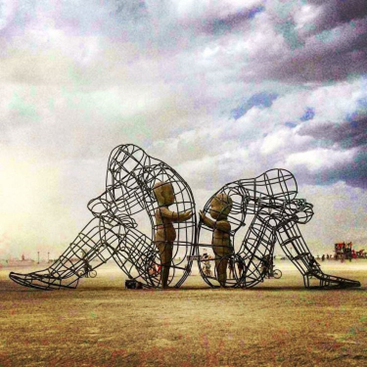
Growing old is natural, growing up is spiritual. While maturity comes with age, spiritual growth involves the integration of all parts of self, including the inner child of the adult. Society judges a childish adult as immature, as it can be frustrating to deal with adults whose arrested development keeps them stuck in a state of self-absorption, emotional instability, and over-dependency. On the other hand, overly-mature children are rewarded for their industriousness and reliability. Yet it is not uncommon for these precocious children to have been parentified in their early years, creating an unfillable void of a lost childhood. In both cases, these childhoods have been disrupted, one stuck from growing up and the other having grown up too fast.
The reality principle dictates that we cannot travel back in time and change what happened in the past. However, the psyche preserves the images, memories, and feelings of our child self that is safely tucked away until we are ready to make contact with our inner child later on in life. Connecting with the inner child is not a regressive act but a moving towards a fullness of self. And this relationship with our inner child can be the secure base from which we can heal childhood traumas; satisfy unmet needs and wants; and feel at home with one’s own self.
The Imprisoned Child
Alice Miller, a psychologist whose writings have had a great influence on me, writes in the Drama of the Gifted Child (DOGC) that connecting with our inner child is like finding home for the first time:
“An adult can be fully aware of his [sic] feelings only if he had caring parents or caregivers. People who were abused and neglected in childhood are missing this capacity and are therefore never overtaken by unexpected emotions. They will admit only those feelings that are accepted and approved by their inner censor, who is their parents’ heir. Depression and a sense of inner emptiness are the price they must pay for this control. The true self cannot communicate because it has remained unconscious, and therefore undeveloped, in its inner prison. The company of prison warders does not encourage lively development. It is only after it is liberated that the self begins to be articulate, to grow, and to develop its creativity. Where there had been only fearful emptiness or equally frightening grandiose fantasies, an unexpected wealth of vitality is now discovered. This is not a homecoming, since this home has never before existed. It is the creation of home.”
Under the conditions that Miller describes, this undeveloped true self exists within the psyche in child form. Like Anne Frank hidden in her attic for nearly two years, the attic was both protection from the dangers of Nazi Germany but also a prison. It was not safe for her to show herself, let alone her true self which could only be expressed through her diary. There was no happy ending for Anne, she was killed just a few years later after leaving her safe sanctuary, yet the essence of her true self was preserved through her diary that lives on in perpetuity.
Fast forward to modern times, the emotions of an imprisoned child is painfully expressed in Justin Bieber’s song “Lonely,” in which he laments the loneliness of his childhood and mistreatment by adults, “they criticized the things I did as an idiot kid.” The images in the music video are haunting: the empty back stage, the white flowers next to his baseball cap, the brief and fleeting swings of his hockey stick, and the frozen pause before he goes on stage, under the immense pressure of performing to an arena full of adoring fans that might as well be invisible to him. At the end of the music video, the adult Bieber looks upon his true self in child form, with empathy and grief, bringing together the older, wiser Bieber with his child self who before suffered alone.
Given his celebrity, I can only imagine that Bieber was surrounded by opportunists, sycophants, and critics growing up, which only adds to his prison of loneliness, as loneliness is worse in the company of mis-attuned others. Worst still is the depth of loneliness from being estranged from oneself. Many like Bieber had to construct a false self to adapt to the circumstances of his youth: the child prodigy and phenom, the global brand that is an institution to itself, and an idol that endeared him to adoring fans but also made him a target of critics and bullies. This false self is the “inner prison” that Alice Miller speaks of, which despite its protective origins, becomes the prison walls that the true self must hide behind.
Not all prisons are physical, walls and bars would be less confusing. For many, the prison of false self is made up of smiles and pretending everything is alright, saying the right and unoffensive things, and upholding an image of a happy life. This prison in plain sight is captured in Bieber’s lyrics, “Like my house was always made of glass,” which reminds me of Alice Miller’s description of a client who had lost touch with their childhood:
“I lived in a glass house into which my mother could look at any time. In a glass house, however, you cannot conceal anything without giving yourself away, except by hiding it under the ground. And then you cannot see it yourself, either.”
The “it” that is buried underground is the true self. For Anne Frank, it was not only her physical presence she needed to keep hidden, the dangers also dictated her child spirit be suppressed – the joy from play and laughter, the cries from fear and grief. Not even whispers of these expressions were permitted. For Bieber, what parts of himself needed to be suppressed to fulfill the duties of his celebrity, to fulfill society’s unquenching thirst for entertainment and sick need for an idol to both idealize and worship, but also to villainize and put down.
Most people may not relate to the horrors of a World War, or the celebrity of a child star, but how common are children who have to deny their childhood to live up to parental expectations and societal standards, and to conform to a predetermined image not of their own. The irony of the loneliness that stems from a repressed childhood, including those who delude themselves of having had a happy childhood, is that we all struggle with this issue to some extent or another, and so we are truly not alone.
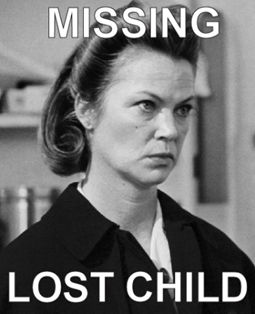
The Lost Child
Parents try their best based on how they themselves were parented. However, what if an unlived aspect of a parent was being deprived of secure childhood that forbid them to be fully and truly themselves, not just the good and happy parts, but also the bad and messy parts of being a kid. Or what if resources were lacking, and there was an absence of a consistent and stable environment of belonging, safety, and care. Providing something one never got is near impossible, even for the most well-intentioned parents.
This dynamic of parenting based on how one was parented results in the re-enactment of the same patterns and traumas across multiple generations. As children, these patterns become normalized that hinders awareness that something is not right in this family picture, “it is like the air he breathes; he knows no other, and it appears to him to be the only breathable air” (DOGC, p. 21). Moreover, even when children become aware (e.g., comparing their family to other families), they have no choice than to go along until they are self-sufficient and old enough to leave their family domicile.
It’s so obvious to me now how limited parents are in fulfilling what is arguably the most important responsibility we have as adults. Yet when I was a child, I put my own mother and father on a pedestal and saw them as Queen and King who always knew better, “to ensure the illusion of love, care, and kindness” (DOGC, p. 65). Now as a parent myself, I realize parents are imperfectly human. Parents have more experiences and privileges as a function of their age, but are still growing themselves with insecurities and limitations. It pains me when I disappoint or break promises with my son, or when I lose my temper or displace frustrations onto him, or when I take the easy road of spoiling him and relying on TV nanny so that I can focus on other demands that I rationalize as more important.
Given that children are smaller, weaker, and less experienced, they are dependent on their caretakers for basic survival. More than abuse, the loss of attachment is a child’s greatest fear, “the loss of his mother’s love for a child, can mean the same as death” (DOGC, p. 13). This dynamic leaves the child vulnerable to the misuse of parental power:
“The parents have found in their child’s false self the confirmation they were looking for, a substitute for their own missing security; the child, who has been unable to build up his own sense of security, is first consciously and then unconsciously dependent on his parents. He cannot rely on his own emotions, has not come to experience them through trial and error, has no sense of his own real needs, and is alienated from himself to the highest degree. Under these circumstances he cannot separate from his parents, and even as an adult he is still dependent on affirmation from his partner, from groups, and especially from his own children” (Alice Miller, DOGC).
Few parents would admit that they exploit their children for their own good, but there are many ways this can happen, often unconsciously. Parents can displace their anger and frustrations from other areas of their lives onto their children. Insecurities and weaknesses can be projected onto the child, so that parents don’t have to feel vulnerable themselves. Children can be made to revolve their lives around the parent, making parents the center of attention. Parents can make children extensions of themselves so that they can stay in control. Children can be ridiculed and shamed so parents can feel superior. Parents can over-protect and condition dependency, so that children won’t ever leave them. Children’s accolades can be paraded around town, feeding the parents’ narcissism. And children can be neglected as a result of the parents’ own lost childhood. These are just a few commonplace examples of ways parental power can be misused.
Even with my training as a psychologist, I fall prey to these misuses of power. As a remedy, I try to keep myself accountable to the following principle: my power as a parent starts and stops at my responsibility for raising and taking care of my child, as opposed to personal gain. However, outside of extreme cases of child abuse or neglect in which DCFS gets involved, these misuses of power can easily go unnoticed, even to the parents’ own conscious awareness. Parents, and our culture, can rationalize these behaviors as training and discipline for the child’s own good, but is it really?
A famous study that exemplifies the impact of caretaker power is one from post-war Germany that compared the experiences of children at two orphanages. Because these orphanages were State governed, there were “experimental” controls in place, such as children from both orphanages having the same diet, the same programming, and frequency of doctor visits. The one major difference was that the women in charge of these orphanages could not have been more different. Based on descriptions taken from Robert Sapolky’s “Why Zebras Don’t Get Ulcers,” Fraulein Grun was described as a “warm, nurturant mother who played with children, comforted them, and spent all day singing and laughing,” while Fraulein Schwarz was described as having “minimized her contact with the children” and “frequently criticized and berated them” in public view. Upon comparing outcome measures, the study found significant differences in height and weight, with the children at Schwarz’s orphanage growing at a slower pace. Interestingly, Schwarz was eventually transferred to take charge of Grun’s orphanage, and the study found the growth rate of her previous orphanage promptly increased, while the growth rate of her new orphanage became stunted, highlighting both children’s resiliency but also sensitivity towards caretakers.
In my opinion, the most important subject of this study was left unexamined: the psychological autopsy of Fraulein Schwarz’s inner child that was absent from her approach to child rearing. In an alternative reality, her inner child could have related to the pain of the traumatized and orphaned children, and could have befriended and found joy and laughter in playing with them. But in our reality, what happened to this part of her? And what were the conditions and traumas from Fraulein Schwarz’s own childhood that made her this way?
The Traumatized Child
A common perception of therapy is that it is space for clients to vent frustrations about their parents. While there may be therapeutic value in clients giving voice to and releasing their emotions around parental grievances, the intention is not to villainize parents but to help clients become aware of the dynamics in their parent-child relationship, and with this awareness, establish healthy boundaries and responses, more often for the sake of the relationship than in spite of it.
Furthermore, by gaining insights into their parents’ history, clients are able to better understand what intergenerational traumas are being transmitted in order to prevent future generations from suffering the same fate. Therapy is not only an opportunity to heal one’s own trauma, but to exorcise the demons that have haunted past generations. To this end, it may be helpful to understand the psychological mechanisms that explain how traumas from childhood can have lasting effects into adulthood, and how these traumas get re-enacted when these individuals become parents themselves.
Trauma is often looked at as a catastrophic event such as abuse or assault, but there are traumas with a small “t” that may not seem traumatic for an adult, but may for a child. For example, an insecurely attached child may experience a parent leaving on a business trip as an abandonment, or a child blaming themselves when parents have an argument, or a child fearing grave punishment for not bringing home straight A’s on a report card. What is traumatic is relative to the sensitivities and the developmental stage of the individual child. Because these events are often dismissed, the trauma expert Bessell Van der Kolk has advocated for the inclusion of “adverse childhood experiences” in the DSM, the primary reference for psychiatric diagnoses, so that the impact of these events do not go undetected by the mental health field.
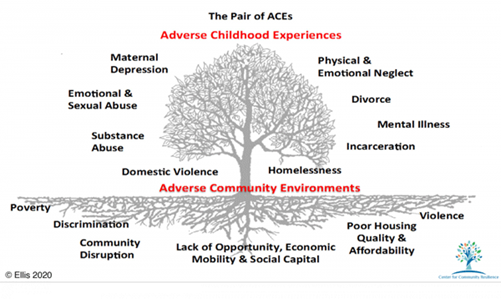
Rather than viewing trauma as an external event (e.g., abuse), Peter Levine, the founder of Somatic Experiencing Therapy, defines trauma as an internal, physiological event. Specifically, Levine suggests that trauma happens when a person’s nervous system gets stuck in a chronic state of dysregulation in response to a perceived threat. It does not matter whether the perceived threat is a real danger, the perception itself triggers the body’s stress response of fight, flight, or freeze.
A normal stress response involves a completion of the physiological cycle of sympathetic arousal (fight or flight), followed by a period of rest and recovery, which eventually returns our nervous system to a state of equilibrium. As Peter Levine puts it, “what goes up must come down.” However, in the case of traumas and adverse childhood experiences, the body is not able to complete the stress-recovery response, and the body gets stuck in the sympathetic arousal stage, experienced as a constant state of feeling threatened, not just for days or weeks but years long after the harmful event has passed.
For this reason, Bessel van der Kolk titled his seminal text on trauma, the Body Keeps the Score. And when the body is stuck in a state of threat, the mind perceives events through the lens of fear even though there may not be real danger, such as misinterpreting neutral situations as harmful and projecting benign others as out to get them. The mind fixates on threat, and like a Google search, the traumatized individual is bound to find danger if that is what they are looking for. Furthermore, when historical traumas do not get resolved, the trauma repeats and gets re-enacted with current and future others, as if they are reliving the past until a resolution can be found. It is not surprising that up to 81% of parents who mistreat their children were abused themselves, according to this review.
For parents who are carriers of intergenerational trauma, their own children can be the misperceived as threats, such that a child acting out may be looked at as having mal-intent, justifying the need to punish or shame them. In this vein, the child can be unconsciously enlisted to reprise the role of the traumatized child in a sick and twisted re-enactment of the unresolved trauma, but this time around, the roles are reversed. The parent is no longer the helpless child but the powerful adult, who can either use their power to break the pattern or repeat it. And when the traumatized parent identifies with the abuser in the re-enactment, the pattern is repeated, and the child suffers the same abuse from generations prior. The child becomes the sacrificial lamb to the true enemy manifested through generations of parents, the trauma itself.
The Mirrored Child
Childhood trauma is not only stored in the body, but in the very foundation of a child’s sense of self that is ever so present in future attachments. From an attachment perspective, it is important to note that an infant instinctively attaches to a primary caregiver prior to them developing a sense of self. Having a self-concept, being self-aware, or having positive self-esteem have no survival benefits for an infant, what they need are the basics like food, shelter, and safety that only a caregiver can provide.
Over time, an emotional bond forms between the infant and the primary caregiver, and an internal working model of the caregiver forms in the infant’s psyche, which becomes the secure base not only for the infant to explore the unknown world but also to develop a sense of self. Starting in early childhood, the child begins to develop a sense of self not in a vacuum but in relation to their caregiver’s mirroring and treatment of them. Specifically, the reflected images of themselves become the basis for who they are, such that when a child is treated with care and acceptance, they see themselves as worthy of love. Contrary to the Cartesian notion of “I think, therefore I am,” for a child, it is rather, “I matter, therefore I am.”
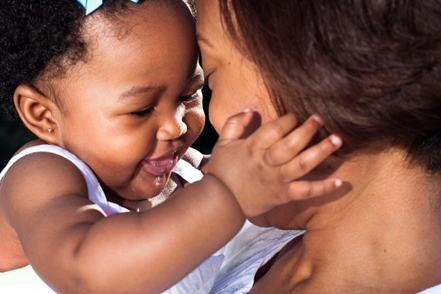
This dynamic is eloquently captured in the following passage by renowned psychoanalyst Donald Winnicott:
“The mother gazes at the baby in her arms, and the baby gazes at his mother’s face and finds himself therein…provided that the mother is really looking at the unique, small, helpless being and not projecting her own expectations, fears, and plans for the child. In that case, the child would find not himself in his mother’s face, but rather the mother’s own projections. This child would remain without a mirror, and for the rest of his life would be seeking this mirror in vain.”
The reliance on the caretaker’s mirroring makes children vulnerable to the dynamic of projective identification. Projection is a common defense mechanism in which a person projects unwanted feelings and impulses, as well as disavowed aspects of themselves, onto other people or things, such as when a controlling person accuses others of being too controlling. When projections are directed to a secure other, a self-aware person is able to see through the projection as hypocritical, not take it personally, and stand up for themselves. However, children have not yet developed their ability to be self-aware and secure in themselves, so they are more prone to identify with and internalize the projections as if they are true reflections of themselves. Given this dynamic, it is not uncommon for children to be scapegoated as the “identified patient” of the family.
Furthermore, attachment keeps the child on the same emotional wavelength as their parent’s, such as “when you are sad I am sad” or “I can’t be happy unless you are.” Being on the same wavelength is great if the predominant emotional connection is one of love and safety, and encompasses a wide range of emotions that is attuned to the child’s. However, a child’s emotional life can be severely limited if the emotionality of their parents is undeveloped and restricted. The unexpressed emotions of the child don’t just go away, they get repressed and linger on in the unconscious.
The mirroring, projections, and emotional life of the child are the building blocks of one’s foundation of self. And when the foundation is built on an insecure attachment, it is like a house built on a cracking foundation, eventually those cracks will widen and spread, and the structure built on top will fall apart. And even though the insecure attachment is no fault of the infant or child, they have no choice but to stay attached for their basic survival.
The Child’s Shadow
Despite the potential for so much to go wrong in childhood, many bounce back from these childhood difficulties with a surviving ego healthy enough to become a functional and generative member of society. An inventive way individuals manifest resilience is by finding meaning in their childhood sufferings, and creatively expressing this meaning in a way that enlightens others. And in the search for meaning, it is the shadow of the lost child that guides the way. One such story is that of J.M. Barrie, the creator of Peter Pan.
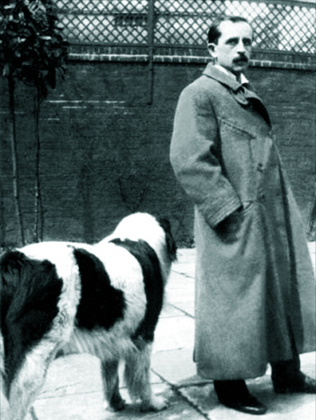
The cultural significance of Peter Pan is paramount, and the inspiration for this archetypal character originated from J.M.’s own childhood. Insights into his childhood were gleaned from the biography he wrote of his mother, “Margaret Ogilvy (1896),” who passed away one year prior to the publication. The biography described the impact of his older brother David’s death on his mother, who was her favorite and golden child of the family. When J.M. was six, David was killed in a skating accident at the tender age of 13. One of a parent’s greatest fear is to survive their children, and this loss spiraled his mother into a deep depression, with the shadow of her lost child haunting her for the rest of her life:
“There was always something of the child in her, and her laugh was its voice, as eloquent of the past to me as was the christening robe to her. But I had not made her forget the bit of her that was dead; in those nine-and-twenty years he was not removed one day farther from her. Many a time she fell asleep speaking to him, and even while she slept her lips moved and she smiled as if he had come back to her, and when she woke he might vanish so suddenly that she started up bewildered and looked about her, and then said slowly, ‘My David’s dead!’ ” (J.M. Barrie, Margaret Ogilvy)
J.M. became an emotional crutch for her mother, trying to “make her the merry mother she used to be,” even keeping a record of her laughs on a piece of paper. Yet his efforts at cheer would not penetrate the depths of her grief. Parentified as a child and petrified as an adult, Margaret could not be without the shadow of her lost child, whose image would be projected onto J.M.:
“‘Is that you?’ I think the tone hurt me, for I made no answer, and then the voice said more anxiously ‘Is that you?’ again. I thought it was the dead boy she was speaking to, and I said in a little lonely voice, ‘No, it’s no him, it’s just me.’”

J.M. had taken on the role of his mother’s consoler, not in a conventional sense but by carrying his mother’s projected image of David onto himself, whose image remained a boy forever. It may have been more than coincidence that J.M. found himself playing the role of a false self. Just a generation prior, Margaret’s mother passed away in her childhood, forcing her to give up her true self, into the motherly role of taking care of household duties and her younger sibling:
“She was eight when her mother’s death made her mistress of the house and mother to her little brother, and from that time she scrubbed and mended and baked and sewed…I see her frocks lengthening, though they were never very short, and the games given reluctantly up.” (J.M. Barrie in Margaret Ogilvy)
Taking on the role of matriarch, Margaret had no other choice than to suppress her carefree childhood; however, she stayed connected with the shadow of the “little girl,” expressed through “innumerable talks” that “made her youth as vivid to me as my own.” J.M. described his mother as a “great reader,” who would read him stories from her favorite genre of adventure novels, such as “Robinson Crusoe,” “Arabian Nights,” and “Treasure Island.” Perhaps because her own childhood was so restricted, it was important for her to show her child side to her children.
J.M. loved this adventure-seeking child image of his mother, even when facing the impending death of his mother as an old woman. A love that would be a companion to Margaret’s inner child as her adult self suffered through grief and depression, and preserving this image of the “little girl” even after Margaret had long discarded this part of her into the shadowy depths of her psyche:
“The fierce joy of loving too much, it is a terrible thing… And now I am left without them, but I trust my memory will ever go back to those happy days, not to rush through them, but dallying here and there, even as my mother wanders through my books. And if I also live to a time when age must dim my mind and the past comes sweeping back like the shades of night over the bare road of the present it will not, I believe, be my youth I shall see but hers, not a boy clinging to his mother’s skirt and crying, ‘Wait till I’m a man, and you’ll lie on feathers,’ but a little girl in a magenta frock and a white pinafore, who comes toward me through the long parks, singing to herself, and carrying her father’s dinner in a flagon.” (J.M. Barrie in Margaret Ogilvy)
It was nearly a decade after Margaret’s death that the “little girl” of her mother who “wanders through my books” would meet Peter Pan. How much of his mother is in the character Wendy? Wasn’t Wendy “every inch a woman” who the lost boys saw as their mother? And doesn’t the iconic image of Wendy don a pale blue dress, which supposedly was Margaret’s “favorite costume” growing up? And like J.M.’s earnest efforts to console her mother’s grief by donning the shadow of his decreased brother, was not Wendy reunited with the “Boy Who Never Grew Up” who showed her the way to Neverland where she can be a carefree kid again?
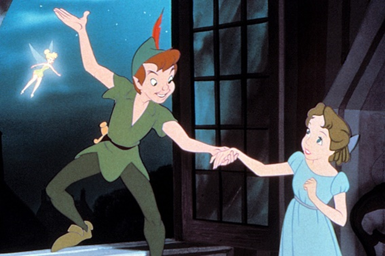
It is a work of his inner genius that J.M. transformed the complexity of his grief and trauma into the story of “Peter and Wendy,” integrating the fantasies of a child with the adult themes of death found in Tick-Tock the Crocodile and the adult cynicisms and scars of Captain Hook. However, it wasn’t until the fortuitous encounter with the real-life “lost boys” that helped him rediscover the Neverland of his youth.
Prior to this fateful encounter, the biographical movie of J.M. Barrie, “Finding Neverland” depicts him as an accomplished but serious playwright whose works were losing the essence of his vocation’s namesake, the play in theatrical play. It was a fateful day when J.M. crossed paths with the Llewelyn Davies boys, five rambunctious boys whose names all show up as characters in “Peter Pan” including the middle child named Peter. J.M. was taken by their imaginative play filled with adventures on a deserted Island fighting pirates in the backdrop of Kensington Gardens. And from this inspiration, he was able to actualize Alice Miller’s “creation of home” for the lost children in his life.
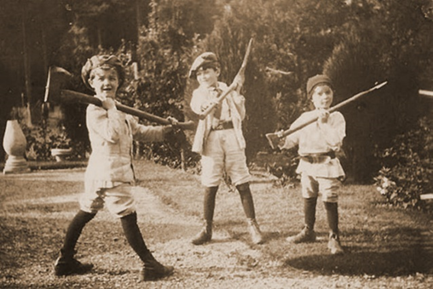
The metaphorical home for the lost boys became a real home when J.M. adopted the Llewyn Davies boys after both their parents passed away due to cancer. J.M. saved these boys from becoming orphans, but it was the boys who saved him many years prior. With the passing of his mother, J.M. no longer had to play the role of David. And time spent playing with the Llewyn Davies boys helped J.M. reconnect with his own child spirit which guided him to complete the story of his childhood trauma, and finally giving a happy ending to the inner children of those dear to him.
Throughout his life, J.M. lamented that his older brother never grew up, “I became a man and he was still a boy of thirteen,” yet through the medium of story, J.M. was able to give this lost boy a name, special powers, and a guardian fairy angel, saving him from the dark abyss of death and into the innocent hearts and minds of children across the world. Looking back J.M. Barrie was not a children’s book writer, as Peter Pan was the first and only play he wrote for children, but like “the second star to the right” that shined for Peter, the tale of Peter Pan is the brightest of all the stories he manifested into the world.
In the penultimate scene of Finding Neverland, after the first on-stage showing of Peter Pan, a theater patron approaches the boy Peter and asks, are you the real Peter Pan? The Llewyn Davies boy responds that it is not him but J.M. who is the real Peter Pan. While J.M. Barrie may have been the steward of the child spirit expressed through this fictitious character, this spirit does not belong to one woman or man or queer, but exists within all of us.
A Child’s Spirit
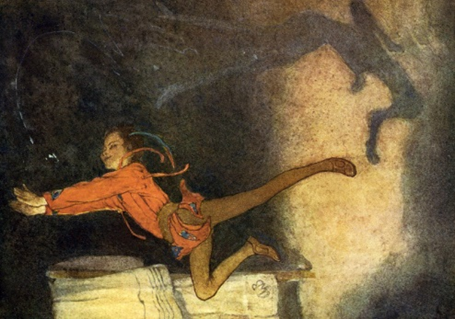
The child spirit shows us how to live truly and fully with heart. When children cry, it is with their whole heart. When they laugh, it is with their whole body, and when they play, it is with their whole being. A simple visit to one’s local playground is enough to witness this spirit in action: children running around in dizzying fashion, laughing and playing, with not a care in the world.
It is the deepest of love that I have for the child spirit of my son, who is six years of age and growing too fast. As much as he is dependent on “mommy and daddy,” his child spirit has blessed our lives with a love that have opened our hearts to the children within us. His spirit keeps us on our toes with its spontaneities and curiosities, and fills us with laughter at its boundless whimsy and silliness. His passion for building things from pretty much anything, whether it be perfectly shaped Legos or discarded scraps, inspires my own creativity. His spirit has taken us on magical adventures across galaxies, eras, and dimensions. The duties of fatherhood humble my ego and teaches me the true meaning of patience and devotion, not only for my son but also for my inner child. It is my responsibility to congruently mirror his true self, absent of any false images. And when he is truly safe and free to be himself, there emerges a vitality that is electric and contagious, an energy that invites my own inner child to come out and play.
As adults we lose this vitality, as the world is not so kind and the demands too weary. As we grow older, we accumulate scars and wrinkles that hardens the heart and ages the body, including memories and feelings from our childhood that fade over time. My barber once shared his wisdom that it is my responsibility to protect my child’s innocence for as long as possible, and I have been mindful of this advice ever since. While cynical adults judge innocence as naïveté, for a child, innocence is the well-spring of creativity and imagination, that anything is possible as long as they believe.
And have we forgotten our first heartbreaks? Children’s innocence makes them scare easily and hurt deeply, with each harsh reality like a fresh cut to a heart yet unseasoned with scars. The world will make sure the scars are there, which means children need guidance honing their sensitivities, rather than invalidating statements like “you’re being too sensitive.” A child’s heart can be easily broken, and needs to be handled with great care and protected at all cost. And in the ageless words of Billie Eilish, try not to abuse your power.
Yet, in the Old Testament of the Bible (Genesis 22), God commands Abraham to lay his only son, Isaac, on the altar to be sacrificed as an offering. The perceptive Isaac detects something is wrong and asks about the missing offering. In his unquestioning obedience, a conflicted Abraham lies to his son and proceeds to place his son on the altar. In the very moment Abraham takes his knife to his son, an angel stops him and provides a ram instead to sacrifice, proclaiming “now that I know you fear God.” The story goes on that Abraham is “blessed” with “numerous descendants” and “possessions” as a reward for his obedience. While this story is obviously not to be taken literally, if this happened in real life, I would call DCFS on Abraham in a heartbeat. However, how often do we sacrifice our inner child to the altar of fear and obedience? Is it not our responsibility to protect children from fear, not instill it? And what kind of God would punish a father for saving his own child?
Children are among the most vulnerable in our society, not only those small humans found in playgrounds and schoolyards, but also the inner children tucked away in the shadowy recesses of our unconscious. Ghandi says that “the true measure of any society can be found in how it treats its most vulnerable members.” And for the individual, it is not fear or obedience, but how we treat the children around us and the childlike vulnerabilities within us that is the true measure of our character.
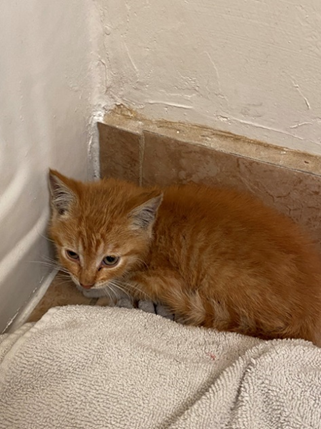
A touching story that beautifully expresses this principle comes from a client of mine who gave me permission to share. On an ordinarily busy and hectic day for this client, she came across a stray kitten in a street gutter, frozen in fear, covered in dirt and grime, being eaten alive by fleas. While most people, including myself, would not be inconvenienced, choosing instead to look the other way, something within my client compelled her to rescue this kitten, spending the next few hours diligently washing the kitten clean of all fleas, treating her wounds, and calling over ten shelters until she found one that would provide refuge. Playing devil’s advocate, I asked why she didn’t turn a cold shoulder, and her reply was that she saw no other choice than to save this kitten from certain death. While the rescue was of another animal species, I can only imagine what this act of kindness had on her inner child who had also suffered an extensive trauma history. Did she see mirrored in the kitten her own childhood suffering? With each gentle stroke, was her own inner child tickled? And did the child spirit not give her a choice because all living beings, however small and vulnerable, are precious and need saving?
Seeing the world as it is, there are just too many traumas that exist, that childhood sufferings are inevitable. When traumas become too painful, the psyche regresses to that of a child, crying out for an archetypal mother or father to take care of us. And when parents could not be there for us, the cries of our inner child are heard by the child spirit who comes to us during these critical times, just like Peter Pan did for generations after generations of Wendy’s and Margaret’s, bringing with him the magical fairy dust of wishful fantasies, imaginative play, and disruptive temperaments that break down the prison of our traumas and false selves. However immature this may seem, is there not a make-believe quality to love, hope, and faith?
When the child spirit shows itself, we must befriend it and heed its call to “come away” to the Neverland of ones lost childhood, where the neglected and undeveloped parts of the inner child lays waiting to be seen, mirrored, and accepted with love. With the child spirit as the guide and vitality our compass, the adult and her inner child can relive and work through the difficulties of childhood together, creating a loving bond within oneself that has the power to heal the child’s heart and complete the story of trauma, giving it a happy ending. An ending that sees the child released from her prison and given a proper home.
Posted July 19th, 2022 by Y. Sue Park. This essay is dedicated to the inner children of my clients, the true authors of this essay.