August 7, 2020
A delusion is an unrelenting adherence to a false belief despite evidence to the contrary. While delusional disorders are rare, milder forms of delusions are found in common mental health conditions. For example, there is a delusional quality to anxiety in which we perceive ambiguous or uncertain situations as threatening, overestimate the likelihood of negative outcomes, and underestimate our ability to cope, despite recognizing that our anxious thoughts may be irrational or disproportionate.
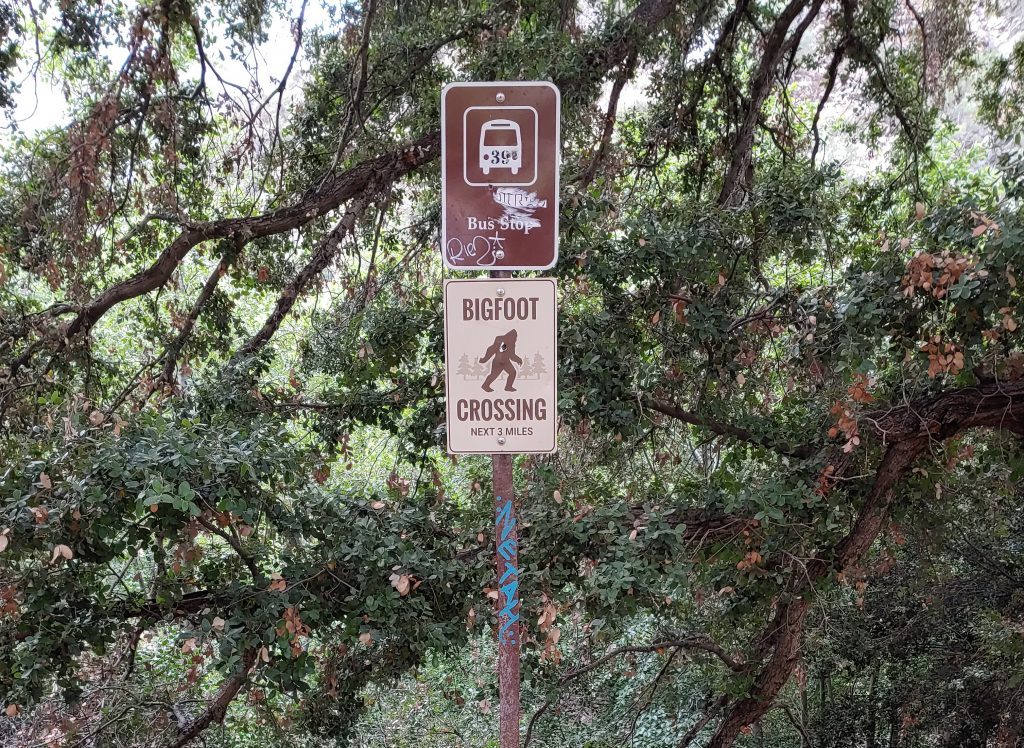
At the root of anxiety is fear, which is a basic emotion that alerts us to potential danger. With anxiety, fear is confused with danger. A helpful acronym to highlight this delusional aspect is false evidence appearing real. The mere appearance of danger is enough to elicit physiological and psychological responses. For example, during one of my night hikes, I approached an odd-shaped boulder and confused it for a bear. My body reacted immediately in fight or flight, revealing my fear of a violent and untimely death, despite the trigger being a figment of my imagination.
The same delusional mechanism that drives anxiety can be used to our advantage, by consciously adopting beliefs that inspires positive attitudes even though these beliefs may not be grounded in reality. Hope, after all, can be as delusional as fear. I refer to these positive self-delusions as “believatudes,” a portmanteau of the words “believe” and “attitude.” Specifically, believatudes are beliefs and perspectives that we consciously and deliberately adopt that elicits a desired attitude or motivation, even though we recognize that the beliefs may not be true.
Positive delusions are easily observable in children who engage in imaginative play. For example, my four-year-old son loves to make-believe that he is an astronaut. All he needs is his astronaut helmet and a few household items (e.g., garden stones as moon rocks) to transform our living room into a space adventure with lift offs, space exploration, and walks on the moon, eliciting a sense of wonder, creativity, and fun!
While this quality is acceptable in children, adults who are out of touch with reality are shunned as delusional. However, the problem is not make-believe per se but rather the failure to discern inner reality from outer reality. When these realities are kept in their own lanes, we can respond appropriately to the demands of outer life, while honoring our inner beliefs and attitudes.
Michael Jordan demonstrated this quality in a matchup with an opponent who allegedly taunted Jordan after a playoff game in which this player outplayed the GOAT. Reporters interviewed the other player who adamantly denied the allegation. Confronted with this discrepancy, Jordan admitted that he deliberately made up the story to light a fire within him. The fabricated taunt of “nice game, Mike” was all it took for Jordan to thoroughly dominate this player the next game.
Once a believatude is conceived, it may be helpful to distill it into a short phrase that can be repeated like a mantra to cultivate the desired attitude. A believatude from my life is, “I have already overcome the hardest thing in my life.” Who knows if this is really true, perhaps my worst days lie ahead. Yet when I hold onto this belief, new challenges feel more manageable. I often engage this believatude on challenging mountain hikes, offsetting my impulse to give up and constellating an “I can do it” attitude.
I encourage you to create your own set of believatudes, as they are entirely subjective and personal. Here are some guiding questions that may help you get started:
- What is an attitude that can help you with a challenging situation?
- What is a belief that can elicit this attitude?
- How can this belief be distilled into a mantra?
- Repeat the believatude like a mantra to elicit the desired attitude.
I hope this approach can help others develop beliefs and attitudes that may be in service of cultivating a more fulfilling life. Sometimes a be(lie)f is what’s needed to get us to where we need to go in life.
Posted August 7, 2020 by Y. Sue Park