December 25, 2022
Quick Links
Part 1: The Ego and the Shadow
In the internal landscape of one’s mind, the ego is sovereign but far from the most powerful. In the psyche, there exists powerful forces like emotions, drives, and archetypes, as well as autonomous figures like the shadow, personas, and complexes, that the ego must lead so that life can be engaged in a purposeful manner. To this end, the ego has the executive powers of command and control, the functions of thinking, feeling, sensing, and intuition, and the ability to direct consciousness not only towards the inner psyche and the outer world, but also towards itself, forming a self-concept known as the conscious “I.” And like the Mandate of Heaven, the ego’s duty is not to serve itself but rather the inner forces it is tasked with leading. And when it fails to fulfill its duty as a benevolent ruler, even the ego can be overthrown.
According to Sigmund Freud, while important in its role, the ego occupies a small part of the overall psyche, likening it to a tip of an iceberg. Carl Jung went even further to put the ego in its place, “a cork bobbing in the enormous ocean of the unconscious.” Despite its limited scope, the ego can easily become inflated and lose sight of its place in the interior of one’s psyche. And as “absolute power corrupts absolutely,” the ego can lose its way when there are no checks and balances that hold the ego accountable for its powers.
Ego and its Attachments

As a warning to the dangers of an inflated ego, there has been a rising trend of such topics as “ego death” and “ego is the enemy,” which seems to characterize an inflated ego as narcissistic and entitled. I agree with the basic premise that it is not healthy for the ego to be overly inflated, which results in many blind spots, such as when the ego sees itself as the center of the universe and is unable to see things from others’ perspectives.
However, I’m iffy about the aggressive language of “killing” the ego or judging it as the “enemy” as a deflated ego poses its own set of problems, like low self-esteem and self-hate. Perhaps due to my limited understanding of “transcendence” associated with ego-death, I personally do not view ego as something to kill off, but see it more as a neutral quality. From a strictly scientific perspective, the ego can be seen as a set of cognitive processes, that can be adaptive or maladaptive depending on how it functions. The ego has a place and a purpose, and the goal is not to get rid of it, but for the self to guide it in a way that is in harmony with the inner and outer forces of our lives.
The view of the ego as an “enemy” arises not from its inherent nature, but from what the ego consumes, attaches to, and identifies with. It is helpful to view the ego as a sticky substance that attaches to whatever it directs its attention towards, which then becomes the stimulus to its response. For example, when the ego obsesses over a situation in which it was wronged, the ego gets filled with hurt and resentment. Or when it is fed with undeserved praise, it can form a narcissistic view of itself that has many blind-spots and entitlements, as the Little Prince put it, “vain men never hear anything but praise.” The ego can also get attached to old patterns, making it resistant to change even though these patterns may be unhealthy and no longer adaptive. And because one of the ego’s primary duties is self-preservation, when real or perceived threats arise, the ego can get fixated on anxious thoughts.

This principle of the ego becoming what it consumes is exemplified in the following Cherokee parable:
One evening an old Cherokee told his grandson about a battle that goes on inside people. He said, “My son, the battle is between two ‘wolves’ inside us all. One is evil. It is anger, envy, jealousy, doubt, sorrow, regret, greed, arrogance, self-pity, guilt, resentment, inferiority, lies, false pride, superiority, and ego. The other is good. It is joy, peace, love, hope, serenity, humility, kindness, benevolence, empathy, generosity, forgiveness, truth, compassion, and faith. The grandson thought about it for a moment, and then asked his grandfather, “What wolf wins?” The old Cherokee simply replied, “the one you feed.”
Even though the ego takes on the form of whatever it consumes or identifies with, it is important to note that these objects of attachment do not define the ego’s true nature. The ego is not a simple composite of all the the objects and identities it has attached to, but rather an instrument of attachment. And as Tyler Durden put it in the movie Fight Club, “You are not your job, you’re not how much money you have in the bank. You are not the car you drive. You’re not the contents of your wallet. You are not your fucking khakis.”
Given the reality that every living thing dies and nothing lasts forever, the ego must learn to let go of everything it attaches to. Half of life is attachment, and the other half is about letting go. And much of the suffering in the world stems from the ego’s inability to let go of things that no longer serve a purpose or was never meant to be.
What happens when an ego can’t let go of its attachments?
It can turn a person into a monster. Such was the fate of Chairman Jang, from the Korean drama Itaewon Class, who was the founder of the fictitious JangGa Corporation, which in the show is the number one food company in Korea. Chairman Jang was obsessed with being the best, and went to great lengths to stay on top, such as betraying friends and family, using dirty tactics to win over competition, and not taking responsibility for any wrong-doings, which included covering-up a deadly accident in which his son’s reckless driving killed the father of the story’s protagonist, putting into motion a story of revenge. Chairman Jang justified his actions with the misguided belief, “the strong preys on the weak,” that deluded him into thinking he was above the law.
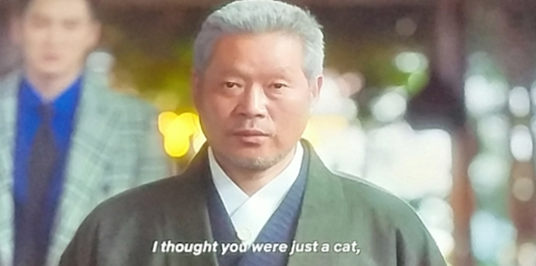
Eventually, members of his own family and company saw through his narcissism, and presented several opportunities for him to step down. However, stepping down was unfathomable to the Chairman whose ego had become over-identified with the company. Even when he fell ill, Chairman Jang failed to let go, which kept him from seeing how his unrelenting grip on power had thoroughly corrupted his soul and kept him from realizing the simple truth that power, like everything else in life, is temporary and can be taken away. And such was his fate when a series of Karmic events brought the Chairman to his knees and forced him to lose not only his family and his company, but his very own soul.
While many can’t relate to being in charge of an international corporation, how often do we hold onto things that are no longer adaptive or serve a purpose in our lives? When we can’t let go of pride, it makes it difficult to apologize after making mistakes, which prevents reconciliation and perpetuates conflicts. When we can’t accept the end of a relationship that has run its course, the same relationship that was once a source of love and joy can become a prison in which one feels trapped and resentful. When we overstay an unsatisfactory job for security and prestige, we can lose motivation and become blind to one’s true purpose in life.
Ego Defenses
Hindsight is 20/20. In the case of Chairman Jang, it is easy to see in hindsight where he went wrong. If only he had not thought himself superior to others, if only he had not enabled his son’s bad behaviors, and if only he had apologized and let go of his feud with the vengeful protagonist. But most importantly, if only he had realized when he lost his way, diverging from the original purpose of his company: for his family to never go hungry again, rooted in the trauma of losing his younger siblings to starvation in the impoverished aftermath of the Korean war. Despite his humble beginnings, Chairman Jang’s inability to let go of power transformed him from a respected hero to a detestable villain.
While it is easier in retrospect to see the “if-only’s” of our lives, hindsight is a bias because life unfolds in real-time in which the path forward is full of uncertainties and obstacles, and the choices we make are not so black and white. And to make sense of uncertainties, to protect us from potential harm, and to justify we made the right decisions, the ego has at its disposal self-delusions and defense mechanisms that cuts consciousness off from the harsh realities of life and the ugly truths about oneself. And the stronger the threats to the ego, the more complex the defenses need to be.
Defense mechanisms tend to be easier to observe in others than ourselves. For example, have you ever had a companion who was physically there but emotionally unavailable (withdrawal)? Or a boss who remains clueless despite countless feedback about same issue from different workers (denial)? Or had a partner who never says sorry and always has an explanation for why they are right and you are wrong (rationalization)? Or had an overprotective caretaker who treated you like an extension of themselves (omnipotent control)? Or had a family member blame you for the very thing they are guilty of (projection)? Or worked at an institution that required everyone put on a smile and tow the company line (suppression)? On the flip side, to what extent do you engage in these same strategies to preserve your ego?
While defenses are meant to be protective, if they become too rigid or long-standing, they can become a problem in themselves. The same defenses that provided safe distance from bad people and things, can eventually push away good people and things. Defenses can make someone stubborn to constructive feedback, which keeps them from learning and growing.
Defenses keep us from being aware of the underlying issues, which means that the real issues are left unattended and the problems persist. For example, the psychologist Alice Miller asserts that grandiosity (i.e., ego inflation) is one of the most common defenses against depression, which has depressed individuals grasping for achievements, status, and material wealth to compensate for their inner emptiness. However, grandiosity misleads the depressed person because what is truly missing can only be found within: a connection with the true self. Specifically, grandiosity may blind depressed individuals from their true needs and feelings, whether it be something as simple as rest and recovery from burnout or something profound like leaving an established career to pursue one’s passion. From this perspective, aiming to fill the void of depression from with-out is like trying to fill a bottomless hole, a person can fill it with all the riches of the world, but still be left unsatisfied and wanting more because the true needs are not being met.
Moreover, the ego may over-identify with certain personas or social masks to adapt to or defend against harmful social dynamics, such as a gay youth who pretends to be straight due to the dangers of homophobia. However, a more insiduous manifestation of the persona is found in the digital frontier of social media. In “Society of the Spectacle,” published in 1967, French philosophor Guy Debord foreshadowed how late-stage capitalism would devolve into the for-profit commodification of all facets of life, including our very own personas. On social media, we “sell” our personas for consumption in the attention economy, which in turn reinforces the ego’s over-identification with the carefully curated images of our online personas that has the populace confuse representation for reality, appearance for essence.
In late-stage capitalism, having enough social and economic resources is not sufficient to ameliorate the self-alienation that accompanies a life dominated by the persona; rather, giving off the appearance of a good life takes priority. Specifically, the social validation derived from the spectacle of appearance may compensate for the lack of a deeper connection with oneself and others. To this end, we flaunt our good fortunes for public consumption, such as our achievements, our travels, and even our fancy meals, as a client once said to me, “camera eats first.”
Even though any person of intelligence may recognize that a highlight reel is not representative of reality, or that there is more going on underneath a smile or an appearance of a good time, delusions do not follow the reality principle. To this point, Debord begins his manuscript with a haunting passage from Feuerbach’s Essence of Christianity:
“But for the present age, which prefers the sign to the thing signified, the copy to the original, representation to reality, appearance to essence, truth is considered profane, and only illusion is sacred. Sacredness is in fact held to be enhanced in proportion as truth decreases and illusion increases so that the highest degree of illusion comes to be seen as the highest degree of sacredness.”
In both the world of atoms and the world of digital bits, these over-identified personas eventually submerge the ego into self-delusions that detaches the self from reality. And when an ego wears a persona too tightly for too long, the mask wears the face, and this persona-driven ego may suppress their true self in favor of false images.
Inner War!
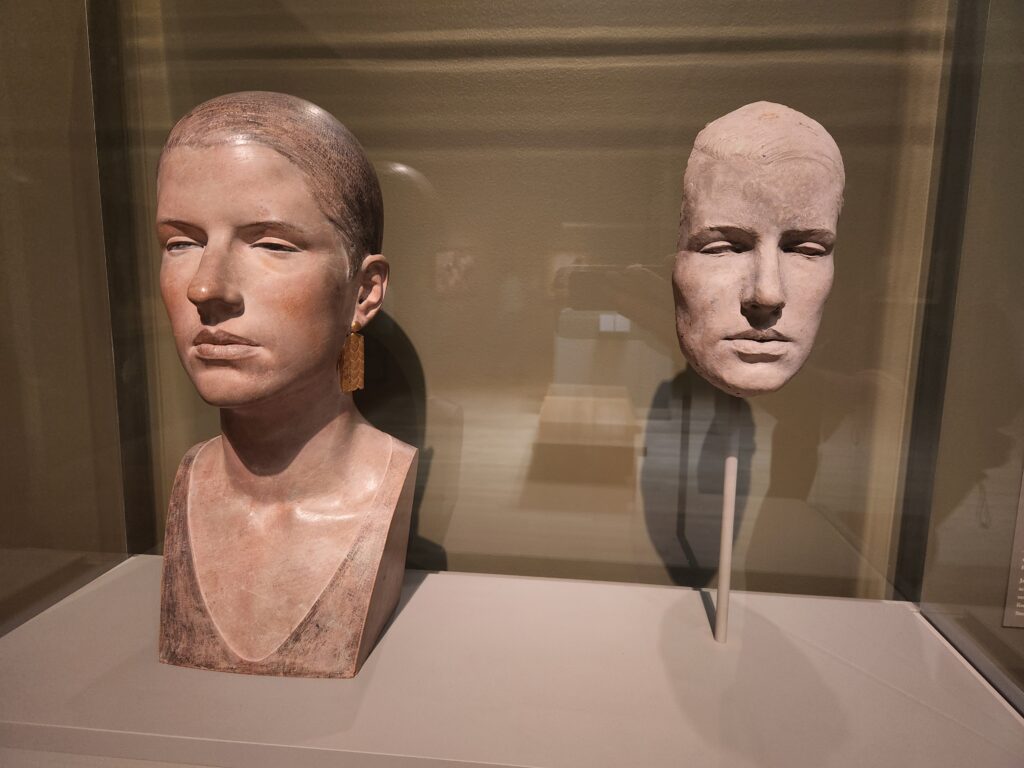
When a threat is resolved, it is the ego’s responsibility to de-mobilize its defense mechanisms and return the psyche to a state of equilibrium. However, an untrained ego may become overly identified with fear and become dysregulated to the point it is no longer in charge of these defensive measures. When this happens, the internal landscape of one’s mind can fall into disarray and become oppressive. In response, the internal forces of the psyche may resist and even revolt against the ego, resulting in an inner war.
The violence in our hearts mirrors the violence in the world. In some ways, the great wars of the past are analogous to the inner wars that raged in the psyches of past generations. This sentiment is captured in the following quote from the movie Fight Club, “We’re the middle children of history, man. No purpose or place. We have no Great War. No Great Depression. Our Great War’s a spiritual war… our Great Depression is our lives.”
This may sound like hyperbole and insensitive to the traumas and lives lost from the military wars of past, but when we take a closer look at the casualties of this inner war, it is not so far-fetched. In 2020, the CDC estimated that 45,979 individuals committed suicide in the U.S., with 1.2 million more who survived their suicide attempts, akin to wounded soldiers. The most common method in completed suicides are fire-arms, which is also an instrument of war.
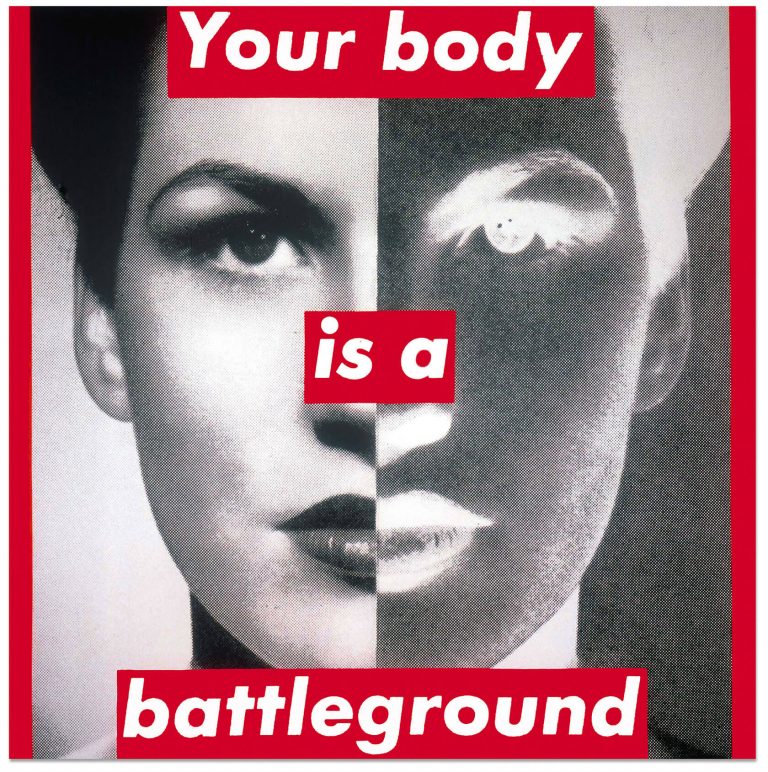
As Barbara Kruger put it, “your body is a battleground,” when one considers the prevalence rates of sexual assault, self-injurious behaviors, and propaganda-like images of ideal body types that has generations of youth hate their bodies. Furthermore, according to the NIH, there were 68,630 overdose deaths, with a significant rise from previous years due to the opioid crisis that peaked during the COVID-19 pandemic. And 1 in 4 who struggle with some form of clinical depression or anxiety, illnesses that imprison those inflicted akin to prisoners of war, such as the highly depressed having difficulty getting out of bed or the highly anxious paralyzed with fear and panic.
A common struggle amongst war veterans is PTSD, which is also widespread in civilian life in the form of abuse, assault, and neglect. Nowadays, trauma is the rule rather than the exception. And while in war there are two or more nations in conflict, is there not widespread division when one considers soaring divorce rates, broken families, the incredible wealth gap, racial discriminations, and social-political conflicts. While there is a start and finish to political wars, and the casualties are primarily the brave men, women, and queer who don military uniforms, the boundaries of mental illness are more elusive and affects civilians of all demographic brackets, including our precious children.
On a collective level, these disturbing trends point to the egos of countless individuals losing the authority of the very mindscapes it is meant to be sovereign. The body and mind no longer heed its direction. This leaves the ego vulnerable to being hijacked by strong emotions and controlled by outer forces, such as harmful ideologies or manipulative others, resulting in chaos and conflict amongst the internal forces of one’s psyche.
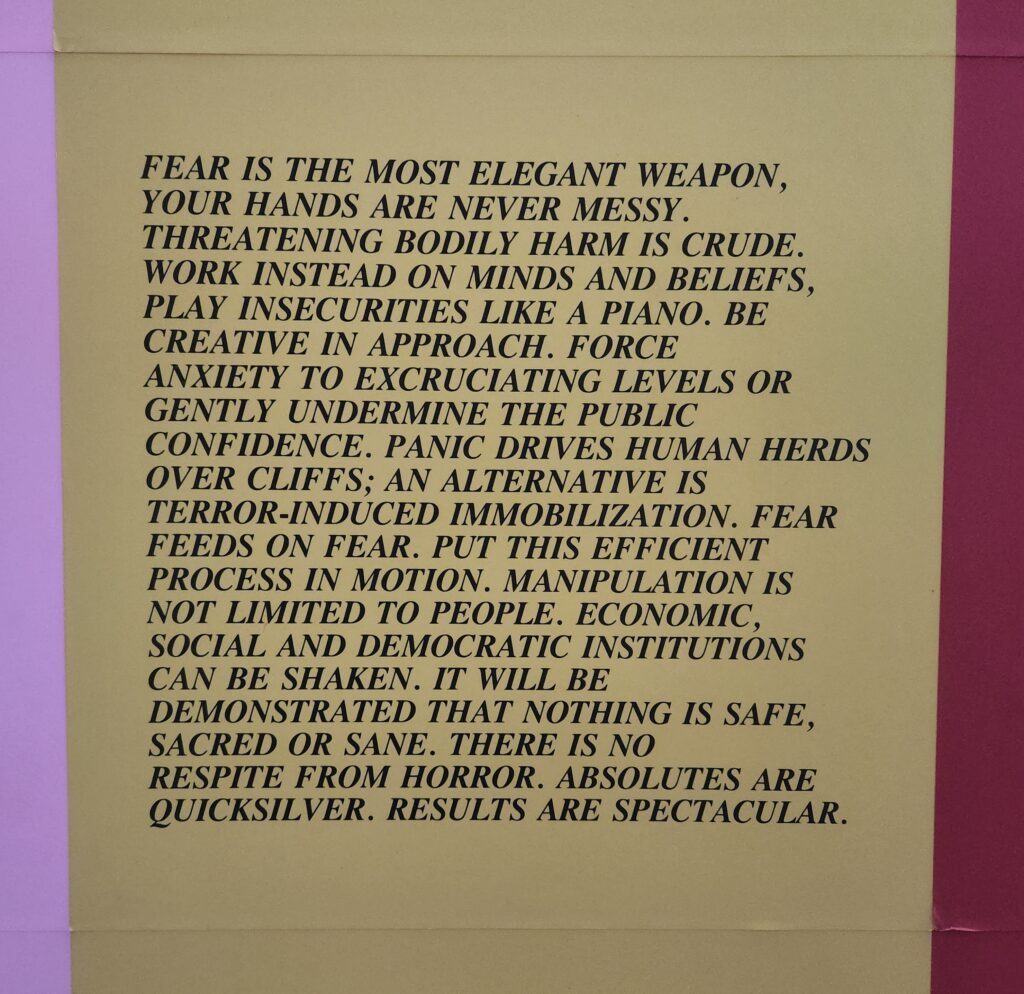
As a consequence, when the ego is divided from the true self, the heart of compassion no longer provides it with the security and warmth of self-love. When negative emotions are overly suppressed, positives ones will eventually follow suit and no longer bring joy or motivate the ego into action. When the ego disregards the inner companions of the psyche, our inner guide (i.e., the daemon) who holds the blueprint for one’s true purpose and vocation will no longer provide guidance, leaving us lost and directionless. Same for the anima taking back its creativities and intuitions and the animus its logic and reasoning.
When the ego lacks security and strength, introjects and complexes can run amok and torment the ego with self-defeating thought spirals. When an ego deludes itself as omnipotent, archetypes from the collective unconscious may no longer bless it with the wisdom of the ages. And when the pain is too much, an inner assassin, in the form of suicidal fantasies and impulses, may surface from the shadows and say to the ego, “go kill yourself.” When the ego is not in harmony with these unconscious forces of the psyche, one’s own mind can be a very scary place.
The Shadow
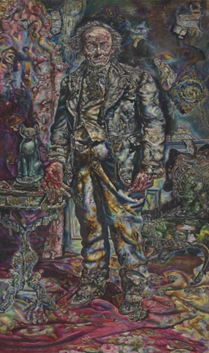
The path to restoring peace and balance in the psyche requires the ego to first descend into the darkness of the unconscious mind. There, the ego must reunite with the aspects of the self that has been repressed, disowned, and split off. Akin to the portrait of Dorian Gray that recorded all his sinful actions and then was shamefully hidden away in the attic, these unwanted parts do not just disappear but gets displaced into the “attic” of our unconscious. As a result, the repression forms a shadowy figure that is the culmination of all these cut-off parts, such as our inferiorities, destructive tendencies, and anti-social qualities.
The repressed parts may not necessarily be negative, there may be positive qualities that were not allowed to be consciously experienced or expressed, such as a parentified child who had to repress their childish tendencies, a workaholic who had forgotten how to have fun, a person with low self-esteem who puts down their own talents and strengths, and even a corrupt individual who shelved away their moral conscience.
From a Jungian perspective, when the shadow is split off from consciousness, it takes on an autonomous form as if it has a mind of its own, a dynamic expressed in Dr. Jekyll and Mr. Hyde. This autonomous shadow may surface and take possession of a person when the ego is under duress, uninhibited by substances, or exhausted from burnout or sleep deprivation. When a person acts out of character or have sudden outbursts, this may be the shadow revealing itself. From this perspective, it would be wise not to underestimate the bite of overly nice people, they may have powerful shadows formed from all the anger and resentments they have had to repress to maintain their nice personas.
Another way the shadow reveals itself is through projections. On this matter, the Jungian analyst James Hollis jokes, “if you want to know someone’s shadow, ask their spouse.” People close to us are often the targets and carriers of our projections, such as an innocent partner being guilt-tripped by their unfaithful counterpart, making their partner carry the guilt that they deny in themselves. This repression is projected outward as a defense against the negative feelings (e.g., guilt), based on the flawed logic that by pushing our shadow onto other people, we no longer have the burden of responsibility.
In general, when a strong compulsion to accuse and blame arises, it may be helpful to examine whether a shadow projection is taking place. What we criticize in others often mirror our own disowned parts. In other words, what we hate about others is what we hate about ourselves. Thus, individuals or groups that we detest are a reflection of what lurks in our own shadow.
According to the Jungian Life podcast, the work of integrating the shadow is not for the faint of heart. Shadow work is rated-R therapy; it is not recommended for children, and appropriate only for those with adequate ego strength that can withstand the cognitive dissonances, identity crises, and life disruptions that arise when the shadow is confronted. This process often initiates in mid-life, for there needs to be enough tensions that accumulate past a certain threshold for the shadow to build up and reveal itself. The first half of life is more about suppressing the shadow for the sake of adaptation until it can’t be held back anymore in the second half of life. However, when a person has the courage to face the ugly truths about oneself, as well as the equally intimidating unlived potentials, the ego gains access to an incredible source of life energy, which Jungian analyst Robert Johnson equates to an “energy potential nearly as great as that of our ego.”
When confronting the shadow, similar to how physical shadows morph and multiply depending on the viewing angle, the ego’s disposition determines how the shadow reveals itself, as Jung put it, “the greater the light, the longer the shadow.” To elaborate on this point, the shadow may appear as a scary monster if the ego is fearful, or hardly visible if the ego is too vain, or pull in different directions if the ego is unhinged. Additionally, the shadow is likely to be unhappy or even furious with the ego upon contact. How would you feel if you were imprisoned, exiled, or buried alive? Thus, empathic understanding, compassion, and patience are crucial to working through these initial tensions.
Despite the shadow’s initial resistance, it is helpful to recognize that it is in the shadow’s best interest to re-unite with the ego, as they are symbiotic parts of the same whole. The truth is that the two are never apart. And for the ego, there is a greater danger when the shadow is cut-off, which undermines a cooperative relationship with its darker half. To this point, Carl Jung wrote, “Everyone carries a shadow, and the less it is embodied in the individual’s conscious life, the blacker and denser it is. If an inferiority is conscious, one always has a chance to correct it…But if it is repressed and isolated from consciousness, it never gets corrected.”
As we approach the shadow, the ego must be clear that its intentions are to integrate these disowned parts. The shadow is often in opposition to the pristine image the ego has of itself, creating a tension of opposites. According to Carl Jung, the way to resolve this tension is not through division but unity, as an oppositional approach only results in further polarization. For example, the way to resolution is not for the ego to become more superior, but rather, to be accepting and compassionate towards the inferior parts. And when both sides work in concert, the inferior and superior sides balance each other out, a balance that can temper aggression into assertiveness, transform fear into courage, and channel one’s suffering into empathy and compassion for others.
When we engage the shadow in conversation, one gains clarity that their shadow is less of a demonic figure and more a hidden companion that keeps the ego’s secrets until the right conditions arise for expression. From this perspective, we can see that that the inherent nature of the shadow is not synonymous with the repressed qualities, just as the ego is not the things it identifies with. And when integration is achieved, the ego and the shadow can work together on the how, when, and what parts of the self to express and which ones to repress.
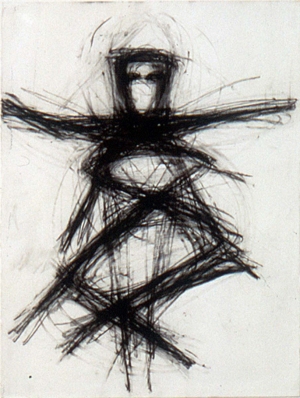
The Art of Repression
When we lift the lid of repression, vital energy is returned to the ego as it takes significant force to hold back a shadow that seeks expression from the dark recesses of the unconscious, like trying to push down an inflatable ball under water that keeps bouncing back up. The vital energy generated from integrating the shadow can be channeled in life-affirming ways, energizing a person to engage life with more freedom, passion, and authenticity.
These repressed parts need not be confined to an inner prison but rather freed and given expression in safe and responsible ways. To this end, the ego can negotiate with the shadow on the timing and method of expressing a repressed part, such as taking a timeout when one feels an intensity of repressed anger, becoming aware of where the anger is really coming from, and then expressing the anger in a calm and assertive manner.
Additionally, repressed aspects that do not conform to daytime conventions, such as qualities judged as “weird” or “loud,” can be expressed in ones private life (e.g., sexual kinks) or through the privacy of one’s imagination, wishful fantasies, or journaling. These qualities can be expressed symbolically through the medium of art, such as writing poetry, listening and dancing to dark music, or even playing the villain role in one’s local theater.
Publically, these qualities can be expressed with like-minded individuals through certain sub-cultures (e.g., heavy metal, cosplay) or in ones night life, in which the cover of dark provides a freedom to express these parts. This is one reason society needs a well-developed night culture that goes beyond drunken partying or mindless bingeing and provides a diversity of outlets for people to express themselves. One colorful example is the Department H Fetish Party in Japan. At this party, individuals shed their daytime personas and embrace their inner weirdness by donning costumes and play-acting characters to freely express their “true passions and true selves” without fear of judgment or embarrassment.

Beyond repressed desires and identities, the shadow can wreak havoc on our personal relationships with partners, friends, and family members. Even though trust, loyalty and harmony are cornerstones of healthy and functional relationships, the shadows of repressed mistrust, disloyalty, and conflict are commonplace. How often do couples tell white lies or keep secrets from one another? Or friends who gossip behind each other’s back, or secretly feel jealous or envious of a friend’s success? Or family members who pretend to be okay and don’t ask for help even though they have hit rock bottom? Rather than openly communicating about these issues, it is not uncommon for people to choose instead the strategy of “sweeping under the rug” in order to avoid conflicts, which may work in the short-run but casts a big shadow of unresolved issues in the long run.
For partnered relationships, a regular practice of open and honest communication can facilitate the repair process when disagreements and conflicts inevitably arise due to individual differences. A helpful framework of communication is the acronym FANOS which stands for feelings, appreciations, needs, ownerships, and struggles that couples share with one another to maintain closeness and transparency, and to bring the repressed or neglected aspects of a relationship into conscious awareness.
For friendships, there may be repressed tensions that may arise from social comparisons and competitive environments that need to be channeled in constructive ways. To this end, healthy competition can be outlet; sublimating natural aggressions and rivalries into sports and games that sees ones opponent not as an enemy but a worthy competitor. And when strict boundaries need to be established with friends who have betrayed or harmed us, the shadow of repressed resentments and grievances can be sublimated into what constitutes a good life for a person, whether it be a successful career, meaningful relationships, or a deep spirituality, because “the best revenge is a life well-lived.”
Regarding family, much of the emotional scars and traumas originate from toxic patterns in our childhood family environments. These familial patterns may have been repressed and forgotten, but may persist beyond childhood through what Freud called “repetition compulsions,” which are unconscious re-enactments of painful experiences, traumatic events, and dysfunctional relationships from the past. Emotional scars can’t heal if they keep getting re-injured by these repetitions that are re-experienced with new counterparts who are unconsciously enlisted to re-enact the roles of the original trauma.
Most people are not conscious of these patterns because the repetitions have become so normalized, akin to the metaphor of fish being the last to discover water. However, a person usually has a vague sense that something is wrong with their family dynamics, and realize that these patterns need to be examined, made conscious, and challenged. Changing these patterns usually involves some form of vulnerability in which a person opens up about their struggles, has a corrective experience that teaches them that healthier alternatives are possible, and takes committed action to challenge these harmful patterns. The commited action needs to be persistent because whenever change is introduced to a family system, there is usually push back from other family members to re-establish the status quo.
According to Jungian analyst James Hollis, a more benign but “unseen” pattern that represses our shadow is our daily routine. Routines are often seen positively as they bring stability, consistency, and predictability to life; however, in the shadow of routine is complacency, redundancy, and an inertia of old patterns that makes us resistant to change. When life gets habituated to a rigid schedule that has people do the same thing day-in and day-out in repetitious fashion, the shadow has no place to express itself. Thus, to disrupt the life-restricting monotony of rigid routines, it is helpful to allow room for spontaneity and even a healthy dose of impulsivity and wrecklessness, as William Blake put it, “If the fool would persist in his folly he would become wise.”
A less foolish method may be engaging in something new, different, and interesting on a regular basis. Novelty disrupts the auto-pilot of automatic thought patterns and going through the motions of life, which neuroscientists refer to as the default mode network. This network is triggered when the mind is not actively focused on a task, left to wander and daydream, and participate in repetitive tasks such as washing dishes and brushing teeth. Small ways to disrupt auto-pilot is to turn washing dishes into a practice of mindful meditation, as did renowned Buddhist monk Thich Nhat Hanh; or brushing teeth with ones non-dominant hand as recommended by neurologist Sudhir Kumar. Larger ways to disrupt our default mode may be found by getting out of our comfort zone and embracing the diversity of people, cultures, and neighborhoods that exist right outside the walls we’ve built around our lives, especially in a multicultural city like Los Angeles with many hidden gems to discover.
To this end, one must take to the streets. Personally, I’m a big fan of street art (e.g., murals, graffiti art, slap stickers) in capturing the shadow elements of society. Unlike curated environments like museums and art galleries that are aesthetically pleasing but somewhat sterile, as if the art is caged inside a picture frame like animals at a zoo; and even though the street is a downtrodden canvass of uneven surfaces and cracked walls, battered by the natural decay of the elements, and polluted with trash and unpleasant smells; life is all about blending the good and the bad, and this contrast is what makes street art all the more beautiful. And like the shadow, street artists are among the most disenfrachised and invisible in our society; underpaid and underappreciated, but at the same time, perhaps the most honest as their art has not been commodified for consumption and profit.
Pretentiousness dies on the streets, leaving only authenticity. Like street art, shadow work is dirty and messy, more likely to bring a person to their knees than elevate them to a some state of higher consciousness. However, it is the descent that allows the ego to bring into consciousness the lost treasures of the shadow. Like the physical realm where precious metals are unearthed from underground mining, Jung stated that “in the shadow is the gold.” And among the shadow’s many treasures, one of the most valuable may be the idiosyncracies that shadow work reveals in a person. And this inner weirdness defies conformity and predictability, and can’t be easily sold to the highest bidder. To this end, James Hollis encourages:
“We are not here to fit in, be well balanced, or provide exempla for others. We are here to be eccentric, different, perhaps strange, perhaps merely to add our small piece, our little clunky, chunky selves, to the great mosaic of being. As the gods intended, we are here to become more and more ourselves.”
Defeat of the Ego
When the ego descends into the unconscious to face ones shadow, the goal is not victory but defeat, as the poet Rainer Maria Rilke put it, “Winning does not tempt him. His growth is: to be deeply defeated by ever greater things.” What is defeated are the false personas, ego-inflations, and self-delusions that the ego must let go in order to connect with a deeper and truer sense of self.
Entering the darkness of our unconscious will inevitably bring up fear and anxiety. One of the most challenging tasks for a person is to sit in a dark room alone with their thoughts and feelings without any distractions, which often brings our worst fears to the forefront of our mind. While most people try to avoid fear, Jung suggests the opposite, “where your fear is, there is your task.” From this perspective, any experience that elicits fear is something to be courageously faced and overcome, which makes way for growth and an enlargement of life.
One of my favorite examples of this principle is Christopher Nolan’s take on Batman’s origin story, in which Bruce Wayne chose the bat as the symbol for his brand of vigilante justice precisely because that was what he feared the most in his youth. One fateful day, a young Bruce accidentally fell down a dry well into an underground cavern that lay hidden beneath Wayne’s vast estate, where he found himself injured and alone in the dark, with a colony of bats shrieking above him. Who knows how long a helpless Bruce had to wallow in fear and despair before his father rappeled down to save him. Upon carrying Bruce in his arms to safety, his father poses a rhetorical question, “why do we fall Bruce?…So we can learn to pick ourselves up.” By picking himself up, Bruce was able to transform his trauma associated with bats into a symbol of courage and resliency.
One of the tasks of fear is unearthing the shadow of repressed memories and traumas that has the ego re-experience the fears of the past. Most adults believe they have outgrown their childhood traumas, especially when their present selves are no longer afraid of their past fears (e.g., bats); however, this belief is often a mis-attunement. The version of ourselves that needs healing is not the adult self, but the more vulnerable younger selves, including the helpless and injured inner child that lays waiting to be saved and held, like Bruce at the bottom of the well. Access to these weaker parts requires the defeat of the macho attitudes that dictate our adult lives so that we can empathetically understand what the more vulnerable parts are going through. This often requires the perspective to look up at life from below, the trust to be carried in arms of a protective figure, and the humility to admit defeat and take in the wisdom of others, as Bruce did with his father.
Decades later, in the Dark Knight Rises, an older Bruce would have to relearn these lessons when he found himself trapped in an underground prison after a humiliating defeat. An angry Bruce trains his body, confident that once his body regains strength he would successfully scale the walls to escape. A single misstep of this climb would mean falling to ones death, yet Bruce arrogantly proclaims to his fellow prisoners that he is not afraid, dismissing their advice that it is not physical strength, but a spiritual “leap of faith” that is the path to freedom. After years of fighting crime as Batman, one can imagine Bruce has vanquished fear from his heart; however, after repeatedly failing the climb with a rope to catch his fall, Bruce realizes that he had over-estimated himself. Knocked unconscious, a demoralized Bruce dreams of his childhood trauma which reminds him of his father’s words, “Bruce, why do we fall?,” and wakes up in distress, gasping for air. In that moment, a wise prisoner tells him that true strength is not found in the absence of fear, but rather its presence because the fear of death is “the most powerful impulse of the spirit.” In response, a humbled Bruce makes himself vulnerable, and admits he is afraid of dying in this underground prison while his beloved Gotham burns with no one there to save it. By accepting his fears, he realizes he must have the courage to make the climb without the rope. Facing his fear of death, he takes the leap of faith and makes it out alive.
The “telos” or the ultimate aim of Batman predestines Bruce to escape the underground prison and go on to save Gotham. Unlike a deterministic view that sees the present as a product of the past, a teleological perspective examines life in reverse, in that the end goal shapes how we make meaning of our past, and asks the question, “what is the ultimate aim that fate has for our fears and traumas?” This inquiry may uncover repressed potentials, motivations, and characterological structures that make up a person’s destiny.
For Bruce Wayne, it was not merely his childhood trauma of helplessly witnessing the murder of his parents that gave birth to Batman. From a teleological perspective, the transformative potential for Batman was always a part of him, laying dormant until fateful encounters with trauma forced Bruce to dig deep within his psyche to actualize his darkest potential. The same traumatic events would have yielded different results for a number of people, but it was the unique way Bruce made meaning and purpose of his traumas that awakened this hidden potential within him. Elaborating on the Stoic principle “Its not what happens to you, but how you respond that matters,” how you respond matters because it reveals your true character, and character is destiny.
Confronting the shadow of our unlived potentials can be just as intimidating as facing our fears, given the disappointments, regrets, and meaninglessness that arises when a person fails to fulfill their life’s calling, as the Gospel of Thomas put it, “If you do not bring forth what is within you, what you do not bring forth will destroy you.” Imagine how Steve Jobs would have felt if he never dropped out of college and started Apple, knowing deep down inside he was destined for something far greater than an ordinary life. When confronted with the shadows of our repressed passions, talents, and dreams, the courage of taking a leap of faith is paramount, especially with no guarantees of success, for a person to engage life with a higher purpose that goes beyond their limited view of themselves.
Even though Batman wore the mask, it was the persona of his billionaire image that needed to be defeated whenever he embodied the shadow of his higher purpose. And in Christopher Nolan’s Batman, this higher purpose was not one of personal revenge or an archetypal embodiment of justice, but captured in a response Bruce gives to Commissioner Gordon in the Dark Knight Rises: “A hero can be anyone. Even a man doing something as simple and reassuring as putting a coat around a young boy’s shoulders to let him know that the world hadn’t ended.” Thus, a higher purpose for Batman was serving as an inspirational symbol for the heroic potential that we all have in courageously facing our fears and showing up for each other during times of need. A hero can be anyone, and sometimes in life, the hero is the shadow, at the defeat of the ego.
Tea with Mara
While it may be the ego’s defeat that gives rise to a deeper and truer sense of self, there are devilish forces within our psyche that we must stand up against and overcome. Integrating the shadow does not mean condoning evil, certain impulses need to be repressed and prevented from being expressed even in one’s imagination due to its corrosive effects on the soul, akin to what John Campbell meant by the lyrics, “you got to keep the devil way down in the hole.” These devilish forces, such as cruel and predatory impulses to abuse, manipulate, and exploit others without any remorse, need to be repressed for the sake of a functioning society, and kept “down in the hole” with the sacred seal of shame.
Shame in the right amount can be medicine, but a poison when excessive. When used judiciously, shame can be a powerful ally against evil. Ideally, shame is attached to a behavior and not one’s entire personhood, and results in social withdrawal both as corrective punishment and solitude that has a person self-reflect, transform guilt (“I feel bad”) into remorse (“I feel sorry”), and work towards reconciliation and atonement.
Since shame is often associated with the disowned parts of ourselves, tracking the emotional breadcrumbs of shame will inevitably lead us to where our shadow is hiding. When the shadow is found, perhaps the first step is for the ego to hear the shadow’s side of the story, and discern whether the shaming was fair or justified.
In the false guise of morality, society often weaponizes shame for social control, such as shaming unpopular opinions, shaming eccentricities, shaming minority groups, and shaming natural tendencies judged as “primitive.” From this perspective, an important task the ego must undertake is to uncouple shame from the parts in which shame was erroneously applied, while judiciously applying shame to the real evils that need to be suppressed.
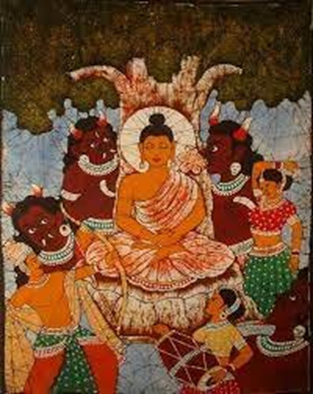
Yet, I am not fully convinced that shaming is the best way to manage the devilish impulses that reside within us. Given that the shadow would need to absorb the repressed evil, this would mean that the shadow will feel ashamed each time the devil comes knocking.
A deeper truth may be found in the allegory of the demon god Mara making a visit to the Buddha. Rather than turning the demon away, the Buddha invites Mara inside for tea, and engages the demon god in conversation. Despite Mara’s attempts to tempt or corrupt, the Buddha does not get pulled away and remains anchored to its essential Self. From this perspective, when the devil appears in such forms as hate, greed, or deception, the ego must realize that it has the freedom of choice in whether to identify with or act on these devilish impulses. And when the ego chooses not to identify, the shadow is spared the burden of consuming the evil.
The ability to remain unaffected by the devil can have a profound effect on the world, as Blaise Pascal wrote, “All of humanity’s problems stem from man’s [sic] inability to sit quietly in a room alone.” This is easier said than done as the devil is not to be underestimated and can be a very convincing liar, such as when traumas have us confuse fear with real danger, or when hate has us misperceive someone as all-bad, or when greed deludes us into believing we do not have enough despite our cups overflowing. Even an ego integrated with the shadow stands no chance. And so, what is needed is for the ego to connect with the most powerful force in the psyche: the wholeness of Self.
(Prior to the next section on the Self with a capital “S,” it may appear out of bounds for a psychologist to dive into such spiritual matters. In response to this critique, it is a helpful reminder that psychology originated as a branch of philosophy prior to being subsumed under the behavioral sciences, and pertained to the study of the “psyche,” which is synonymous with the soul. From this perspective, a true psychology cannot exist without attention to spiritual matters.)
Part 2: The Self
In a past lifetime, I lived near some rocky, desert hills where I would go running and hiking. This place was both refuge and playground for my imagination. Like a blank canvass for a painter, I crafted stories from the obscure rock formations, and one such story was that of a wise gopher standing up on its hind legs watching over me from the summit. One day, I went off trail and sat next to it for a break. I admired this gopher-shaped figure from close up and gazed my attention to where the gopher was looking, out into the horizon, as if it was pointing me to something.
What welcomed me was a view of the vast blue sky filled with majestic clouds slowly shifting into diverse shapes that watched over the windy and slopy path I had just taken. My mind went into rewind, retracing the steps of the hike that brought me to this very moment, back to events earlier that week, to the start of a new job, and further, all the way back to my childhood home. In that moment, I saw my life as a whole, all the ups and downs, twists and turns, and I cried and laughed indiscriminately at both the happy and painful memories.
It was not until years later that I realized what was projected onto this rock formation was my daemon, which in the Soul’s Code, James Hillman theorized is an inner guide that accompanies the soul and provides direction to one’s true purpose in life. The daemon communicates to the ego through an inner voice, as well as epiphanies, motivations, and visions. As my daemon revealed my life unfolding in reverse, I realized that for the soul, time is a never-ending circle. What appeared to be my past was also the path forward, towards a way back Home. Furthermore, I realized that every mishap, closed doors, and painful experiences, which I deemed as unfortunate at the time, had a purpose and was part of a bigger picture.
The Self with a Capital “S”
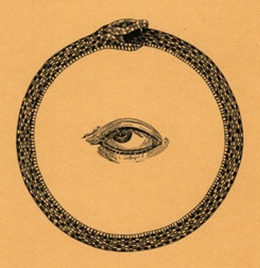
This bigger picture is the Self with a capital “S,” which is the ordering and unifying principle of the total psyche, among which the daemon, shadow, and ego are mere agents. The Self is God-like in proportion, encompassing all aspects of the conscious and unconscious psyche. While Sigmund Freud limited the unconscious to the personal, such as forgotten memories or repressed desires, Carl Jung held a more expansive view, a collective unconscious that is beyond personal.
Specifically, the collective unconscious includes innate instincts, drives, and potentialities universal to all humans, as well as archetypes (“original design”), which are primordial energy patterns that exists in the psyches of all humans across time and space. For example, the archetype of Love is found in all cultures, and existed in the minds and hearts of our ancestors and will persist in future generations.
Jung asserted that the collective unconscious represents an objective psychic phenomenon that is autonomous to the ego. Parallel to scientific inquiries of the natural world, Jung asserted that the psychic world can be understood objectively. However, given its unconscious nature, a major critique of Jungian psychology is that his claims are largely non-falsifiable, which is a factor that differentiates scientific theory from dogma. Whether science or dogma is up for debate; however, critiques that invalidate Jung’s theories may be a product of a limited scope of science.
Modern psychology prioritizes empiricism, which inflates the importance of observable phenomenon, such as behaviors and symptoms; idealizes experimental designs as the gold standard; and legitimizes empirically supported therapies while disregarding approaches that are harder to quantify. Furthermore, modern psychology has a collective shadow with many blind-spots, such as treating the numinous as placebo; a publish-or-perish culture that devalues null findings; and academic ranks that attract ego-identified individuals driven by title, prestige, and power.
While scientists and their institutions are fallible, there is nothing inherently wrong with the scientific method. As a scientist-practitioner myself, I hold science in high esteem, but also recognize that science is one of many ways of knowing and that scientific findings are limited to its methods and can be easily misrepresented, as Mark Twain put it “lies, damned lies, and statistics.”
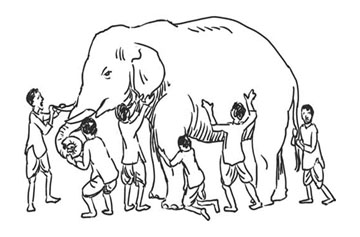
Metaphorically, scientific methods are like the blind-men touching different parts of the Elephant, but none are able to grasp the whole. Similarly, the Self is the whole and cannot be understood with empiricism alone. To this end, Jungian psychology developed robust methods to understand the Self, not with microscopes and brain scans, but with introspective methods such as active imagination and dream analysis. Furthermore, Jungian psychology has given rise to scientifically valid tools such as the Word Association Test and the Myer-Briggs Type Indicator, as well as a plethora of therapeutic interventions, such as Robert Johnson’s “Inner Work,” which details a sophisticated method for Jungian dream analysis and active imagination.
Whether science or dogma, there are similarities between Jung’s view of the Self and the qualities ascribed to God in many religions, such as its omnipresent and omniscient nature. This is not surprising given that Carl Jung had a strong religious background, coming from a family of clergy. However, one major difference is that the Self is bivalent as opposed to all-good. The Self is good and evil, order and chaos, light and dark, center and circumference, and everything in between. Given its all-encompassing nature, the Self and its archetypes are the unity needed to resolve the tension of opposites and maintain balance and harmony within the psyche.
Revisiting Tea with Mara
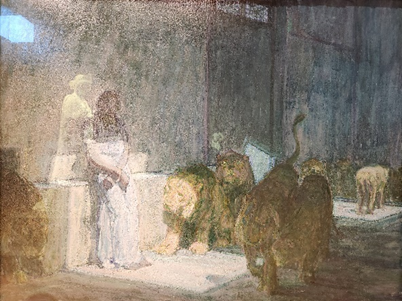
Revisiting Tea with Mara, the Self is the anchor that allows the Buddha to sit unaffected by the demon god’s attempt to deceive, tempt, and corrupt. Not by fighting evil with good, but for the ego to connect with a force more expansive, in which the Devil archetype is one part of a whole, akin to a full deck of the tarot in which is devil card is one of many.
Specifically, when one connects with the Self, the archetype of truth allows a person to see through the devil’s lies and temptations. And when the devil succeeds in corrupting, the archetype of justice will eventually find its way in such forms as a guilty conscience, social justice movements, and the fall of kingdoms and empires. There was a time in which fall of the British empire was unfathomable, but here we are. And even when justice fails, no living being can escape the archetype of death which brings upon an honesty at the end of one’s life that the soul must account for.
Recently, I read about a real-life devil in a Vice article written by Hanako Montgomery, “Japanese Cannibal Who Got Away With Eating and Raping a Dutch Woman Is Dead.” Upon reading, I found myself feeling sad for the victim and her family, disturbed and furious at the atrocity, and my body wanting to puke in disgust. I noticed my shadow condemning this “subhuman” to hell: “shame on you!” Yet, my daemon whispered softly, “this is not the way (Love keeps us kind),” which left me conflicted because I so wanted to hate this guy. I realized in that moment that the answer to my dilemma was right in front of me, the journalism of Ms. Montgomery: balanced, objective, and non-judgmental. Reading between the lines, her writing had an equanimity, a courage in tackling such dark material, and a purpose in shining light on such evils.
This made me think of past mindfulness trainings in which the primary task was to observe and describe the features of an object, such as a raisin, in a non-judgmental way. The latter is easier said than done because we are programmed to judge, whether it be evaluating something as good or bad, right or wrong, like or dislike, and so on.
Judging puts the ego off-kilter, in that a grasping arises when the ego judges something as good, or an aversion arises when the ego judges something as bad. For example, grasping for wealth results in an aversion to poverty, which adds to a person’s suffering when going through financial hardships. Judgments are needed to navigate the world, but the how, why, and to what extent we judge matters. From this perspective, when I judge the cannibal in the Vice article as “a fucked up, sorry excuse for a human,” I am filled with hate and emptied of love. And because violence begets violence, could this mindset have unintended consequences of making things worse?
Rather than getting entangled, the Self expands the perspective of the ego to see this real-life devil for who he is, as Montgomery described the killer as “a man with small hands and measuring under five feet tall.” The scary and intimidating devil often appears giant-sized at first, but size is relative. Humans are like giants to ants, and universe-sized to the micro-organisms in our bodies. Relative to the Self, everything is diminutive including the devil. Furthermore, when connected with the Self, the ego can find the courage to face its greatest fears because something more powerful is on its side. This allows the ego to act swiftly and decisively against such evils unlike the failed legal system that allowed the killer to roam free despite verbal admission and conclusive evidence.

But most importantly, the Self allows the ego to not lose sight of Renée Hartevelt, who was more than just a victim. Ms. Hartevelt was a kind soul whose intention was to help a foreign classmate learn a new language and whose very last moment was the beautiful act of reading poetry. And for the priority to be on supporting the family and friends of Ms. Hartevelt whose lives must have been devastated by this tragic event, starting with the removal of the grotesque images of the heinous crime from the Internet. And to recognize that the soul of Renée Hartevelt remains untainted, that the evil done to her is a mark on the killer and not on her. May she rest in peace and her memory be treated with respect.
Complexes
A trope in psychotherapy is discerning the difference between a trigger and a cause. A trigger is what sets off a reaction, whereas the cause is something more deeply rooted, usually an emotional wound or trauma, that is the original source of the reaction.
With regard to World War 2, the trigger was Hitler’s invasion of Poland in 1939, but the cause was deeply rooted in the aftermath of Germany’s defeat in the first World War that left the once rising empire in economic ruin and its pride deeply wounded. The harsh conditions set forth by the humiliating Treaty of Versailles left many Germans feeling victimized, vengeful, and resistant to the inferior position that Germans now occupied in the world order. This set the stage for the rise of an authoritarian dictator with an extremist fervor to restore Germany’s position in the world.
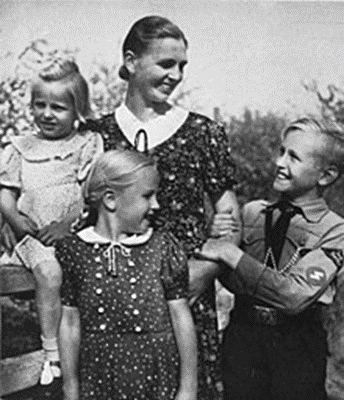
Fueled by propaganda, a cult of personality formed around Hitler’s messiah complex that identified him as the “the Greater German, the Führer, the Prophet, the Fighter, the last hope of the masses, the shining symbol of the German will to freedom” (Nazi Propaganda). Furthermore, a deadly piece of Hitler’s grandiose plan outlined in Mein Kampf was to propagate the identification of German Aryans as the “master race,” which resonated with the wounded egos of a once proud people.
This propaganda shaped the persona of the “perfect Aryan.” Even if one privately disagreed with the persona, it was not safe to do otherwise. And to maintain this perfectionistic image, inferiorities needed to be repressed, which in turn, may have fed a collective shadow that got projected outward, onto neighboring countries justifying invasion and to Jewish people and other minority groups justifying genocide. Taken together, superiority complexes swept through the psyches of Nazi Germany resulting in some of the worst evils ever recorded in human history.
There are many lessons to be learned from the Holocaust so that such atrocities never happen again, one of which is the perils of psychological complexes that go unchecked, such as Hitler’s messiah complex and Nazi Germany’s superiority complex.
Carl Jung placed such importance on complexes that he once considered naming his theory, Complex Psychology. Complexes are hard to define given their unconscious and multi-faceted nature, but usually entail a “compulsive thinking and acting” that envelops a personality with a particular feeling tone. Complexes tend to originate from emotional wounds and traumas or what Jung described as “emotional shocks…that splits off a bit of the psyche.” These split off parts disappear into the unconscious, only to reappear as rogue agents with hidden agendas that no longer heed the will and direction of the ego.
The experience of a complex is that of being possessed, as Jung put it, “complexes can have us.” Like many aspects of the psyche, complexes are autonomous and have the ability to disrupt ego functioning. Specifically, when traumas dysregulate the ego, the ego may hide behind its defense mechanisms and may no longer be in the driver’s seat. This keeps the ego in a trance-like state, such as daydreaming or dissociation. And when the ego is disconnected from present reality, a person’s life is no longer determined by the ego’s conscious choices. This does not mean the person becomes an empty shell, in the ego’s place, a complex may take the steering wheel.
According to Jungian analyst Murray Stein, complexes are analogous to “personality fragments or subpersonalities” that constellate from the split-off parts of the fractured psyche. While these subpersonalities are not inherently pathological, they can become disordered if they are not properly integrated into consciousness: distoring perceptions, dysregulating emotions, and compulsively re-enacting mal-adaptive behaviors.
Because complexes are unconscious, the ego may not be aware that it is in the grips of one, and so, the complex can be easily confused for the true self. A differentiating factor is that the true self is the continuity from the beginning to end of a person’s life, while complexes are borne from salient emotional events and get triggered in certain situations. For example, individuals with inferiority complexes tend to be highly identified with self-doubts and insecurities. However, their life history may reveal that they have been confident in other stages or contexts of their life. Furthermore, while the true self is able to connect with a wide range of emotions, complexes are restricted to a narrow bandwidth of emotions that have an intensity to them, such as an inferiority complex restricting emotions aside from insecurity and doubt, which leaves little room for self-confidence.
It behooves the ego to makes haste in resolving complexes when they arise, or else they can strengthen and solidify both psychically and even physically, in terms of neuro-plastic rewiring of the brain by the sheer repetition of compulsive patterns. This presents a great danger in making a person’s life progressively more rigid, narrow, and unconscious. The complex effectively becomes the “second ego” that runs a person’s life from the unconscious, usurping the conscious rule of the ego. Ancient times called this demon possession, Jung used the language of complexes. In both cases, darkness has overtaken the light.
On a societal level, Jung adamantly warned against the potential dangers that unconscious forces, like complexes, can have on the world if left unchecked:
“The supreme danger which threatens individuals as well as whole nations is a psychic danger. Reason has proved itself completely powerless, precisely because its arguments have an effect only on the conscious mind and not on the unconscious. The greatest danger of all comes from the masses, in whom the effects of the unconscious pile up cumulatively and the reasonableness of the conscious mind is stifled…It is therefore in the highest degree desirable that a knowledge of psychology should spread so that men can understand the source of the supreme dangers that threaten them. Not by arming to the teeth, each for itself, can the nations defend themselves in the long run from the frightful catastrophes of modern war. The heaping up of arms is itself a call to war. Rather must they recognize those psychic conditions under which the unconscious [tsunami-like] bursts the dykes of consciousness and overwhelms it.”
Archetypes
James Hillman, founder of archetypal psychology, speaks about archetypes not as static blueprints, but “living forces” that actively shape a person’s life, akin to gods and goddesses meddling in human affairs from ancient mythology. From this perspective, a human being is less an autonomous figure and more a field of experience in which the divine drama of archetypal energies play themselves out, as Jung put it:
“Through the Self we are plunged into the torrent of cosmic events. Everything essential happens in the Self and the ego functions as a receiver, spectator, and transmitter.”
When an archetype manifests in a person’s life, it is wise for the ego not to get over-identified, given that archetypes are bi-valent having both positive and negative sides. For example, an over-identification with the archetype of justice may form a self-righteous morality that imposes rigid rules upon others. This over-identification may leave a person blind to their own sins, as it is common for people committing evil to think they are on the side of good.
An interesting aspect of archetypes is their relationship to complexes, creating a bridge between the collective and personal unconscious. Specifically, the split-off parts of the psyche that constellate into a complex are not aimlessly floating around in our personal unconscious, but rather, they organize and cluster around an archetypal core. This archetypal core infuses the complex with a compulsive energy that has the potential to undermine ego functioning, as Jung described:
“When a situation occurs which corresponds to a given archetype, that archetype becomes activated and a compulsiveness appears, which, like an instinctual drive, gains its way against all reason and will.”
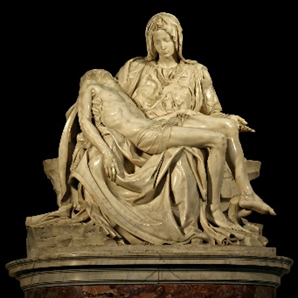
This is a primary reason why complexes are often identified with an archetype, such as a mother complex corresponding with the Great Mother archetype. To illustrate this point, the archetype of the Great Mother is more than an idealized image of a mother’s unconditional love that gets projected onto the real-life mother, it is what drives an infant’s instinct to seek out nurturance and care, which is a biological imperative given that infants are dependent on their caretakers for basic survival. This dynamic sets the stage in subsequent developmental stages to preserve the image of ones mother as “good” at all costs, which may include splitting off the “bad” parts of the mother from consciousness.
Based on the unique dynamics with the real-life mother, a complex may develop for parentified children with struggling mothers who depended on them for adult needs. This complex may take the form of “saving” their mother at the expense of their own needs and limits, a pattern that may persist into adulthood in the form of co-dependent relationships. For others, a complex can form for children who were triangulated (e.g., used as a mediator, pawn, or scapegoat) in their parents’ marital conflicts. These children may blame themselves for the family dysfunction, which may result in a persistent guilt that cannot be easily resolved because the guilt was never attached to anything they did wrong. Furthermore, a complex may develop for children with mothers who were chronically invalidating and who failed to mirror the child’s positive qualities. In order to preserve the idealized view of mother, the child may internalize these criticisms, resulting in chronic low self-esteem and poor self-confidence, despite demonstrated strengths and real accomplishments.
By making complexes more conscious, we can ensure the split-off aspects of the psyche do not run amok in our lives. To this end, Jung recommended finding ways to communicate with complexes, which often take the form of inner voices or personified figures in dreams, with whom we can engage in dialogue through active imagination. And when the ego puts aside its fear and resistance, it can see that complexes are the “architect of dreams and symptoms,” as Jung put it, that alerts the ego to the deeper cause: a rupture with an archetype that is at the core of the complex.
To this end, it is the ego’s task to restore an integrated relationship with the archetype at the core of the complex. One way is to connect with and experience the full range of an archetype; thereby integrating the split-off aspects back to the whole. For example, the Great Mother archetype not only includes the image of the “good” mother but also the “terrible” mother, with the latter being denied from consciousness through the complex. This complex may have formed because the “terrible” aspects of the real-life mother could not be integrated for a myriad of reasons; for example, a narcissistic mother may have prohibited the child from ever seeing her in a negative light despite the harm she may be inflicting.
Given the universal aspect of archetypes, access to the Great Mother need not be limited to ones real-life mother, but through a wide range of maternal figures in a person’s life, which may include godmothers and grandmothers; teachers and therapists; mentors and role models; and even spiritual figures like the Blessed Virgin Mary for Catholics, or the divine feminine energy of Shakti for Hindus, or Guan Yin the Goddess of Compassion for Buddhists. Through real or imagined relationships with healthy maternal figures, the ego may have corrective experiences in which they are able to express their grievances and not be made to feel guilty, ashamed, or abandoned, but instead, be responded to with curiosity, empathy, and compassion.
To get a felt-sense of a corrective experience, an experiential exercise you may consider is to audio record and play-back the following message from James Hollis, imagining you are listening to the Great Mother disguised in your own voice, and notice what arises within you:
You are precious to us; you will always have our love and support; you are here to be who you are; try never to hurt another, but never stop trying to become yourself as fully as you can; when you fall and fail, you are still loved by us and welcome to us, but you are also here to leave us, and to go onward toward your own destiny without having to worry about pleasing us.
For someone with a mother complex, boundaries may need to be established with the toxic dynamics of ones real-life mother; however, an expansive view of the Great Mother archetype provides the ego opportunities for new experiences that challenges the old patterns of a mother complex. A corrective experience can have profound effect, in that there is no going back when a child experiences for the first time, even momentarily, a maternal figure that can hold both the “good” and “terrible” projections of the child with equanimity, without getting inflated by the former and destroyed by the latter, and still maintain unconditional love for that child. Such corrective experiences presents a realm of possibility beyond the inflexible patterns of a complex, making way for new attitudes, perspectives, and expressions of life.
This is the power of archetypes: they hold the latent potential of a person to reach the greatest heights and the darkest depths of human experiences. Its incredible that this power exists in the psyches of all human beings, ready to be activated at any moment when the right conditions arise. Thus, in an instant, everything can change; and everything we need in life is already within us. While only aspirational, fully actualizing this potential is encapsulated in a short but profound quote that Jungian analyst James Hollis often cites from the ancient Italian playwright Terence: “Nothing human is alien to me.” And for humans, there is nothing alien about archetypes: these sentient forces are the inalienable truths of our divine nature that connects us to the whole of humanity and beyond, corresponding with Jung’s grandiose view of humans as the “microcosm and eidolin of the cosmos.”
The Self-Cure
However grandiose Jung’s claims of humans and the cosmos, a more grounded approach (Earth to Jung!) is needed to apply the principles of Jungian psychology in a practical manner. And there is nothing more grounded than examining the healing potential of these principles on the human body.
Just as the body has built-in healing mechanisms, the Self has mechanisms to heal a wounded psyche. In the same vein that bodily symptoms communicate the presence of an underlying disease, illness, or injury, Jung advised leaning into rather that defending against neurosis (e.g., anxiety, depression), to understand the inner meaning and purpose of what the psyche is communicating through the symptoms of mental illness, “We should not try to get rid of a neurosis, but rather to experience what it means, what it has to teach, what its purpose is…Neurosis is really an attempt at self-cure.”
With regard to the neurosis of trauma (e.g., PTSD), a major thesis of Bessel Van der Kolk’s “Body Keeps the Score” is that traumatic energies get stored in the body long after the traumatic event, even decades later. One way the body remembers is through our neuromuscular system in which the affected muscle groups repeatedly contract in reaction to persistent trauma triggers, which in turn, does not allow these muscles to release tension despite the original threat no longer being present. Over time, the muscle contractions become habituated and we lose voluntary control over relaxing these muscles. When these contractions become chronic, the “antagonist” muscles that relax and lengthen in response to the contracted “agonist” muscles eventually weaken from underuse, undermining the balance and stability of the entire body. According to psychoanalyst Wilheim Reich, these chronically constricted muscles habituate a “body armor” that restricts the flow of life energies and emotional expressions.
The body keeping the score is a both a curse and a blessing. While painful and disruptive, the somatic symptoms of trauma provide a roadmap to the original traumatic event that the ego may have repressed or forgotten. By rewinding these symptoms, the memories and experiences of the traumatic event can be reconstructed. As a therapist, I have witnessed firsthand the body’s amazing ability to uncover repressed memories. When clients cultivate a deeper level of body awareness, it is not uncommon for repressed memories to surface, which can be cathartic and provide insights into the forgotten traumas that may be the original source of their chronic pain or other bodily discomforts.
Because of the ego’s defenses to avoid feelings and memories from past traumas, there may be gaps in memory that are difficult to recollect. However, psychic healing does not require a forensic reconstruction, the accuracy of the physical facts matters less than what resonates on an intuitive level. Self-examination can be the crucible from which these traumatic memories can be unearthed, by exploring when else, where else, and with whom these emotions and physical sensations were felt in ones history. And any gaps in memory can be filled with insights from an unconscious that does remember.
One bridge to the unconscious is dreams. Sigmund Freud stated that dreams are the “royal road” to the unconscious. For Jung, the dreams are seen as having a compensatory function, to satisfy needs missing from one’s waking life. Sometimes this compensation is ego-congruent, such as a widow dreaming of a deeply missed husband. But not always. For example, high achieving individuals may have nervous dreams of failing, but failure may be what is needed to humble an inflated ego. Alternatively, nightmares may surface for survivors who repressed their traumatic past but need to face them in order for healing to occur. And for Ebenezer Scrooge, was it not his dream of death that transformed him upon waking? There is value in understanding dreams so that the ego can work in concert with the unconscious, and not against.
A second bridge to the unconscious is imagination. In the dimension of imagination, things work differently. In the physical world, we see to believe, but in the imagined world, we believe to see. And these beliefs shape the stories we have about ourselves, others, and the world. Even though many adults have outgrown fairy tales, most live in a story, they just don’t realize it. Rather than live out the story unconsciously, Jung developed the technique of active imagination to make these stories more conscious. While there are many creative ways of doing active imagination, one element is personifying elements of our psyche, such as complexes, in order to communicate and shift the ego’s relationship with them.
Active imagination goes beyond make-believe and figments of imagination. Active imagination respects the autonomy of these psychic forces, such that the ego does not force a response, but may ask questions and await a response, which may come in a variety of forms such as symbols, emotions, and visions. The practice is also not limited to meditative posture, active imagination can be expressed in a diversity of ways, such as writing, dancing, singing, and painting.
Taken together, Jungian analyst Robert Johnson added that the healing process leads to psychological growth, “if you find the psychic wound in an individual or a people, there you also find their path to consciousness. For it is in the healing of our psychic wounds that we come to know ourselves.”
The NeverEnding Story
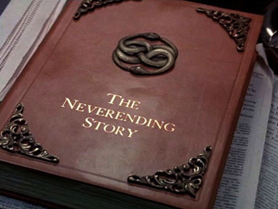
Life imitates art. There are moments in life when a piece of art resonates with the core of our being, such as a painting that reminds us of our childhood, a song that lifts us from depression, or a movie that inspires us to make important changes in our life. For countless children, how did the cathartic experience of endlessly singing Frozen’s “Let it Go” shape their sentiments in real-life? On a deeper level, a profound experience of art may activate archetypal patterns in our unconscious psyche that inspires meaningful changes in ones real-life.
In Jungian psychology, the art of story-telling in the form of myths and fairytales holds special value. Whether conscious or not, we all carry a personal mythology that reflects how we make sense of our past and foreshadows future possibility. This personal mythology is not only unique to our lives, but also derivative of archetypal themes found in myths and fairytales that encompass the collective wisdom of our shared humanity. Thus, by identifying the collective mythos that resonates with our personal story, we gain a road map for not only understanding our personal unconscious, but also the collective unconscious that seeks expression through our lives.
This is a reason why Jungians apply the same rigor of dream analysis in understanding the deeper meaning of myths and fairy tales, as if they are collective dreams. From this perspective, everything that happens in a particular mythology represents the dynamics within a single person’s psyche. And just like dream analysis, the process of analyzing myths and fairytales puts us in the seat of an observing ego or a witness consciousness that sees what’s happening from above, like a narrator in a book, rising above the suffering that the characters in the story must undergo to achieve their transformation.
In this vein, one of my favorite movies from my childhood was, “The NeverEnding Story,” originally a novel by German writer Michael Ende. This movie was my first exposure to Jungian psychology, as the story is rich with Jungian archetypes and symbols. As a child, I related to the main character, Bastian (the ego) who was a timid, ten-year-old outcast, bullied at school, and had just lost his mother to an unspecified illness. Bastian found refuge in books, and one ominous day he stumbled upon an old bookstore while escaping some bullies. There he comes across a mysterious book that he feels an unexplainable desire to read.
In the attic of his school, Bastian starts reading and enters the world of Fantasia through the point of view of his shadow, a young warrior named Atreyu who had the courage and strength that Bastian lacked in real-life. Remember shadows can be positive. Bastian learns that Fantasia is in grave danger, from a super-natural force called the Nothing devouring everything into a void of emptiness, which reflected Bastian’s loss of hopes and dreams in real-life. Furthermore, like his real-life mother who died of illness, the matriarch of Fantasia, the Childlike Empress is also dying of a mysterious illness, and it becomes Atreyu’s mission to find a cure.
Together they traverse such landscapes as the Desert of Shattered Hopes and Sea of Possibilities to find a cure. And in one heart-breaking scene, they enter the Swamps of Sadness, that once may have been a wetland where sadness flowed like water, but now had become a dark and muddy terrain that the heroes must slog through. This swamp is known to take the lives of those who give up hope. While Atreyu is protected by an emblem given to him by the Empress, the swamp is too much for his beloved horse Artax, despite Artreyu’s desperate but failed attempts to save his trusted companion. Grief-stricken, Artreyu wails out his love and sadness in their final moments together as Artax dies in his arms. A witnessing Bastian tearfully empathizes with Atreyu’s pain, creating an emotional bond over grief.
As the journey proceeds, the fourth wall between Fantasia and Bastian’s world begins to break down. Just as the inner forces of the Self are autonomous, Atreyu begins to sense Bastian’s presence. And during a test to meet the Southern Oracle, Atreyu looks upon a magic mirror gate that reveals his true self, an image of a boy reading a book in an attic, symbolizing the conscious integration of ego and shadow. Together they learn from the Southern Oracle that the cure requires a human child to give the Empress a new name, reflecting the psyches ability to renew itself.
By the time Atreyu returns with news of the cure to the Ivory Tower, where a dying Empress rests, the Nothing has devoured nearly all of Fantasia. Atreyu believes he has failed but the Empress reassures him that there is still hope. And this hope was symbolized in the Auryn, which was a protective medallion gifted to Atreyu at the start of his journey, the same one that graced the cover of the book Bastian is reading. This symbol of light and dark serpents, geometrically entwined in infinitude, represent the bond between Bastian and Atreyu. And this bond is the key to saving Fantasia.
The Empress reveals the true nature of Fantasia, a world created by the dreams and wishes of all people. And as if the story was not meta enough, it goes even further when the Empress tells Atreyu, “just as he is sharing all your adventures, others are sharing his,” enlisting the viewers into the rebirth of Fantasia, hence the NeverEnding story.
At first Bastian is in disbelief that he is the true hero. However, the emotional journey had transformed Bastian, a process that provided healing for his grief and depression and connected him to the courage and strength that was buried in his unconscious. A courageous Bastian approaches an open window and yells out into the dark and stormy night the new name for the Empress. In that moment, Bastian is transported to the Empress who bestows upon him the last grain of sand from Fantasia and the power to restore this magical world through his dreams and wishes. And with Bastian’s first wish, a new Fantasia arises.
(An interesting note about the book is that the movie is only its first half, and in the second half, Bastian becomes an ego-maniac committing all kinds of atrocities. Bastian failed to heed Nietzche’s warning, “He who fights with monsters might take care lest he thereby become a monster.” Perhaps this too is Jungian, relating to the concept of enantiodromia that an extreme eventually turns into its opposite. However, Bastian’s downfall is another story and shall be told another time.)
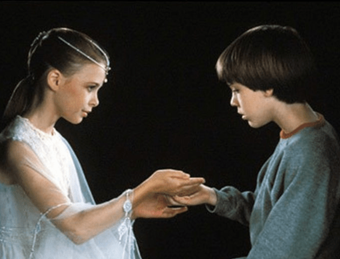
Anima and Animus
In the NeverEnding Story, if Fantasia was the collective unconscious, the Empress symbolized the archetypal image of the anima. According to Jung, the anima and animus are contrasexual archetypes that personify the inner feminine in males (e.g., other-oriented, nurturing, emotional, creative, relational), and the inner masculine in females (e.g., self-oriented, empowering, rational, problem solving, independent). Jung referred to the anima/animus as the “soul-image,” the mirror opposite of the ego’s gender-dominant persona. From this perspective, Jung theorized that a balanced personality forms from integrating the anima for males, and the animus for females, as the true nature of the psyche is androgynous. And because the images of our anima/us exist in the unconscious, it takes a deep dive into the inner world of projections, dreams, and imagination to come into contact with this incredible archetypal force.
Perhaps a reflection of the times when Jung coined the terms “anima and animus” over a century ago, the original concept is gender binary and may need updating. Given the current paradigm that views gender as a social construct existing on a spectrum, a non-binary approach may eschew the gendered language when describing the qualities of the anima and animus (e.g., love and power, eros and logos). Regardless of whether the gendered language is obsolete, a relationship with the anima/us remains an important bridge to the collective unconscious in Jungian psychology.

According to Jung, the anima/us manifests in many forms in a person’s lifetime, as Jung wrote about the anima in males, “Every mother and every beloved is forced to become the carrier and embodiment of this omnipresent and ageless image, which corresponds to the deepest reality in a man.”
For Bastian, the earliest carrier of his anima was likely his mother who passed away at the beginning of the Neverending Story, which set off an inner journey through Fantasia to overcome the emptiness of his depression, and renew the image of his anima in the form of an Empress, whose mission of restoring Fantasia became his raison d’etre. And in the final act, Bastian accomplishes this feat by realizing the true identity of the Empress is the same archetypal image that was once projected on his Earthly mother. With this realization, Bastian proceeds to give the name “Moonchild” to the Empress, which was implied to be his mother’s surname in real-life. What would you name your own anima or animus? And it is Bastian’s loving devotion to the Empress that restores Fantasia to its full glory after it had been pulversized to a grain of sand by the Nothing. In both fairy-tales and real-life, finding something to love again after a major loss is essential to healing the deep wounds of grief and heart break.
While children may project their anima/us onto parents and teachers, from adolescence onward, the encounter with the anima/us is often experienced as romantic love. Because the psyche seeks wholeness, there is an emotional drive when a compatible person resonates with the anima/us within. Who a person falls in love with is less a choice of the ego and more a projection of the anima/us (e.g., love at first sight). This may be a reason why when we fall in love, we feel instantly at home because psychologically the image of our beloved has been with us our whole life, albeit unconsciously.
The archetype of the anima/us provides the image of “the one” that gets projected in the early, passion filled stages of dating in which the loved one is idealized and put on a pedestal. This creates a strong attraction in which the heart yearns for the loved one and the mind can’t stop thinking about them. And when a relationship is actualized, there is a feeling of completion, as Robert Jonnson put it, “When we are “in love,” we feel completed, as though a missing part of ourselves had been returned to us; we feel uplifted, as though we were suddenly raised above the level of the ordinary world. Life has an intensity, a glory, an ecstasy and transcendence.”
Ideally, this love is reciprocated and a partnered relationship develops that mirrors the inner relationship with ones anima/animus. According to Jung, the beloved who carries the image of our anima/us often bears the traits and features that represent the hidden potentials of a person’s personality. By learning from and experiencing life together with ones “better half,” the relationship becomes a catalyst for psychological growth, which may be a reason why opposites attract. We are drawn to those who help us most to grow.
It is the ego’s responsibility to steward this relationship. However, the ego often gets in the way of this growth for a variety of reasons, such as when it lacks courage to fall in love or believes it is undeserving of love. Furthermore, a relationship may not work out even though the heart is fully convinced it is meant to be, such as unrequited or forbidden love, misplaced projections, or the timing or situation not being right.
Thus, it behooves the ego to discern the anima/us projection from the realities of life, or else a once-idealized relationship may turn into a nightmare, as Murray Stein put it, “…the anima is the wrecker of conventional marriages and careers.” This discernment is incredibily important because selecting partners based on romantic projections is a fickle way of living. If the anima/us is compensatory to our persona, these images may change as our personas adapt to the shifting demands and circumstances of our lives. Inevitably, the “in love” feelings from the earlier “honeymoon” phase eventually fade when these shifts occur. This brings a challenge for couples when one or both partners fall out of love and their respective anima/us seeks expression through another. Unconsciously navigating this transition without discernment can lead to all kinds of major life disruptions (e.g., affairs, divorce).
Failure to discern projection from reality reveals the darker side of anima/us archetype, which Jung equated to the Hindu Goddess Maya, “who creates illusory worlds, and the ego ends up inhabiting a world that is largely based on projections.” As those “in love” can attest, the powerful experience of falling in love is so numinously captivating that Murray Stein stated that only the “Kundalini masters and others like them” have the psychological discernment to not get swept away by the “transcendental features” of the anima/us experience. According to Robert Johnson, this failure of discernment is “…why men and women put such impossible demands on each other in their relationships: We actually believe unconsciously that this mortal human being has the responsibility for making our lives whole, keeping us happy, making our lives meaningful, intense, and ecstatic!”
When we superimpose this projection onto our human partners, extreme disappointment is the likely result and the once lovely image of the anima/us can turn into something dark and sinister. When lost in projections, a “they can do no wrong” can turn into “everything is wrong about them.” Thus, it is wise to heed the warning of Jungian analyst Esther Harding who suggests that along with the images of Goddess and God, the anima/us archetype also contains the images of the Witch and the Devil. And when it comes to Witches, who knows if the image projected is one of a formidable but fair Hermione, or a raging Baba Yaga out for blood. This dynamic is clearly evident when one asks a man going through a contentious divorce, how he sees and feels about his ex-wife now compared to when they first started dating. This sad man’s response will undoubtedly affirm Jung’s prescient view that “the greatest blessing in this world is the greatest curse in the next.”
According to Robert Johnson’s “We: Understanding the Psychology of Romantic Love,” insights into resolving the tension between projection and reality can be gained from understanding the origins of romantic love, when it began to emerge into our collective consciousness around the 12th century. One of the earliest manifestations of romantic love was “courtly love,” which was modeled after “the brave knight who worshiped a fair lady as his inspiration, the symbol of all beauty and perfection, the ideal that moved him to be noble, spiritual, refined, and high-minded,” not unlike what the Empress symbolized for Bastian in the Neverending Story.
Unlike the modern secular and sexualized view of romance popularized by Hollywood, the original intent of courtly love was “idealized as a spiritual relationship between man and woman,” and did not involve marriage or sex as “to do so would be to treat her as an ordinary woman,” while “courtly love required that he treat her as a divinity, as a symbol of the eternal feminine.” These spiritual boundaries were purposeful, as it not only kept the passion alive but intensified it, as Robert Johnson put it, “they suffer intense desire for other, yet strive to spiritualize their desire by seeing each other as symbols of the divine archetypal world and by never reducing their passion to the ordinariness of sex or marriage.”
Those “in love” often attest that being denied ones lover only makes the passion even stronger, which is a reason why parents should not be too restrictive when their hormone-filled teenager falls in love, or else the teenage lovers will fall further into Maya’s illusory grip that increases the risk of life-altering consequences like attachment traumas and unplanned pregnancies. In such cases, a limerence reaction may arise in which the person disregards red flags, obsesses over the beloved, and has difficulty letting go, leaving them emotionally tormented or unavailable to anyone else, as the wise kid in the movie Love Actually put it, “what is worse than the total agony of being in love?” A love un-actualized can be very painful: heartbreak, unfulfilled longings, and grief for what was and what could have been. The ego must mourn these losses to find closure and move on. However, if the pain is too much, the ego may bury its love to protect the heart from further injury.
A hopeless romantic may despair over these negative outcomes; however relating to the anima/us as a spiritual experience provides another way forward. Rather than condemning these feelings, the incredible suffering that arises from being apart from ones beloved can be met with compassion and empathy, and provided spiritual guidance that helps the lovelorn sublimate their passion into “poetry, song, love stories, and plays,” which in pre-modernity was referred to as “romans” and later anglicized to the familiar term of “romance.”
From this perspective, it may be helpful to privately channel the desires of romantic love (e.g., no-send letters) while respecting interpersonal boundaries; to love but not touch. The romantic interest can even be seen as a muse-like figure that inspires creativity, such as writing poetry or composing music. How many love songs ever happened in real-life? Furthermore, romantic fantasies can be an outlet, in which one experiences the feelings, desires, and needs of being in love through imagination. One can even embody these fantasies through dancing or singing. Lastly, a person can love their romantic interest from a distance, such as praying or rooting for them, being a good friend, or even confessing ones feelings but committing to boundaries. Even though these romantic expressions may never reach the loved one, they are not in vain because an actual relationship with ones anima/animus is taking place.
Thus, the resolution between the tension of ordinary, human love versus divine, romantic love is to honor and deepen both sides of the dialectic, living out the former as an embodied human relationship grounded in practical reality and the latter in the realm of spiritual reality “as an inner ideal, a path to the inner world.” According to Robert Johnson, it is “…when we fail to live the inner world as symbols, when we try locate it in literal people, that the illusory world is created. The illusory world is the projected world, which so distorts both inner and outer that we can see neither as it is.”
The first step in resolving the muddled confusion of the inner and outer is for “a man…to withdraw the projection of anima from the women in his life. This alone makes it possible for anima to perform her correct role within his psyche. This alone makes it possible for him to see his woman as she is, unburdened by this projections.” Correctly relating to the anima/us archetype inwardly and to ones partner outwardly allows a person to fully experience life in both its Heavenly and Earthly realms.
A withdrawal of the anima/us projection reveals that the image of the anima/us had always “belonged to him.” This dynamic is beautifully expressed in a scene from the movie Adaptation, in which the main characters who are twin brothers have a conversation about an unrequited love from Donald’s past:
Donald: I loved Sarah, Charles. It was mine that love, I owned it. Sarah didn’t have the right to take it away. I can love whoever I want.
Charlie: But she thought you were pathetic.
Donald: That was her business not mine. You are what you love, not what loves you.
For Donald, the image of his anima was projected onto a person named Sarah, but “the one” is not an attribute of the other but a quality that exists within. In Jungian psychology, when a projection becomes conscious, it is the ego’s responsibility to return the projection back to its original source, to oneself. This means that the same passion we have towards a romantic interest can be directed inward: loving oneself as we would a lover.
Active imagination with the anima/animus is one way to access this inner love. For example, when a romantic fantasy arises, see yourself from the eyes of your lover, and feel what your lover feels about you. Allow these sights and feelings to come to you. And sit with how this makes you feel. With regard to emotional pain, imagine crying in the arms of your lover, letting out your sadness and frustrations, while being held by the warm embrace of their unconditional love. Does this open your heart? Lastly, simply ask your anima/animus, “call me by your name.” And feel into yourself, and sense what your lover wants and needs to feel loved, and love yourself in these ways.
Perhaps the deeper reality of this archetype can be deduced from Jung’s choice of the words “anima/us” which is Latin for “Soul.” From this translation, to love ones anima/us is akin to an ego loving its own soul. And when we love ourselves at the deeper level of soul, a power surges from within that brings vitality and color back to life, as Jung put it, “That power within, which constantly urges us to experience our unlived possibilities and values, is the most awesome force in human life. Anima is that force for men: She is the soul. No wonder, then, that men see her as a goddess, she who alone can make their lives worth living.”
The Power of Love
In “Soul Mates,” Thomas Moore writes, “Love is an alchemical process in which we are the material to be transmuted.” Jungian analyst Robert Johnson describes alchemy as a metaphor for a psychic process that “separates out the entangled threads of one’s inner life – the confused values, ideals, loyalties, and feelings – so that they may be synthesized in a new way.” Thus, the experience of love “transmutes” a person and their relationships into a more harmonious integration of the paradoxical aspects of life.
A cliché worth repeating is that a person needs to love themselves first before being able to give love and receive love from others. This parallel process between self- and other-love can be transformative, as it was for Bastian whose loving devotion to his anima, as symbolized by the Empress, beset him on a journey that connected him to the “unlived possibilities of his own secret heart.” Even though this transformation occurred in Bastian’s inner life, the mere experience of loving a force deep within will eventually seep out to ones outer life, as it did for Bastian when he stood up to his bullies in real-life. Bastian discovered a love within himself worth protecting and fighting for at all cost.
In the outer reality of human relationships, this alchemical process shifts the ego’s perspective from seeing differences in relationships as complementary strengths, and deficiencies as opportunities to support and encourage each other, for the sake of mutual growth. This process recognizes that a concerted effort is needed to maintain relationships, such as improving communication, empathizing and understanding, and taking responsibility for both intentions and impact.
This often involves a person putting aside their ego for the sake of the relationship. This makes way for a durable attachment that emboldens the ego to withstand and work through the “thick and thin” of a relationship. And for those still searching, when we fully accept ordinary human love, we let go of our idealistic standards. We become less prone to swiping left on a dating app, and focus more on developing the qualites that would make oneself a good partner, because we can only truly change ourselves, not others.
In reciprocal fashion, the same love can be extended inward to all aspects of ourselves, including the good, bad, and ugly parts. To accept ourselves just the way we are. This does not mean we don’t challenge ourselves to grow and evolve. A higher form of love holds oneself accountable, because growth comes from an honest examination of the unintegrated, undeveloped, and dysfunctional aspects of ourselves that seek cultivation and resolution. To this end, the ego may work towards mediating conflicts, repairing ruptures, reconciling differences, and restoring love between parts of the psyche that have become divided.
Love does not harm. And when this love is directed inward, it holds the ego accountable for resolving the ways we harm ourselves, as we are often our own worst enemy. And perhaps the part that needs the most love is our bodies, which we often objectify, dominate, exploit, neglect, shame, and traumatize. Worse is when we violate boundaries and harm the bodies of others. When we consider all that our bodies do for us, it is the ego’s hubris that falsely believes it is above the body and thinks it can do anything it wants with it; in such cases, repair and reconciliation is in order.
We can start by appreciating the body for being there for us since day one, going through the scary and painful ordeal of childbirth before the ego could even form memories. And from our early years, it was the body’s instincts, drives, and reflexes that signaled to caretakers its organismic needs; its immune system that continues to protect us from infection and disease; and its reproductive system that will ensure the survival of our species. Unlike the ego that ruminates about the past and worries about the future, the body is always grounded in present reality, the only dimension of time in which the ego has true agency and freedom. For good reason, most religions see the body as a temple that houses our divine nature, the least we can do is take care of the body’s basic physiological and safety needs, which according to Maslow’s hierarchy of needs, are pre-requisites for the ego reaching its lofty goals of self-actualization. And for the scientifically oriented, one can’t deny that our bodies evolved from millenia of natural selection that carry the genetics and heriditary traits of our great ancestors who survived unseen dangers so we can be alive today.
On an emotional level, an inner culture of love can be cultivated within the psyche by way of the anima/us. Once cultivated, this self-love can be readily available as an emotional resource even when real-life relationships are not going one’s way. This culture of inner love is the counterforce to what Jung warned against when we lose touch with our anima/us, “…permanent loss of the anima means a diminution of vitality, of flexibility, and of human kindness.”
You may know individuals who have cultivated this culture of love within themselves. There is a certain glow to them, they exude love and compassion from the pores of their skin, and one instantly feels seen and held by their mere prescence. These are the people who make friends out of strangers and enemies, not because they are charismatic or socially adept, but their calm-abiding presence has a way of putting others at ease, their holistic sense of self makes them relatable on so many levels, and they treat everyone with same kindness and respect regardless of their station in life. Unmuddled by internal conflicts, they can see clearly with equanimity which makes them a well-spring of wisdom and guidance. Their depth of character gives them substance and complexity, but they don’t take themselves too seriously, with a sense of humor that brings laughter and levity, especially during heavy times. These are the people we want as our leaders and role models. These people are the transmutations of love.
When a person truly loves themselves, the Self with a capital “S” will love back, which can be powerfully healing and transformative. From a polytheistic view, the inner world of the psyche is populated by a diversity of archetypal forces and figures in service of the Self, just like Fantasia with its expansive cast of mythological creatures and characters that swore allegiance to the Empress. Likewise, when the Self emerges into consciousness, our interior comes fully alive, with an equanimity towards the flourishing of life and the languishing of death, not with a cacophony of conflicting voices, but as a united collective that offers up its powers and wisdoms, and faithfully heeds the ego’s will and direction. The loving bonds that the ego cultivates with the plurality within – the personas, the Shadow, the complexes, the archetypes, the Anima/us, and so on – form a sense of inner belonging that holds up the ego during the most difficult times in life.
The archetypal images of love from the Self has many levels, the depths of which are mostly unconscious and even defended against. Its easy to love someone that is lovable, and much harder to love someone who has wronged you, and what level is needed to love someone as vile as Hitler? Despite the unforgivable atrocities he and his Nazi cronies inflicted, if we dare to have empathy for Hitler, perhaps seeing him as a broken man possessed by deadly complexes, completely estranged from his anima, devoid of any real love, and his soul eternally suffering in all nine circles of hell, could we muster even an ounce of pity for him? Even the Devil needs love, perhaps most of all, recognizing that its isolation from love is what may have driven the Devil to the extremes of wickedness. This does not mean we condone the unforgivable, we can love something and still stand against that thing with every moral fiber of our being, the latter being its own kind of love. To love the most despicable among us, could that get us to a level 99 love?
From an alchemical pespective, love might as well be the philosopher’s stone, transmuting whatever it touches into pure gold on a soul level. Love is not just a feel-good emotion, but a spiritual power that the ego must harness. When we learn to love fully and deeply, it is no longer limited to an object relationship, in that an “I love you” evolves into a loving character and a compassionate heart. We fall in love, not with someone or something, but with love itself. When did we stop worshipping love as a goddess? In this way, a love for one becomes a love for all. This universal form of love, known as “Metta” in Buddhism and “Agape” in Christianity, predestines us to form loving bonds with whomever and whatever we encounter in life, including all aspects of our inner world. And when one recognizes that the Self is the whole that unifies the psyches of all humanity, “love is the bridge between you and everything.”

Individuation
Many years ago, I came across a metaphor of a mirror, which represented ego development that went something like this. During infancy and young childhood, the mirror is foggy, reflecting an unconscious state. As the person grows into adolescence and young adulthood, the fog clears and the person sees their reflection, the image of themself in the forefront and the world in the background, representing ego-centeredness. Finally, from adulthood on, the mirror starts to break down, leaving an opening through which the person becomes conscious of the true nature of reality beyond mirrored reflections.
This beyond-looking penetrates the depths of our inner and outer realities, and aligns with Jung’s theory of individuation, which is a process of cultivating wholeness by integrating all aspects of the Self (i.e., the ego, the personal- and collective-unconscious) into consciousness. Such a feat is aspirational, individuation is not a reachable end state but a lifelong process that intensifies in mid-life. This process often involves non-linear stages, that includes differentiating from personas, integrating the shadow, resolving complexes, communing with archetypes, and relating with ones anima/animus. And when a person is no longer divided with themselves and others, they can experience life more fully and deeply, in which even a grain of sand can have incredible meaning.
Expanding consciousness awakens the person to the inner and outer forces that shape our lives. Otherwise, Jung stated that the unconscious “will direct your life and you will call it fate.” And with this awareness, the person can make informed choices that is congruent with one’s true self, “I am not what happened to me, I am what I choose to become.” According to Jung, it matters less if a person “who goes his [sic] own way ends in ruin” as long as the person “obeys his own law, as if it were a daemon whispering to him of new and wonderful paths.” These choices create a unique and robust individual that does not easily conform to social pressures or fall prey to temptation or corruption, despite the devil’s attempts to lead the person astray from its chosen path.
An awakened person is no longer afraid to walk this world alone because she is truly never alone. The Self is always present. As the person becomes more conscious of the Self, the Self and the collective unconscious is also manifesting and becoming individualized through the person. And what the Self wants may not be what the ego wants. These tensions commonly arise in mid-life crises in which the old way loses its luster and a new way of life calls for them.
The process of integrating the Self inevitably passes through suffering. For example, the Self may ask the ego to let go of its attachments resulting in grief and loss; to confront evils requiring the ego to face its fears; and to open one’s heart to the pain and suffering of the world. From a Jungian perspective, suffering has healing value, as beautifully expressed by Lisa Marchiano of the Jungian Life podcast, “Suffering is part of what cures us. It burns away which is not important and reveals what really matters.”
This suffering may take the form of major depression which can lay devastation to one’s life. As Ann Belford Ulanov put it, “The Self, if resisted, demands the sacrifice of the ego. We feel it as defeat, going through the fire, descending into the abyss, or simply the unraveling of our known way of living.” Because the ego can’t grasp the whole, it may judge the depression as unwanted. However, this disruption may be what’s needed for the ego to let go of the old ways and find a path that has greater meaning.
In the Bible, Jesus asked, “If you would be perfect, go, sell what you possess and give to the poor, and you will have treasure in heaven; and come, follow me.” While the Self also asks a lot of the ego, Jung stated that wholeness not perfection is the goal of individuation. Thus, one need not be a spiritual warrior to individuate. Individuation follows a middle path that is manifested in everyday life, as opposed to extreme makeovers or a renunciation of worldly attachments, “one cannot individuate on top of Mt. Everest.” This middle path is about finding balance between “your divine nature and your social security card” as Ram Dass put it, because an ego in a balanced state is equidistant to all aspects of the Self, the center to the circumferences of good and evil.
Furthermore, Jung stated that “the world will ask you who you are, and if you don’t know, the world will tell you.” Expanding on this quote, the world will ask you who your Gods are and if you don’t know, the world will tell you. And in the Bible, one of the first stories that told us about God’s nature was Adam and Eve’s fall from grace, and exile from the Garden of Eden for disobeying God who forbade them from eating from the Tree of Knowledge of Good and Evil.
From an individuated perspective, one is free to have opinions and unafraid to ask questions. So here are some questions: When one needs sustenance, is it not natural to pick a fruit off a tree? And even if God forbade Eve and Adam, how could they have known the gravity of their disobedience if they lacked the knowledge of good and evil? And isn’t exile quite an extreme punishment for ignorance? And scapegoating Eve, what was that all about? And did God consider what kind of self-fulfilling prophecy original sin would have on humanity?
My intention for posing these inflammatory questions is to highlight how threatening individuation can be to social structures built on obedience and conformity that put us in little boxes. But isn’t this what was needed to prevent such atrocities as Nazi Germany from taking hold of the world. A diverse populace of “woke” individuals would not have easily allowed a deranged megalomanic like Hitler to take charge in the first place.
There is great meaning in Jung’s choice to refer to the wholeness as the “Self” instead of “God.” The Self connotes that this wholeness exists within us, which can be accessed at any time and place. Furthermore, Jung stated that the Self is “God within us” and that the “symbolism of psychic wholeness coincides with the God-image,” which fits with the Christian doctrine of imago dei.
The images we see reflected in the mirror are not synonymous with the person. One day we may see an image of a coward and another day a brave hero. Images are in process, they change and evolve based on our experiences, perceptions, and realizations of the truth.
And for the Christian faith, was there not a re-imagining of God in the New Testament of the Bible, that transformed the image of God from an authoritarian figure, to one of love and forgiveness based on the teachings of Jesus Christ. An individuated figure who went around performing acts of service, standing up to establishments, washing the stinky feet of his disciples, befriending outcasts, and preaching the virtues of love and kindness. Whose death on a cross serves as a powerful symbol for Christians, and whose story of resurrection carries the transformative meaning of death and rebirth, reflecting the psyches ability to renew itself.
And if God’s image in the form of the Self is truly within us, why not go direct to the source and ask yourself in the mirror: who am I really, and what is my true purpose? Like the blind men and the elephant, Christianity, Buddhism, Jungian Psychology, and Science all try to answer these questions about our truest nature and why we exist. They all hold different pieces of this cosmic puzzle, but none alone can grasp the whole.
Are we merely bags of flesh and bone? Souls in monkey suits? Agents of the Self? Or God? Or a miraculous confluence of Nature?
Like billions before and after me, I have no clue. Life is a mystery. However, if someone with a messiah complex claims they have the answers, I would advise, be careful who you idealize. That person may very well be the next Hitler or the next Jesus Christ. Rather, the path of individuation does not follow in another’s footsteps, an individuated person finds its own way, guided by the transcendent forces of the psyche which includes the sacred Self as an inner companion.
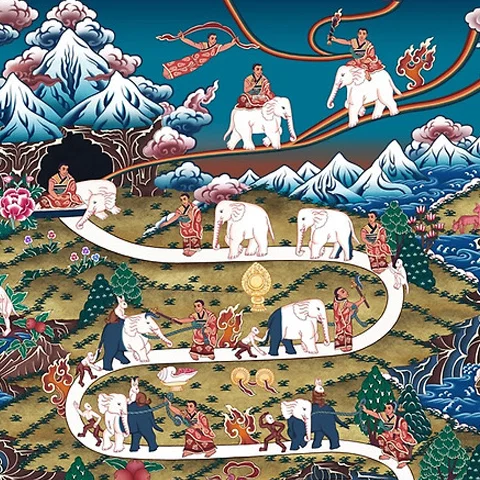
(For those who have read this far, I feel honored and grateful for your time and attention. As you may surmise, this essay is not Jungian canon, but rather my process of integrating Jungian psychology. A re-mix of sorts. Thus, please take everything here with a big grain of salt. My views continue to evolve and are subject to change. I am a beginner.)
Posted December 25, 2022 by Y. Sue Park. Part 2 is dedicated to memory of Renée Hartevelt. May you rest in peace.