May 15, 2024
Quick Links
- What Remains
- Love is Pain
- ÷ (Division)
- The Devil Within
- Compassionate Suffering
- Metamorphoses
- Re-Creation
- Timshel
- L’eggo My Ego
- Way Back Home
“Hatred never ceases by hatred, but by love alone is healed. This is the ancient and eternal law.” – The Dhammapada
What Remains
Every morning I get on my knees and bow my head towards the rising Sun. For many spiritual traditions, bowing is a sacred act of reverence and worship. Muslims pray in solidarity by placing their foreheads on the ground towards Mecca. Buddhists bow to one another to honor the sacred within each and every soul. And Christians get on their knees as an act of surrender to God. My morning ritual is not so profound: it is to dampen my troll-like hair upon getting out of bed. Baptism from my bath tub faucet, waking me up in the process. Whether sacred or absurd, the posture of placing ones head below ones heart is the same. The difference is in the meaning and purpose.
It is meaning and purpose that makes suffering tolerable. Nietzsche wrote, “he [sic] who has a why, can bear any how.” It was meaning and purpose that willed Viktor Frankl to survive the atrocities of the Nazi concentration camps. As a testament to the strength of the human will, Frankl described in “Man’s Search for Meaning” the insufferable conditions that stripped a person of all that mattered to them, broke their bodies and minds beyond repair, and inflicted traumas for generations to come. He documented the worst of humanity: automatons who carried out orders despite their moral conscience and inmates who betrayed their own kind to curry favor. Humans can adapt to anything, but at what cost?
There was a thin line between life and death at Auschwitz. Those sorted to the left met their fate at the gas chambers, and those to the right a prolonged death sentence comprised of exhaustive labor in freezing temperatures. Whether left or right, both sides faced death, the difference was in the how and when. And even for survivors, death can come before the body dies.
Against all odds, Frankl described how survivors found the will to carry on. Finding purpose in completing tasks, caring for one another, and safe keeping ones dignity in the vault of ones shadow. Even a relative happiness was found, such that a small piece of vegetable in their watered-down soup was a God-send for the malnourished body. And when Death is a close companion, it is not surprising that Frankl observed a deepening of spiritual life amongst inmates. To survive, one must have had to reach deep within to something indestructible. Even in the darkest times, there were glimmers of this Light.
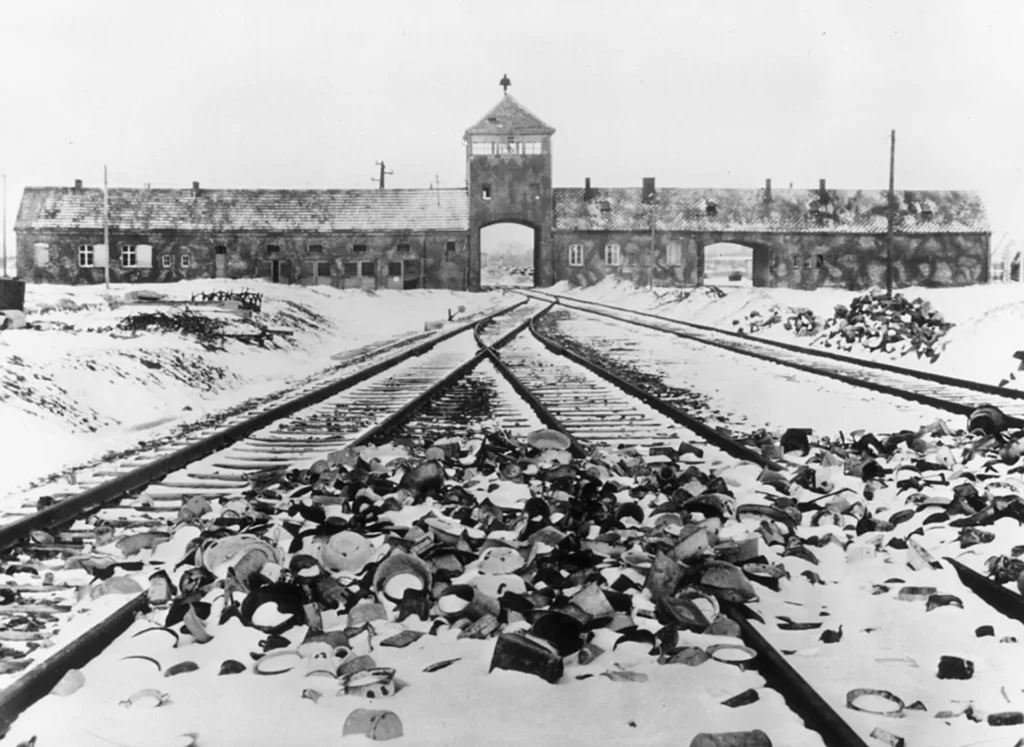
What remains when a person loses everything they hold dear?
Not pride, an inflated ego only makes the suffering worse. Not identity, any semblance of who once was shattered beyond recognition. Not hope, false hope is a delusion, and is often more harmful than no hope. Not peace, trauma will make sure one never forgets their painful past. Not even fear, as Frankl wrote, “The prisoner of Auschwitz…did not fear death. Even the gas chambers lost their horrors for him after the first few days.”
For Frankl, what remained was…
“the last of the human freedoms: to choose one’s attitude in any given set of circumstances, to choose one’s own way. Every day, every hour, offered the opportunity to make a decision, a decision which determined whether you would or would not submit to those powers which threatened to rob you of your very self, your inner freedom.” (Man’s Search for Meaning, p. 12)
Freedom of choice, the will to carry on, meaning and purpose comes from a deeper part of one’s self. While the ego is conditioned on nature and nurture, this deeper part has a consciousness and free will that can defy fate and choose its own path. For many religions, this innermost part is referred to as the soul or the true self, “we are spiritual beings having a human experience.”
The soul is said to exist beyond ones lifetime. Christians and Muslims believe in the after life. For Buddhists, the soul lives, dies, and gets reborn. And in this life after death, there is said to be a Karmic justice based the consequences of our choices and actions, whether it be Heaven or Hell, or transcendence. Although who’s to say these states of being do not exist in the here and now. There is no way for science to prove these beliefs, but if one chooses to believe them, it gives life a fuller perspective.
And for the ego, a change in consciousness.
Love is Pain
When the ego is at-one with the wholeness of Self, consciousness shifts from “I” to “We,” giving birth to an “Us” in the sacred space between the ego and the plurality that exists within and without. This Us zooms the ego out from its self-centered view, and in witnessing the suffering of others, we care for things beyond the personal. From this perspective, a murder is a suicide, as harm done to others is a harm to oneself. And excess loses its allure, because having too much means someone else is having too little. The solidarity of “We are all in it together” is a valuable lesson from the pandemic we should not easily forget.
Love is the connective tissue of the We. More than a feeling, it is a spiritual force that bonds, heals, and makes whole. The highest form of love is unconditional, inclusive of the most despicable among us, for they are the greatest teachers of love. Unconditional love does not discriminate and goes beyond who or what one loves into a loving character and an open heart that can be cultivated with daily intentions of loving thoughts, words, practices, and habits.
One such intention is having empathy, imagining what it’s like to walk in the shoes of another. This intention can be directed towards those going through dark times, not to pity them and certainly not shadenfreude, but to cultivate understanding, gratitude, perspective-taking, compassion, and a motivation to help.
I applied this intention to one of the worst humanitarian crises happening today, the plight of Palestinians in Gaza. While the crisis was triggered by Hamas’ horrendous attack against Israel on October 7th, 2023 resulting in over 1,200 deaths and approximately 250 hostages, violence begets violence and one wrong does not justify another wrong. Israel’s retaliation has been brutal. More a genocide than a conflict, Democracy Now! reported on February 21, 2024:
“Nearly 30,000 Palestinians have been killed in Israel’s assault on Gaza over the past four-and-a-half months, with thousands more missing and presumed dead under the rubble. Nearly 70,000 people have been wounded. Eighty percent of Gaza’s population has been displaced, while a humanitarian crisis continues to worsen, with a quarter of Palestinians in Gaza facing starvation.”
And amongst the senseless killings are over 10,000 innocent children and many more whose childhoods have been destroyed beyond repair. In a briefing to the United Nations Security Council, the head of Doctors Beyond Borders Christopher Lockyear reported:
“Children who survive this war will not only bear the visible wounds of traumatic injuries but the invisible ones, too—those of repeated displacement, constant fear, and witnessing family members literally dismembered before their eyes. These psychological injuries have led children as young as five to tell us they would prefer to die.”
On a daily basis, there are gut wrenching images of dead, injured, and starving children. While the atrocities are too many to count, one that stood out to me was footage of two Palestinian children drinking dirty water from the ground using a tube as a straw. This image broke me. What’s seen can’t be unseen, and this image haunted me for weeks. I can’t even imagine how their parents may have felt, but I tried to empathize anyway. What if this happened to my son? I would feel heart-broken and desperate to do everything in my power to save him. I would feel infuriated at those responsible, wishing for their egos to be devoured by their guilty consciences.
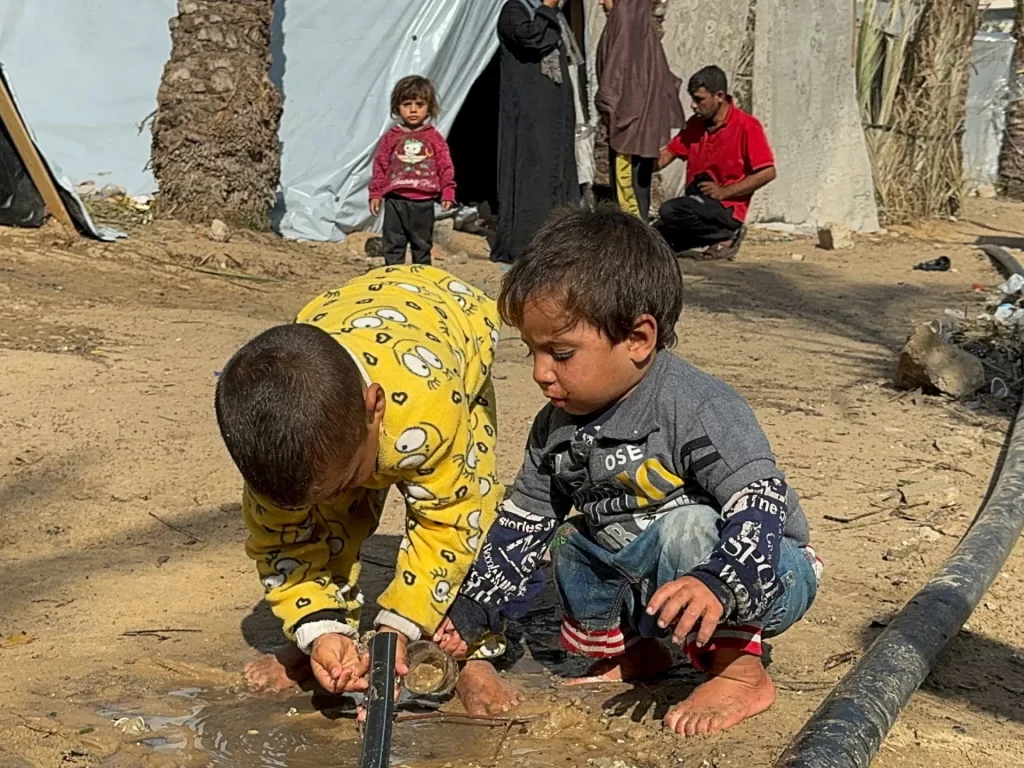
And when I look into the eyes of these grief-stricken parents, I see the pain of love, and find myself caring more and more for a people thousands of miles away as well as for my fellow Palestinian Americans. I can’t help but cry along with these parents, feeling a small fraction of their suffering. My empathy is inconsequential, but from the perspective of the Self, shouldn’t we take personally what’s happening to our Palestinian brothers and sisters? Whether Israeli or Palestinian, any form of genocide is a crime against humanity.
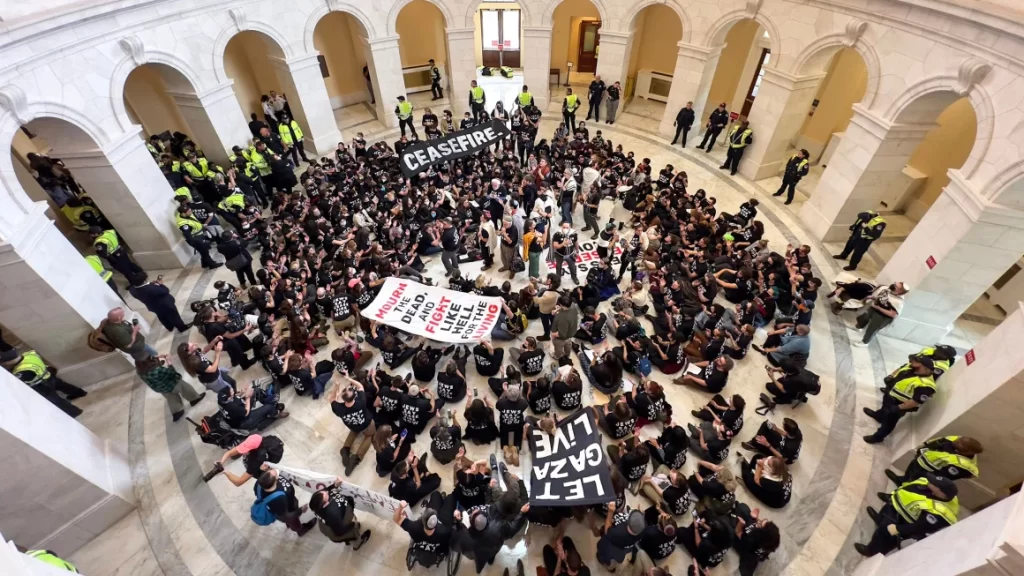
Love means we do not turn away from the pain and suffering of others. To love means confronting evil in whatever shape and form it takes. It is a spiritual warrior that loves fiercely. And this fierce love can be seen in the health care providers who have been working beyond exhaustion with a dearth of medical supplies and equipment, no electricity, and even running water; in journalists from all over the world risking their lives to cover the conflict on the ground, with at least 85 journalists who have been killed; in countries standing against the mighty U.S. to demand immediate ceasefire, including South Africa which brought the case of genocide against Israel to the UN’s highest court; and in the Jewish protestors who have taken to the streets as well as the nation’s capital demanding justice for Palestinians and shouting “not in our name!”
As demonstrated by these brave souls, love is more than sunshine and rainbows. Like any archetype, there is a dark side to love, which I first came to realize in high school when I took a class taught by my favorite teacher.
Mr. Mac taught Comparative Religions with such passion and enthusiasm that reached the most jaded of students, including me. Like the metaphor of the Blind Men and the Elephant, he emphasized looking at things from different perspectives and that everything in life is inter-connected. One lesson that has stayed with me is a story about how emotional suffering from heartbreak is more painful than any physical injury or disease. I remember doubting how could this be. Surely being boiled alive or crucified on a cross is more painful. But the heartfelt way he taught this lesson, with tears in his eyes, felt like a wisdom gained from experience.
Fast forward to a few years ago, I was listening to Tara Brach’s Heart to Heart podcast conversation with psychologist Dan Gottlieb and the lesson clicked. Dan Gottlieb has suffered chronic pain since 1979 when he had a near fatal accident that left him paralyzed from the chest down. In the interview, he described the difference between physical pain and emotional suffering:
“…that trip to South Africa, my daughter was with me. We were in a van and we were driving down a rugged road. And from all that movement, I was in agony. And she is sitting across from me watching her father be in agony. And I saw the look on her face, my heart went out to her. And when we got back, I was okay, I was back to baseline in fairly short order. And she wasn’t, and I put my arms around her. And I realized the difference between pain and suffering. I felt pain, she suffered. It broke my heart.”
Love can be painful. Love is often at the root of suffering. We suffer because we care. Love pushes us to make great sacrifices. It keeps us from giving up on loved ones even when they hurt us. Love takes things to heart, tormenting us when ruptures happen. We lose our minds when we fall in love, turning us into fools. When love is not returned, we feel rejected and unworthy. Love attaches us to things that we must eventually let go. With love, we have something worth losing. We fear this loss, and there is incredible grief when a loved one passes away, as if a part of us died with them. Forbidden love betrays and disrupts the lives of many. And when one is abused and abandoned by a loved one, the hurt is traumatic, making it hard to trust again. Love shines light on our insecurities and vulnerabilities. In the eyes of our loved ones, we are seen and known for who we truly are, including the bad and ugly parts. Love forces us to take an honest look in the mirror until we can fully accept ourselves.
It takes courage to love.
÷ (Division)
Evil breaks down love, creating divisions and inequalities that makes way for conflict, hatred, and indifference. In the eyes of love, we are all equal, with no one person greater or worse than another because the sacred exists within each and every soul. Yet humankind has failed miserably to live up to the standard of loving thy neighbor as thyself. When one looks at the cold hard facts of the Gaza crisis, there is no equality or proportionality. The ratio of Palestinian to Israeli deaths is approximately 30 to 1 and increasing. Despite the narrative that Israel’s invasion is self-defense, the current conflict is neither a retaliation against Hamas nor even a primitive eye-for-an eye morality, it is the creation of Hell on Earth.
Yet the Jewish protestors against Netanyahu’s Israel gives me a modicum of hope in humanity. What motivates them to stand against the sole nation comprised of a Jewish majority? Is it humanitarian values that prioritizes life over any social-political-religious divisions? Is it their value for truth, justice, and peace? Or is it compassion for their Palestinian neighbors, a love buried deep in their collective unconscious? A collective unconscious in which Jews and Arabs once peacefully coexisted in Ottoman Palestine, and in which Judaism and Islam both serve the same Biblical God and are branches of the same spiritual Tree.
My first exposure to the Abrahamic tree of monotheism was from the same Comparative Religions class taught by Mr. Mac. I learned that Judaism, Islam, and Christianity shared common ground, such as Jesus being respected as a prophet in Islam and that Christianity arose from Judaism. However, a schism formed when Jews were scapegoated for the death of Jesus Christ. Even though this false claim was renounced by the Catholic Church in 1965, severe damage had already been done. Centuries of anti-Semitism resulted in brutal persecutions of the Jewish people, including enslavement and exile in ancient Rome all the way to their systematic extermination in the Russian Pogroms and the Holocaust.
This history makes the current conflict such a complicated affair. Israel whose Jewish majority has survived countless genocides is enacting the same onto Palestinians. To understand this twisted re-enactment, to what extent does historical trauma play a role? And could there be a blind-spot to Israel’s transgressions due to our collective guilt over the Holocaust? And is Zionism truly in the best interest of the Jewish people?
Mr. Mac encouraged his students to always be curious and never be afraid to ask questions, because nothing is as it seems. History is often written by the victors, and power dynamics determine which version of the story is considered historical canon. In her Ted Talk “The Danger of the Single Story,” the wise Chimamanda Adichie spoke:
“Power is the ability not just to tell the story of another person, but to make it the definitive story of that person. The Palestinian poet Mourid Barghouti writes that if you want to dispossess a people, the simplest way to do it is to tell their story and to start with, secondly. Start the story with the arrows of the Native Americans, and not with the arrival of the British, and you have an entirely different story. Start the story with the failure of the African state, and not with the colonial creation of the African state, and you have an entirely different story.”
However horrific Hamas’ October 7th attack on Israel was, it did not occur in a vacuum. What came before the “secondly” in the current conflict between Palestine and Israel?
History reveals that the centuries old conflict goes back to 1917 (or perhaps earlier) when the British inherited the region after the fall of the Ottoman Empire. The Zionist movement took this opportunity to lobby for the Balfour Declaration that designated Palestine as the new home for Jews escaping persecution in Russia, Germany, and other parts of Europe. With increased settlements, tensions arose, resulting in the Palestinian revolt in 1936-1939 and armed conflicts that displaced Palestinians from their own homeland. The founding of Israel in 1948 was borne from the Nakba, which was the ethnic cleansing of Palestinians resulting in a mass exodus of more than 750,000 Palestinians including massacres of defenseless villages across the region. Illegal settlements further divided Palestine with no connecting means of travel. Even the holy city of Jerusalem was divided, East to Palestine and West to Israel. Currently, Israel occupies both the Gaza strip and the West Bank, including Palestine’s capital in East Jerusalem.
Despite this historical context, during the early days of the Gaza genocide, anything pro-Palestinian was suppressed and judged as anti-Semitic. Not even our top intellectuals were immune, as congress grilled the Presidents of Harvard, MIT, and UPenn for not suppressing student protestors who exercised their freedom of speech. It didn’t matter that these Presidents denounced anti-Semitism and upheld the legitimacy of Israel as a sovereign State. Its ironic that the exploitation of anti-Semitism for political gain is in itself anti-Semitic, but this hypocrisy was not what was on stand.
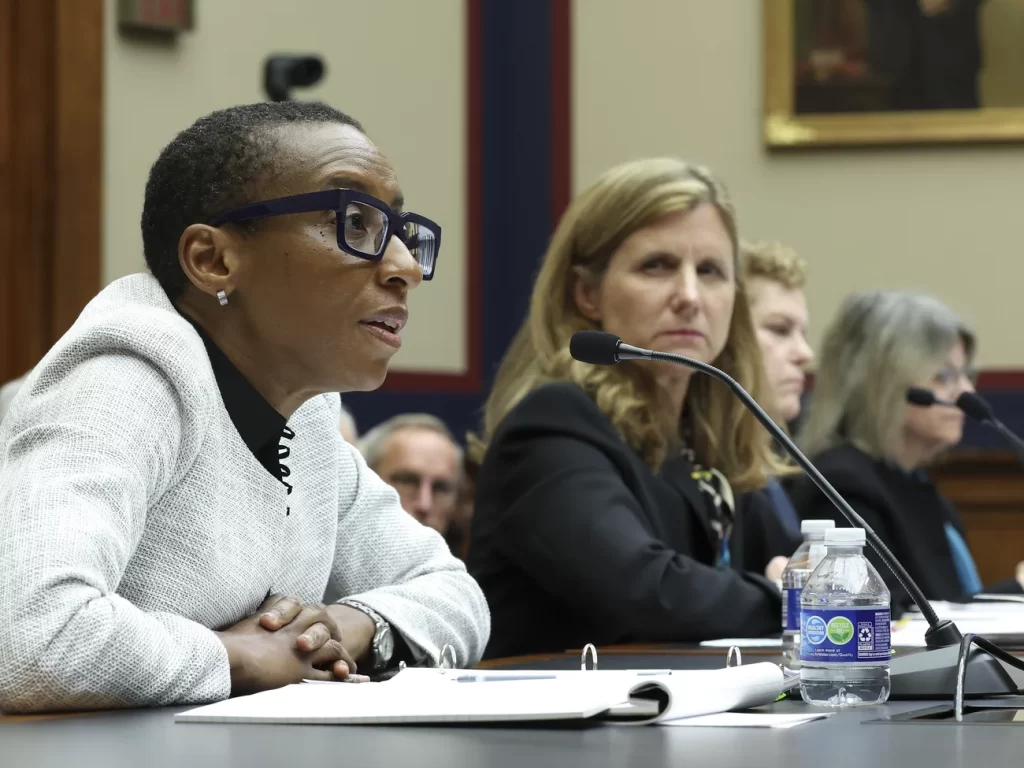
In Jungian psychology, a shadow repressed inward is a shadow projected outward. What was the collective shadow cast on Palestinians that enabled the genocide of innocent civilians and children? Understanding this collective shadow beckons an honest look in the mirror. What is in the shadow of the U.S. vetoing U.N.’s multiple attempts for an immediate ceasefire? What is in the shadow of the U.S. sending billions of dollars worth of weaponry to Israel? What is in the shadow of the U.S. defunding the primary humanitarian group (UNRWA) providing life-saving aid to Palestinians? What is in the shadow of there being no pro-peace candidate in the next U.S. Presidential election?
In the most recent U.N. voting for immediate ceasefire on February 20th, 2024, the U.S. was the sole nation that vetoed (13 to 1), with a statement from U.S. Ambassador Linda Thomas-Greenfield stating that the proposed resolution was “irresponsible” and “would not achieve the goal of sustainable peace.” A similar statement was given when the U.S. vetoed the first call for ceasefire on December 12, 2023, and since then more than 20,000 Palestinians have been killed, and conflict has spread to neighboring countries of Iran, Lebanon, and Yemen. And from a psychological perspective, traumas can be transmitted to future generations as well as vicariously to those viewing the horrors from afar. Even those enacting the violence are not immune from this trauma. Sustainable peace does not involve violence or trauma, but rather compassion for both sides and follows a pattern of taking responsibility, forgiveness, and reconciliation. Perhaps U.S. foreign policy on “sustainable peace” has found a way to defy the laws of human nature.
Nietzsche wrote that the “most despicable man [sic] is one who does not despise himself.” Lacking self-reproach, U.S. foreign policy rarely admits to any wrong or miscalculation. Same goes for the politicians behind these policies. In our culture, we vote for and celebrate those who hide their shadows: the righteous, the victors, the successful, the powerful, the popular, the attractive, the perfectionists, the pollyannas, the rich and the famous. God forbid our shadows get revealed, or else we get cancelled.
Yet the U.S. casts a big shadow on the rest of the world. If humans are the apex predator, Americans are top dog. Our country was built on American exceptionalism and manifest destiny that justified the genocide of Native Americans and an enslavement of an entire race. Since its founding in 1776, America has not seen war for only 17 years of its entire history, and in modern times, spends more on the military than the next 10 countries combined. Like Hungry Mungry, America eats and extinguishes natural resources to planetary proportions, with one American consuming, on average, as much energy as 6 Mexicans, 13 Chinese, 31 Indians, 128 Bangladeshi, and 370 Ethiopians. The majority of our energy comes from non-renewable fossil fuels that the Middle East has in abundance, the same region as the current Gaza conflict.
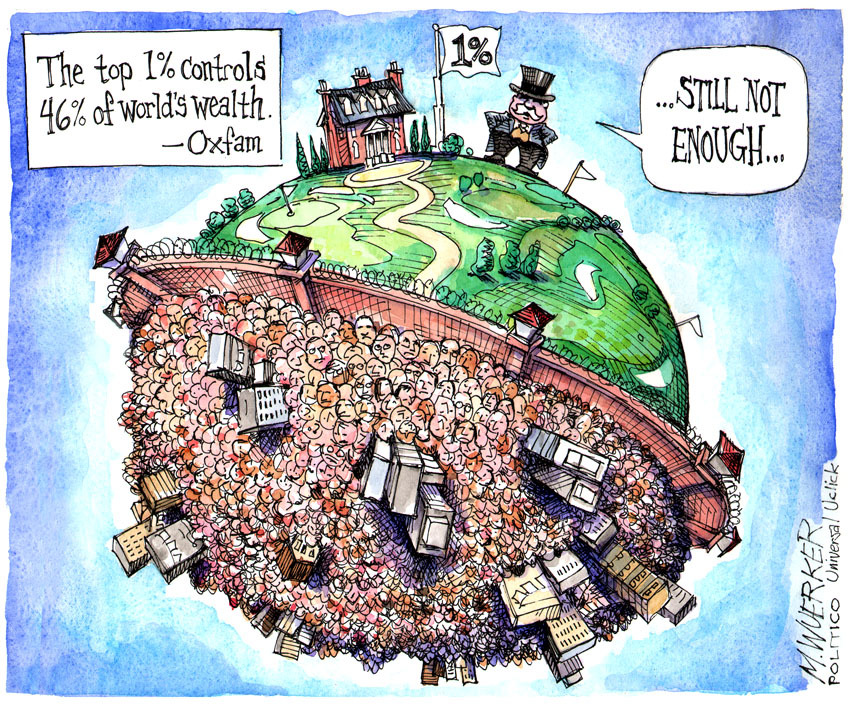
In global affairs, the U.S. asserts its power as the “good guys” even though we don’t have our own house in order. As we enter election season, its a shame that American politics has devolved into political parties that are so divided that decisions are largely partisan-based. United we stand, divided we fall. Yet there is no political middle, no common ground. How can the U.S. unite the world when America itself is so divided?
There does not appear to be an end in sight for the conflict in Gaza. With each day that passes, more children are dying from violence, starvation, and inadequate health care. The world is watching with compassion and horror, but there is not much it can do without cooperation from the U.S. Frankl espoused finding meaning in suffering, however the suffering in Gaza feels completely unacceptable. The evils of the Holocaust were largely hidden from the world’s view until World War II ended, but there is no shortage of real-time coverage of the current genocide. These are dark times for Palestine and for humanity as a whole. Hope feels lost. Even empathy and compassion has its limits. Where do we go from here?
The Devil Within
A fascinating aspect of a grove of redwood trees is their root system: intertwined, sharing nutrients and holding each other up. Their roots can stretch 60 to 80 feet wide, which allows them to grow over 300 feet tall without toppling. Redwood trees are resilient because of their interconnectedness, living over 2,000 years despite shifting landscapes and harsh conditions. What if human souls worked the same way? That on the surface we are separate individuals, but deep in our psyches, we are interconnected through the roots of archetypal patterns and energies.

The ancients spoke of the Anima Mundi which posited that the world has a soul from which each individual soul grows and returns to upon death. This is at least physically true, our bodies grow from nutrients provided by the Earth and the body will eventually return to it upon death. The so-called circle of life. And like cells in a body with a full set of DNA in its nucleus, it is said that the spiritual DNA of the Anima Mundi exists within each and every soul. It is the ego’s responsibility to awaken to and live in accordance with this divine nature.
In his lessons, Mr. Mac often repeated that we are all inter-connected. This may sound like new-age fluff, but it is somewhat true on an inter-personal level. Most people are said to be connected by six degrees of separation or less. For example, previously my knowledge of Palestinian culture, history, and its people was sorely lacking. However, last year I worked with a colleague whose husband was Palestinian. She educated me on the plight of Palestinians in the context of her own family history. I learned about her husband’s family immigrating to Canada, as part of the Palestinian diaspora. And that they had relatives in the West Bank, who in turn knew people in Gaza. For them the current crisis is not merely a threat to their cultural identity, it is painfully personal. And through this friendship, it became personal for me as well.
We can only control the controllable. It is beyond anyone to control what’s happening in Gaza right now. The world’s best efforts have failed, but we can all do our part in small ways, such as having compassion and empathy, educating ourselves and spreading awareness, dialoguing with and befriending Palestinians and Israelis, praying and protesting for peace, writing to representatives and voting for pro-peace candidates, donating money to humanitarian agencies, and so on. No singular act will make a significant difference, but a collective effort can move the needle ever so slightly. Change takes time, what’s important is the trajectory.
An unorthodox way of taking personal responsibility is turning inward to confront and transform the destructive part of our spiritual DNA. This archetypal energy has expressed itself in war and conflict on a worldly scale, but the same dynamics between warring nations occur in interpersonal relationships, such as deception, betrayal, rejection, abandonment, passive-aggressiveness, stonewalling, blame-shifting, manipulation, exploitation, assault, abuse, domestic violence, divorce, and so on. By transforming these destructive elements within ourselves, we can create peace in the realms of our lives we have control over. And if we truly are inter-connected through six degrees of separation or less, this peace can potentially reach the shores of Gaza.
While this destructive element is complex and multi-faceted, there is one archetypal force in our collective psyche known to cause division and strife, that of the Devil. In “Love and Will,” the psychologist Rollo May wrote that the Greek derivative of the word devil is “diabolic,” which is defined as “that which disintegrates and tears apart.” The Devil manifests in many shapes and forms. For Christians, it can manifest as the Seven Deadly Sins of pride, greed, wrath, envy, lust, gluttony and sloth; for Buddhists, the Three Poisons of delusion, greed, and hate; and for Muslims, that which turns a person away from Allah. These manifestations tear relationships apart, and can even divide a person from their own soul.
When one turns on the news, there is no shortage of evil, the Devil is alive and well, as William Shakespeare put it, “Hell is empty and all the devils are here.” Despite signs of the Devil everywhere, rarely do people admit to their own destructive side. Like Adam and Eve blaming the serpent for the original sin, we split off our personal Devil by casting it outward through such defense mechanisms as scapegoating and gas-lighting, however this only makes us fall deeper into the Devil’s grasp. We are our own worst enemy.
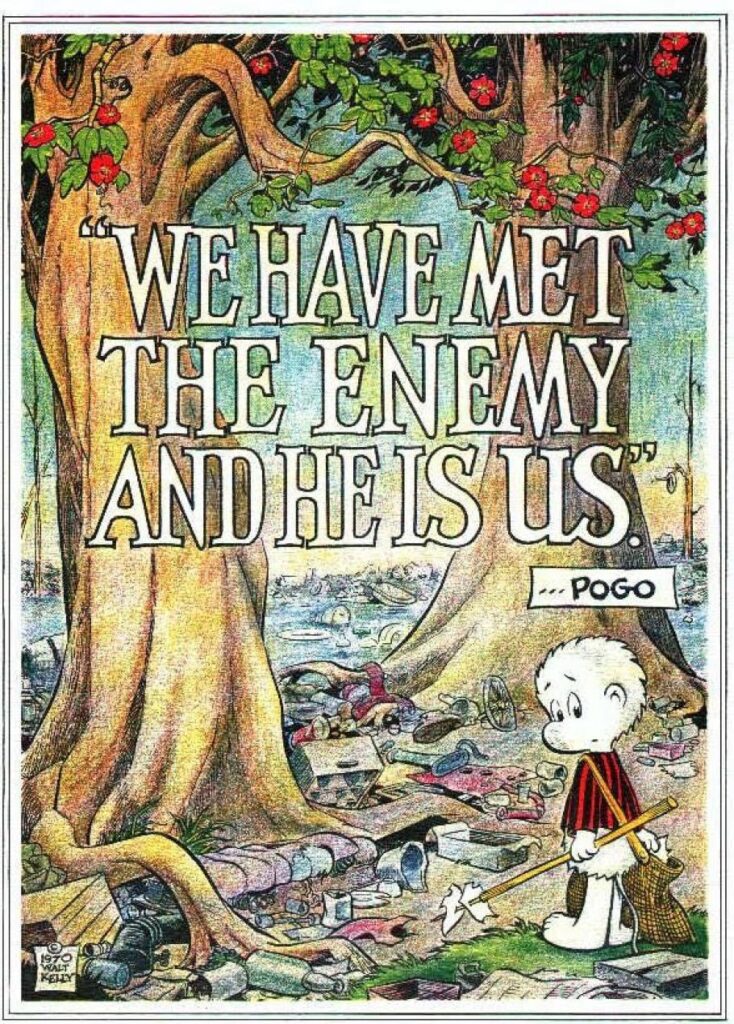
An insidious manifestation of the Devil is the way it shapes our thinking. Thinking is not bad in itself, it helps us plan, organize, evaluate, compare, predict, make decisions, and so on, all of which are necessities for navigating the modern world. The problem is we do too much of it, dividing us from our hearts and bodies. Our minds just won’t shut up. And these thoughts can be brutal, with self-defeat and anxieties.
A thinking-oriented approach to life is deeply rooted in Western philosophy, such as the Cartesian “I think, therefore I am,” which equated our essential being with a function of the mind. We are not our thoughts, and thoughts often deceive. Yet many live in their heads, rather than an interconnected life that integrates mind and body, ego and soul. Jung warned against a mind isolated from the whole:
“The development of Western philosophy during the last two centuries has succeeded in isolating the mind in its own sphere and in severing it from its primordial oneness with the universe. Man himself has ceased to be the microcosm and eidolon of the cosmos, and his ‘anima’ is no longer the consubstantial scintilla, spark of the Anima Mundi, World Soul” (Carl Jung, CW 11, para 759).
A mind that is severed from the Whole is prone to dualistic thinking, such as categorizing something as good or evil, right or wrong, us or them, and so on. When we engage in either-or thinking, we strip people and things of their wholeness, resulting in polarization and conflict between the divided parts.
On an interpersonal level, the extremes of dualistic thinking is a slippery slope for projections. By projecting a preconceived image onto the actual person, we no longer see the person in a holistic, nuanced, and dynamic way, selectively paying attention to the qualities that confirm the projection and disregarding the rest. These projections are largely unconscious and can be dehumanizing, such as when we judge another person as “crazy or criminal,” while disregarding the sane and good parts of their character. The inability to see through ones own projections results in a person having a relationship with a mental image versus the actual person. This dynamic can be divisive for relationships, and trap a person in an echo chamber of their own mind.
And on the receiving end of a negative projection, if the projection carrier has poor ego-strength (e.g., insecure, low self-esteem), they may identify with the projections and internalize the judgments, such that the receiver sees themselves through the lens of the projected false image. Over time, this internalized projection or introject gets replayed in their mind such that the self-defeating thoughts are no longer associated with the aggressor but can be confused with ones own inner voice, dividing the person from their true self.
Negative projections don’t stay put in the realm of mental images, they often are acted on and get expressed as judgments, hatred, and aggression. And when projections are combined with stereotyping, we can a strip a whole group of people of their humanity, which can result in polarization and conflict.
This dynamic was demonstrated in the controversial 1971 Stanford Prison Experiment, in which college students were randomly assigned to take on the role of either a guard or a prisoner. Guards were asked to use any means necessary to maintain order with the exception of physical violence, while prisoners were treated like criminals: finger-printed, mug-shots taken, uniformed, ankles chained, and identified by numbers. Dehumanization was in full effect.
In less than 24 hours, tensions formed between the two groups, with prisoners rebelling and guards abusing their power to maintain order, such as withholding food, removing beds, preventing access to bathrooms, and calling prisoners only by their numbers. Guards were observed using tactics like divide and conquer and shuffling prisoners around to instill confusion. The study observed the prisoners becoming more submissive and internalizing their punishment, even though they were innocent college students. Although the study was planned for two weeks, it had to be prematurely shut down after only six days due to the harm it caused. The study concluded that participants internalized the roles they were given, and that mere categorization, even randomly, was enough to create conflict and draw out uncharacteristic behaviors.
The implications of the Stanford Prison Experiment is relevant to the current conflict in Gaza. Since 2007, Gaza has been considered an open-air prison due to policies that restricted Palestinians traveling to and from Gaza, which entrapped Gazans, devastating their economy, and further fracturing Palestine as a nation. In hindsight, the Stanford study foreshadowed the dehumanization of Gazans and the sadistic behaviors displayed by some Israeli soldiers, as evidenced by these shameful videos from the soldiers’ own social media. These dehumanizing images make me sick to my stomach and compel me to condemn these soldiers as sinners or evil-doers.
We often consider our enemies as those who commit evil against us, judging them as a Devil-figure. The Devil is often seen as all-bad. One “bad” on its own is surmountable. For example, When the voice of hatred pushes you to strike, you can take a time out and calm down before responding in an assertive way. When the voice of greed tells you “more, more, more,” you can be grateful for what you have and have compassion for those who have less. When the voice of pride has you look down on others, you can remove the “plank from your own eye” and cultivate humility, and so on.
However, when these qualities are merged into an all-bad image, the monster it creates is to be feared and/or destroyed. This image of the Devil can be projected onto groups of people that justify war and genocide, such as seeing the other as “terrorists,” “communists,” or simply “the enemy.” When this happens, we fail to recognize that the projected image of the Devil is a mirror reflecting back our own destructive tendencies. This failure to discern deludes us into battling the monsters inside our heads as if they are external threats. And in fighting these all-bad devils, the collateral damage to innocent civilians and children is unforgivable.
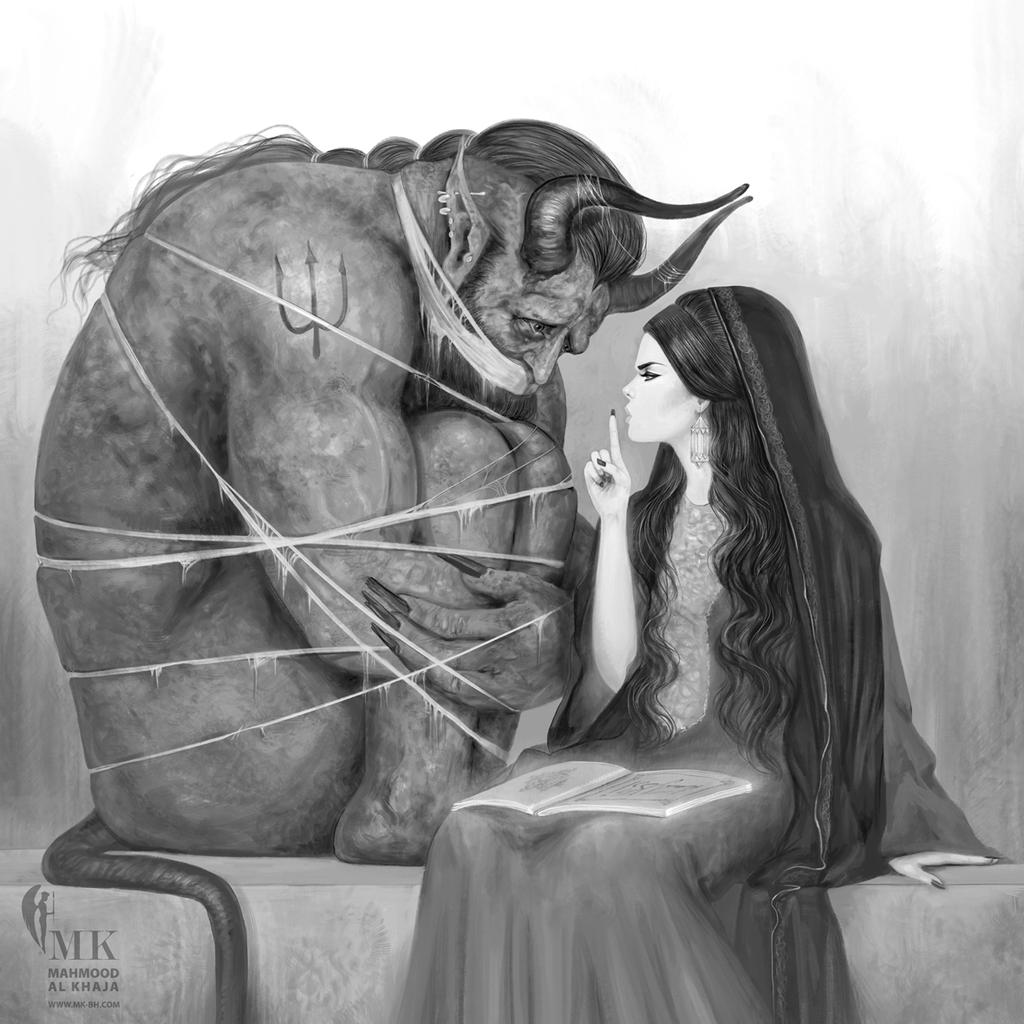
Jesus preached love your enemies. It is easy to love someone who is kind, but much harder to love those who have wronged us. Loving ones enemies is as much for oneself as it is for the other, expunging the poisons of hate and resentment that create so much negativity within our own hearts. Our emotions don’t stay in neat sturdy containers, which means this negativity can spill out to other parts of our lives. Its rather difficult to keep up a double life of love and hate.
While it takes a saint to love someone as vile as Hitler, we can start with enemies from our own life by shifting our all-bad image of them. You might start by empathizing with and having compassion for a struggle your enemy is going through. To lighten the mood, you might inject some humor by imagining them wearing your grandma’s clothing or them sitting on a toilet taking a stinky poo. If this does not humanize them, you might imagine them as children back when they were innocent and harmless before the world got to them. And to seal the deal, you might imagine your enemy as an infant being held in the arms of the Great Mother archetype, which is more than make-believe when you consider that all beings, good and bad, are held and nourished by a Mother Earth that does not discriminate. And when you’re done, this same intention can be applied to the enemy within yourself.
As there is a dark side to the Love archetype, what is the Light in the Devil? One of my favorite interpretations to this question comes from a scene from the movie Jacob’s Ladder, which paraphrases the theologian Meister Ekhart:
“Eckhart saw Hell too. He said: The only thing that burns in Hell is the part of you that won’t let go of life, your memories, your attachments. They burn them all away. But they’re not punishing you, he said. They’re freeing your soul. So the way he sees it, if you’re frightened of dying and… and you’re holding on, you’ll see devils tearing your life away. But if you’ve made your peace, then the devils are really angels, freeing you from the earth. It’s just a matter of how you look at it, that’s all.”
Whether an angel or a devil is at the root of our suffering, the imperative to let go is the same. The difference is the degree to which we hold on. In both physical and metaphorical terms, death requires us to let go of everything we attach to, and perhaps the Devil is what forces our hand when we can’t let go. Seeing devils as angels makes the ego less resistant to letting go, despite how painful it can be.
What is it that Netanyahu’s Israel can’t let go of, that has lead them to murder innocent civilians and children? Perhaps it’s their own version of manifest destiny, as Netanyahu put it, “Between the sea and the Jordan there will only be Israeli sovereignty.” And what is it that Palestinians can’t let go of? Perhaps it is their ancestral homeland, their culture, and their identity as a people. Whether for good or bad reasons, we have no other choice than to let go. And when we can’t, the Devil offers its pitchfork, fire and brimstone.
By honoring the Devil’s purpose as an archetype, we can cultivate a sort of diplomacy with it, sublimating its destructive energies in a way that is balanced with love, and does not harm any more innocent children. From this perspective, the problem with the Devil may not be the Devil itself, but when it is isolated from the whole, akin to an incomplete deck of the Tarot missing its Devil card. More the reason for the UN to be inclusive of all nations, regardless of their “allied” or “enemy” designations, as these statuses can change with time and circumstance. Perhaps this is why the Buddha invites Mara in for tea, to make way for a diplomacy that potentially can transform an enemy into an ally.
As it relates to the current conflict, if Israel’s incursion into Gaza is an unavoidable consequence of a centuries old conflict, could there be deal struck with the Devil for a more compassionate letting go? All our tax payer money spent on war can go a long way in funding a more humane transition for Palestinians who have tragically lost their homes, such as increased humanitarian aid, refugee resettlement, and the best our health care system has to offer. Such humanitarian efforts would truly make America great again.
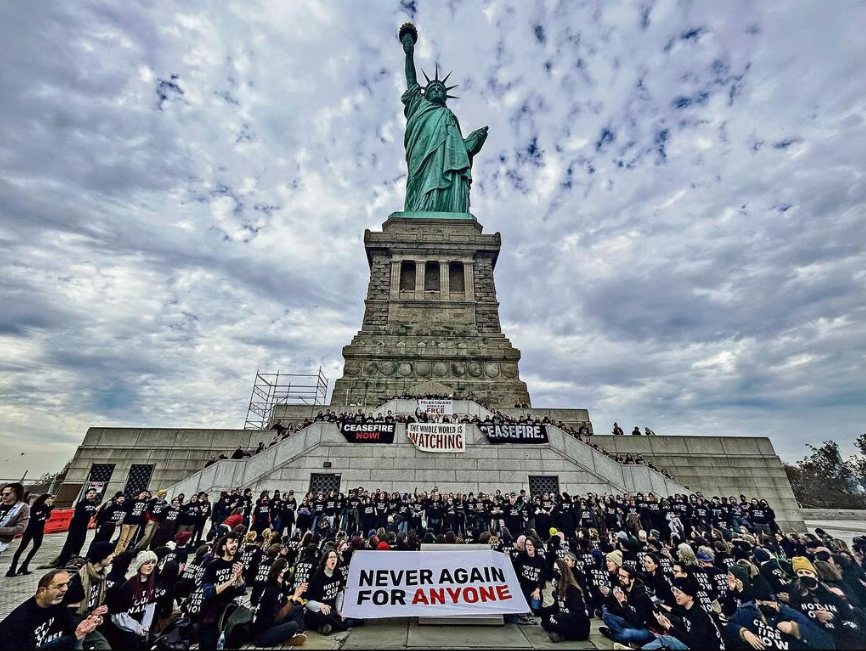
Need we be reminded of the spirit of our own Great Mother, written on the base of the Statue of Liberty?:
“Give me your tired, your poor, your huddled masses yearning to breathe free, the wretched refuse of your teeming shore. Send these, the homeless, tempest-tossed to me, I lift my lamp beside the golden door!”
One of humanity’s greatest achievements was putting a man on the moon. While this milestone represented the technological superiority of the U.S., its boon was a change in consciousness for all of humanity. Seeing photos of Mother Earth from the moon, we saw the Whole. Earth was beautiful beyond imagination. The colors, shapes, and textures, the oceans and lands, the swirling clouds all coming together as one harmonious Whole. We saw that everything had its place. There were phases of light and dark, but no divisions. No greater or lesser. No good or evil. Just a lonely planet in the vastness of space. A planet we call our home. A home where everything belongs, including the most despicable among us.

Compassionate Suffering
The Earth revolves in orbit around the Sun. The Earth spins, round and round, days turn into months, seasons come and go, and the world and its inhabitants is transformed from what it was before to something new and different. Change is constant, nothing lasts forever, which is a blessing for those going through dark times, bringing about an end to suffering, at least until the next revolution. Whether by fate or misfortune, suffering is a necessary evil despite our best efforts to avoid it. While we have no other choice than to endure suffering, what matters is the spirit in which we go through it. We can choose to suffer in vain or surrender to its transformative power. Life is full of suffering for a reason.
Perhaps suffering is grist, for the mill of spiritual growth. When we endure suffering, we grow stronger, wiser, and braver, as Nietzsche put it, “that which does not kill me, makes me stronger.” To this end, there can be no compassion without suffering, no courage without fear, no growth without pain, no strength without struggle, no humility without defeat, no resiliency without failure, no healing without injury, no forgiveness without rupture, no faith without surrender, no rebirth without death and so on. Suffering is a critical stage in the change process. Dis-order is needed to deconstruct the old-order to create a new-order.
Transformation through suffering is at the nadiral heart of the archetypal Hero’s Journey. In “The Hero with a Thousand Faces,” mythology guru Joseph Campbell refers to this journey as a mono-myth because this process shows up over and over again in myths across cultures throughout history.
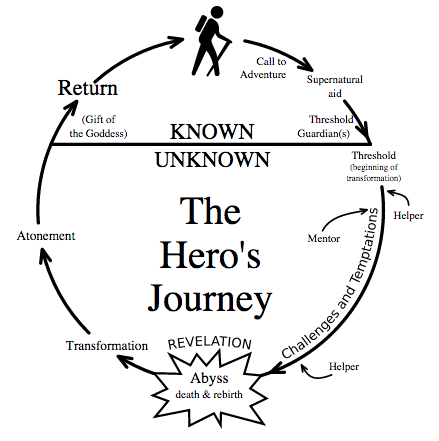
The journey begins with an event that disrupts ordinary life, putting into motion a call to adventure which may be resisted at first, however once engaged, brings forth guides, companions, and adversaries, all of whom may happen to be on their own journeys. The journey crosses into the threshold of the unknown, making way for new perspectives, experiences, and abilities to enter consciousness. Eventually, the journey turns inward into the abyss of ones greatest fears, wherein the heroine must face her innermost demons. In this critical phase, she must pass through a series of challenges and temptations that culminates in a crisis marked by an incredible suffering that brings death to ones ego and gives birth to a new self. Transformed, the heroine returns home to offer her wisdom or “Elixir” as a benefit to others.
For Jesus Christ, the threshold was crossed when he was lead by the Holy Spirit into the wilderness where he encountered the Devil who tested and tempted him. Despite fasting for forty days and forty nights, he resisted the first temptation of turning stones into loaves of bread, overcoming his fleshly needs. For the second test, the Devil transported Jesus to the holy city of Jerusalem and urged him to jump off the parapet of a temple, as a test to God whether he would be saved from the fall. Jesus remained still, noting it is not his place to test God. Lastly, the Devil offered Jesus the power and glory of ruling over all the kingdoms of the world in exchange for allegiance. By turning down the Devil’s bargain, Jesus put his ego aside and remained loyal to God. Once the tests were completed, the Devil bid farewell and Jesus went on to begin his ministry.
While suffering is often disruptive, it does not need to be traumatic. Jesus wittingly followed the Holy Spirit into the wilderness to suffer through the harsh conditions of the desert, and survived with his mind, body, and spirit intact. While Jesus may be the G.O.A.T. when it comes to human suffering, Christians take his lead during Lent season by voluntarily engaging in suffering on a much smaller, manageable scale, such as fasting or giving up a personal pleasure, accompanied by guidance, ritual, and community that helps re-orient the person from the material to the spiritual. It exemplifies a compassionate approach to suffering with intent, measure, and consent. And at the end of Lent season, Christians feast with abundance and gather together with loved ones in a heavenly celebration of life.
The season of Lent overlaps with the holy month of Ramadan for Muslims that commemorates the revelation of the Quran to the Prophet Muhammad. From sunrise to sunset, Muslims abstain from any food and water, which cultivates a spiritual orientation to life, empathy for those less fortunate, and gratitude as we often don’t realize what we take for granted until it is gone. Fasting concludes for the day when families come together to share a meal called the Iftar, which provides much-needed nourishment for the body as well as spiritual sustenance that symbolizes Allah’s mercy and love. In the evening, communities gather in solidarity at a Mosque to pray and recite the Quran. Ramadan is a month of introspection, charity, and contemplation that purifies the soul, builds community, and strengthens ones relationship with Allah. The end of Ramadan is referred to as the Eid al-Fitr, which is a day of celebration in which Muslims feast and don new clothes symbolizing new beginnings.
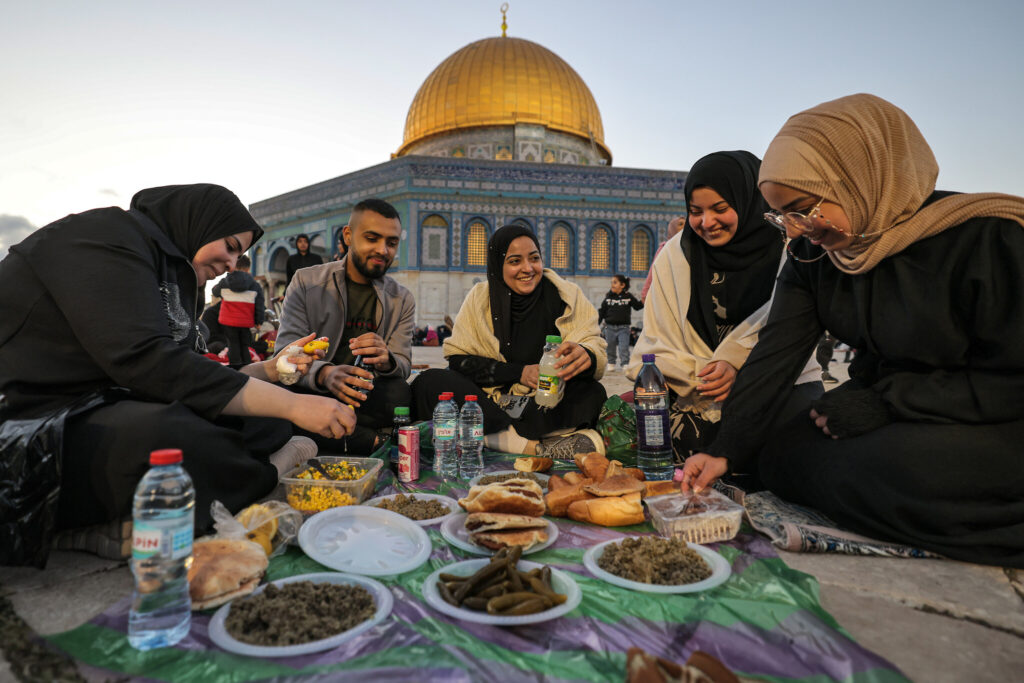
For Palestinians in Gaza, the line between the compassionate suffering of Ramadan has been overshadowed by the traumatic suffering of genocide. Palestinian journalist, Eman Alhaj Ali, wrote that Gaza during Ramadan used to be “the most beautiful place on Earth” before it became a Hell:
“…But this holy month, we cannot celebrate and enjoy worship in peace. The colourful lights and lanterns and the chants and songs have been replaced with the flashes and sounds of Israeli bombs exploding. The joyful noise of children playing outside in the streets has been replaced with the screams of people buried under the wreckage after another Israeli bombardment. The neighbourhoods full of life have been transformed into graveyards. Mosques are not crowded with people because they are all destroyed. The streets are not bustling with people, because they are all covered in rubble. People fast past Iftar because they have no food or water.”
What remains of Ramadan for Palestinians in Gaza? Despite the philosophical “problem of evil,” that questions why an all-powerful God would allow such evil and suffering, Gazans remain steadfast in observing Ramadan. Regardless of God’s reasons, Palestinian American Ahmad Ibsais writes…
“Ramadan after Ramadan, the Palestinian people have been tested. But the Palestinian spirit will outlive the tyranny of occupation. As I watch Gazans perform Friday prayer amidst the rubble of their society, I am reminded of what steadfastness looks like: that you can destroy one’s home or mosque, but never one’s Iman (faith).”
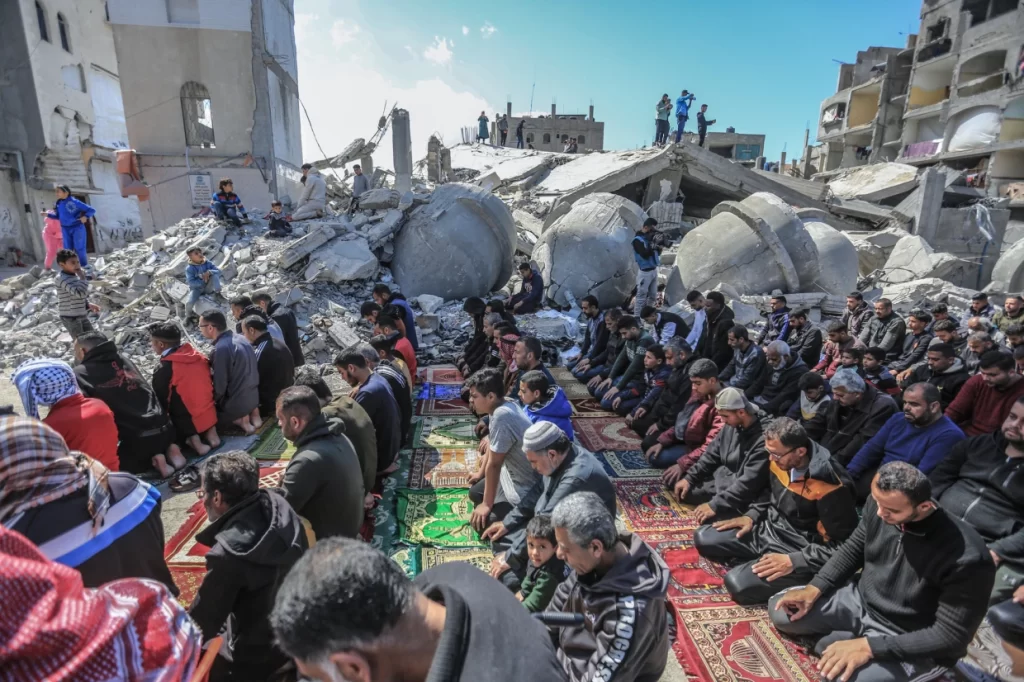
Like a diamond that can withstand incredible pressure, the spirit of the Palestinian people is indestructible. Year after year, they have been persecuted and traumatized; forced into poverty and starvation; exiled from their own lands; had their mosques and traditions desecrated; had their nation occupied and divided; and made to suffer incredible pain with no reprieve. Death or submission can’t be any worse. Yet they persist.
To play Devil’s advocate, why not submit to the powers that be? The reasons are of course many and complex, but in my opinion, a big reason for their persistence is for the sake of their children, and their children’s children, and so on. A persistence that gives the next generation a chance to recreate Palestine in the image of what once was “the most beautiful place on Earth,” filled with “colourful lights and lanterns,” with the “joyful noise of children playing outside in the streets.” Even though these images may be idealized, any semblance of normal life after going through such suffering would be like a Heaven.
Metamorphoses
In Nietzsche’s “The Three Metamorphoses,” the Child is the highest form of spiritual development. Children are worth protecting at all costs, because their spirit is what brings about “new beginnings.” In circular fashion, we begin life as children and grow up into adults, carrying a heavy burden and overcoming obstacles, only to become a Child again. As Nietzsche put it, “the spirit becomes the Camel, the Camel a Lion, and the Lion at last a Child.” The end is built into the beginning.
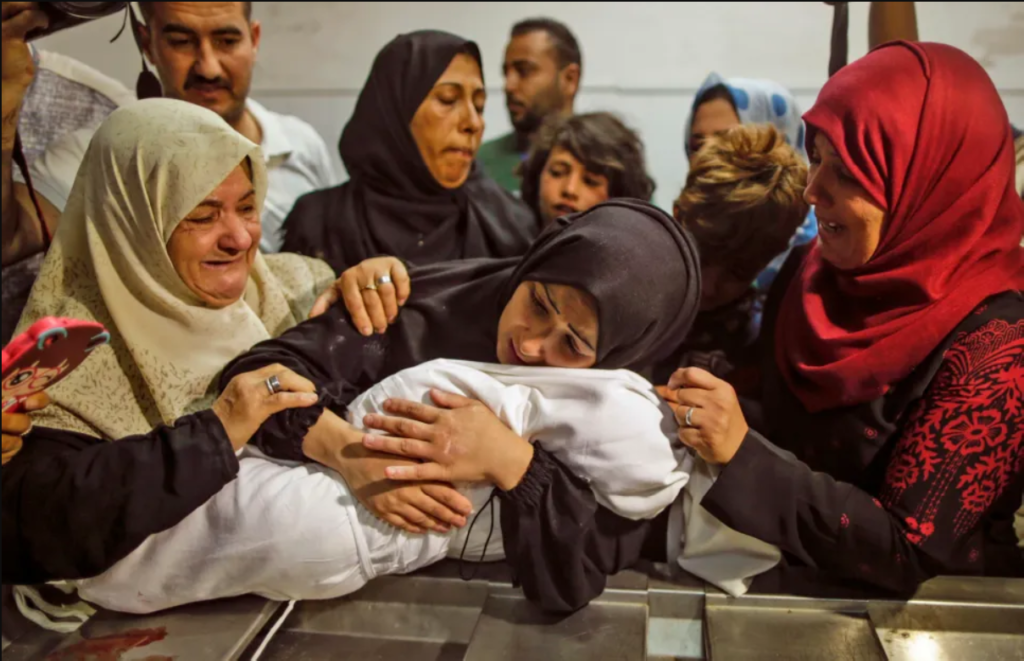
The spirit of the Camel is subservient to the dominant paradigm of its time (e.g., capitalism). It is the “load-bearing spirit” that carries on its back “many heavy things” put on it by the world. Nietzsche poses the question, “what is the heaviest thing” that this spirit can bear? I can’t imagine anything heavier than the traumatic loss of ones child to indiscriminate murder, a complicated grief carried in the heavy hearts of the parents, relatives, and neighbors of over 10,000 Palestinian children who have been killed in the genocide. The weight of this pain is immeasurable.
Prior to transformation, the spirit of the Camel dutifully serves the Dragon known as “You-shall,” which represents the dominant values and belief systems of the world that upholds the status quo, including the power structure. The Dragon is not God yet demands our obedience as if it is one. If the natural laws are reflected in God’s will, then God must be obeyed. However, the Dragon attempts to usurp power even from the natural laws. This was the case during the Inquisition when scientists like Copernicus and Galileo were persecuted for endorsing helio-centrism, which was controversial at that time because it challenged the Catholic Church’s geo-centric view that the Earth was the center of the universe.
Over time, the Camel discovers it has grown strong from carrying a heavy load, and traversing vast distances has exposed it to different worldviews that brings about disillusionment. It begins to the question the Dragon, which takes the Camel into the wilderness of the unknown. And in this liminal space, the Camel must choose whether to continue serving its old master, or put down its heavy load and transform into the Lion. A choice between the blue or red pill.
The Lion is the Lord of the wilderness. With the Dragon no longer its master, the Lion becomes sovereign to its own mind, free to think for itself. The Dragon is threatened by this freedom, and attempts to convince the Lion that there is no other way than to heed its call, because “all values have already been created and all created values – I do represent.” In response, the Lion roars back “I will” and invokes the sacred “No!”
If we don’t stand for something, we fall for anything. This spirit of the Lion is captured in the following passage from one of my favorite books, East of Eden. Steinbeck writes:
“At such a time it seems natural and good to me to ask myself these questions. What do I believe in? What must I fight for and what must I fight against?…And this I believe: that the free, exploring mind of the individual human is the most valuable thing in the world. And this I would fight for: the freedom of the mind to take any direction it wishes, undirected. And this I must fight against: any idea, religion or government which limits or destroys the individual. This is what I am and what I am about. I can understand why a system built on a pattern must try to destroy the free mind, for that is one thing which can by inspection destroy such a system.” (East of Eden, p. 172).
In Gaza, there has been no shortage of Lions standing up against the worldly forces that have enabled and enacted genocide. Despite their lands occupied, the Lion spirit of the Palestinian people endures the suffering of tyranny without giving up their identity, faith, and values. The Lion spirit is found in U.S. Representative Ocasio-Cortez from New York, as she accused Israel of genocide in an impassioned speech given to Congress, advocating for cutting military aid to Israel, increasing humanitarian aid, and challenging fellow politicians to uphold the values of democracy. And Lions can be found in human rights activists, including Jewish protestors shouting “Not in our name!,” calling for immediate ceasefire that the U.N. finally passed on March 25, 2024 in consideration of Ramadan, which was only made possible because the U.S. abstained to vote in un-Lion fashion. It is now the people of Israel’s turn to evoke the sacred “No!” to genocide.
The Lion transforms into the Child when it creates its own set of values to live by. Free to think for herself, the child defines what she believes in, what she must fight for and fight against. Through wisdom of experience and critical analysis of what she has been taught to believe, the Child formulates her own system of beliefs and values that guides her life. Nietzsche wrote “Innocence is the child, and forgetfulness, a new beginning, a game, a self-rolling wheel, a first movement, a holy Yes.” With the strength and endurance of the Camel and the courage and freedom of the Lion, the innovation and creativity of the Child brings about a potential for change, as children approach life with a beginner’s mind and have their whole lives ahead of them. And in this new beginning, the Child can choose a path that is congruent with ones chosen values, a choice that turns the sacred No into the sacred Yes.
I see this Child spirit when I watch my eight-year old son playing Legos. Upon getting a new set, he first follows instructions to build it proper, and after a few weeks or months, he breaks it apart to rebuild it with pieces from other sets, creating something new and different. He doesn’t get too attached to the original build. I shared this observation with my son as it relates to the Camel, the Lion, and the Child, and he playfully replied with a series of “Yo’s!” What do you mean?, I asked. “Yo!” Did you not understand Daddy? “Yo!” At first, I thought he was messing around and not taking me seriously, but moments later I realized I was the fool. “Yo!” blends the words yes and no, symbolizing the integration of the Sacred Yes and Sacred No. There is wisdom in the absurd, we just have to play along.
A few weeks later, this integration manifested in the form of a real-life child who was also a Lion. On March 25, 2024 a news-story ran of a Israeli soldier assaulting a Palestinian child at a store located in the occupied West Bank. Apparently the soldier was bothered by the boy wearing a shirt with a gun logo, despite the hypocrisy that the soldier himself was armed with a gun. The soldier smacked the boy before forcibly stripping him of his shirt. Upon leaving the store, the soldier shushed the store owner, but the whole encounter was caught on CCTV. The video revealed that as soon as the soldiers entered the store, the older brother immediately walked in front of his younger sibling. This act of courage was not lost on me. Being confronted by big men with guns is a scary affair for anyone, let alone a child. Yet a child stood up to these men, putting himself in harms way to protect his younger brother.
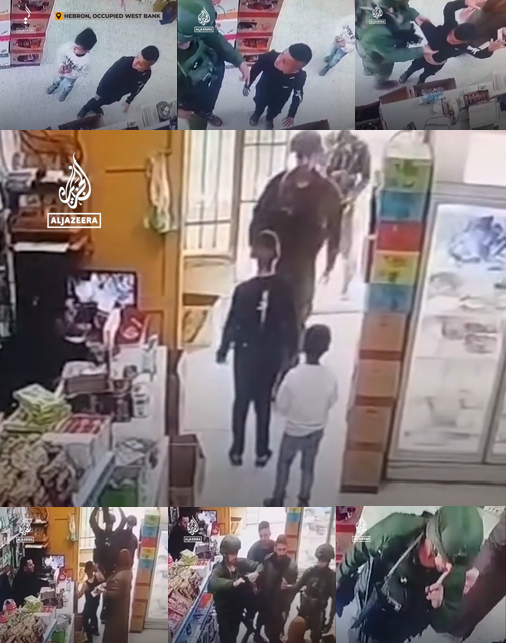
Art imitates life. While the internal experience of this brave Palestinian boy is unknowable, insight can be gathered from archetypal images of heroic children found in myths and stories. This real-life incident reminded me of a scene from Harry Potter and the Order of the Phoenix. As he lay defenseless with Voldemort towering over him, Harry had to confront his worst fears. Harry realized in that moment that his greatest power over Voldemort was neither strength nor magic, but the power of love, proclaiming to his adversary, “You’re the weak one…and you’ll never know love or friendship. And I feel sorry for you.” Like the brave Palestinian boy, Harry put himself in harms way to protect his friends over and over again throughout his Hero’s journey. He protected others because love protected him, as Dumbledore put it, “to have been loved so deeply, even though the person who loved us is gone, will give us some protection forever.” For true defeat is not death, but an absence of love.
As a beacon of light, the courageous act of this brave Palestinian boy can be a North Star for humanity. This light shines brightly in countless other Palestinian children that show us the way out of darkness. To this end, documentaries are being released of children from Gaza that reminds us of what we are fighting for and what we are fighting against.
On November 9th, 2023, filmmaker Majdi Fathi spent a day with seven year-old Lina and her displaced family, who were living in a tent outside of al-Aqsa hospital. Lina spends her days searching for food, carrying heavy gallons of water, and helping out with family necessities. As her grandmother laments, Lina provides a listening ear and even manages a comforting smile. She misses her “normal childhood,” and wishes to feel safe in her home without fear, so that she could “sleep comfortably at night, without the sound of rockets and ambulances.” Lina’s remark “Who knows if we survive or die?” are words no child should ever have to utter.
Another documentary released on December 25, 2023, follows the life of nine year-old Elaf and her family struggling to find safety in the Deir el-Balah city of the central Gaza strip. To escape Israeli air strikes, they had to flee to an over-populated refugee camp with long queues for clean water, depleted food supplies, and shelter from a make-shift structure they built themselves from scraps. Walking through rubble and stepping on broken glass is the least of their concerns. During a four-day truce, Elaf and her family returned to their house only to find it destroyed with artifacts from their old life scattered everywhere, such as innocent stuffed animals and school books. Elaf remembers when she was one of the top students at her school and beloved by her teachers. Prior to the destruction, her outlook on life was so bright, with dreams and ambitions, but now her future is dire and uncertain.
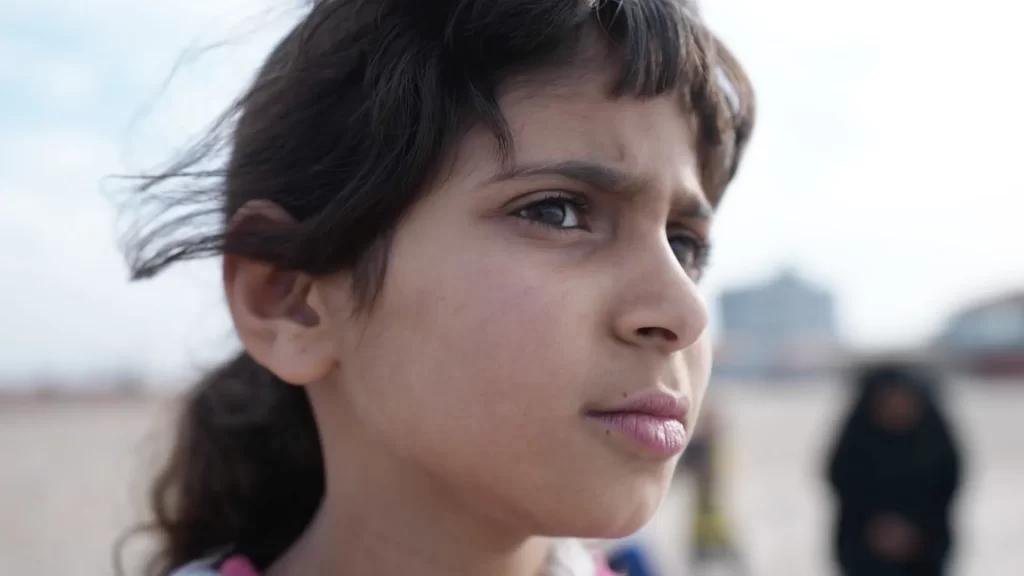
We have failed humanity’s children, but failure is not the end of the story. It breaks my heart that conditions in Gaza have only worsened since the time of these documentaries. The Earth keeps spinning, and time is not on their side, with children dying everyday from starvation and injury. Ceasefire and humanitarian aid should have happened months ago, however we can’t live in the past. Suffering is happening as we speak, and change needs to happen today, so that there can be a tomorrow for these children.
Children compel love. Despite the pain of love, it is the ego’s responsibility to cultivate love in ones heart, so it can be passed down to future generations. Love can be chosen at each step of the Hero’s journey, whether it be love over fear, love over hate, love over indifference and so on. A journey not beset by trauma, but a compassionate rite of passage that transforms the spirit into a Camel and then the Lion, and back to a Child again. What we love becomes our fate, and if our Child spirit can recreate the future in the image of Love, we can make the world a better place.
Re-Creation
The mythical Phoenix is an emissary of the Sun, symbolizing death and rebirth in many cultures. Around 500 BCE, one of the earliest accounts of the Phoenix came from Herodotus, the “Father of History” who described an Egyptian myth of a rare and sacred, eagle-like bird with red and gold plumage. With a lifespan of several centuries, the Phoenix is the only one of its kind and thus is unable to reproduce sexually. However, when the Phoenix approaches its end of life, it builds a nest and sets it on fire, engulfing itself in flames. From the ashes, it is reborn. The renewed Phoenix then places the ashes into an egg-shaped shell made of myrrh and incense, and along with a procession of other feathered creatures, carries it to a temple in the ancient Egyptian city of Heliopolis where funeral rites are performed. In Egyptian myth, the death and rebirth of the Phoenix represented the setting and rising of the Sun.
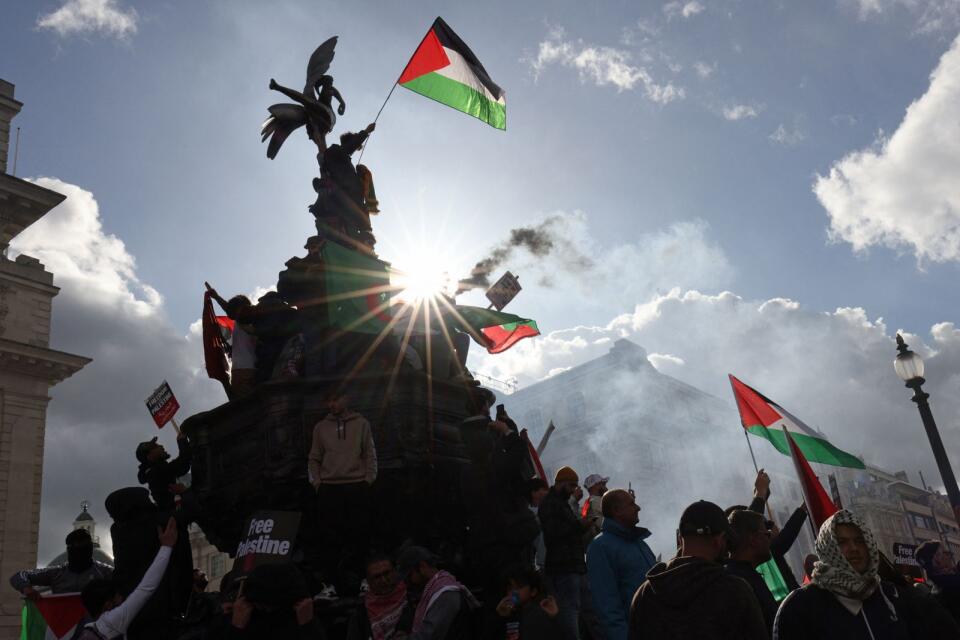
The burning on the pyre for the Phoenix represents the liminal space between the end of its past life and the beginning of new life. The space between death and rebirth is where transformation happens.
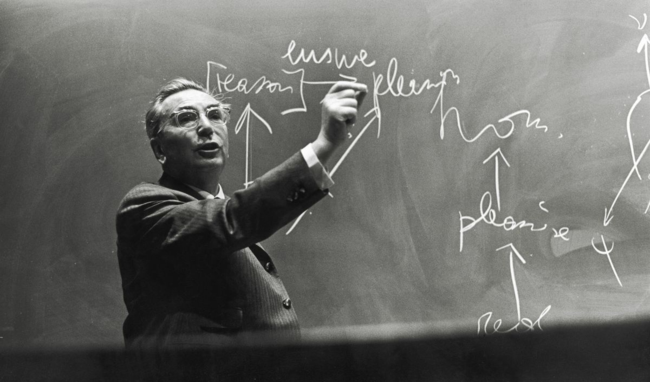
For Victor Frankl, his past life was that of a well-regarded psychologist and Director of a Neurological Department at a hospital that served Jewish patients. Prior to the concentration camps, he was developing his theory of Logotherapy (“Meaning therapy”), the manuscript of which he carried to Auschwitz, sewn into the lining of his overcoat. Upon arrival, he was stripped of his clothing, forcing him to let go of his life’s work. This was the death of his personal identity, “we all had once been or had fancied ourselves to be ‘somebody.’ Now we were treated like complete nonentities.” Next to be burned away would be his humanity:
“If the man in the concentration camp did not struggle against [a loss of values] in a last effort to save his self-respect, he lost the feeling of being an individual, a being with a mind, with inner freedom and personal value. He thought of himself then as only a part of an enormous mass of people; his existence descended to the level of animal life. The men were herded – sometimes to one place then to another; sometimes driven together, then apart – like a flock of sheep without a thought or a will of their own” (Man’s Search for Meaning, p. 70).”
With his outer life in ashes, Frankl experienced his inner life more intensely. Despite not knowing whether his wife was still alive, he felt a loving connection with her that transcended death, “love goes very far beyond the physical person of the beloved. It finds its deepest meaning in his spiritual being, his inner self” (p. 58). In addition, he felt a deeper gratitude for the “smallest of mercies,” describing a “negative happiness” derived from the “absence of suffering,” as opposed to the presence of pleasure. Moreover, he felt his emotions more strongly without shame, “there was no need to be ashamed of tears, for tears bore witness that a man had the greatest of courage, the courage to suffer” (p. 100). And as it is the Phoenix’s destiny to be burned alive, Frankl wrote that it is humanity’s “destiny to suffer.” Rather than resisting, Frankl found meaning and purpose in his suffering, quoting Dostoevsky, “There is only one thing that I dread: not to be worthy of my sufferings.”
For Frankl, the ashes from which the Phoenix is reborn was more faith than hope. Frankl observed how false hope crushed the spirits of those who held onto it. He shared an account of one prisoner who dreamt of being freed by a certain date. And when his dream did not come true, he became ill and delirious with a high temperature, even losing consciousness on the “prophesized day,” and died a few days later. Frankl observed other prisoners holding onto “naïve hope” that they would be released by Christmas, and when freedom did not arrive, they lost courage and “disappointment overcame them.”
While hope yearns for a future that may or may not happen, faith is rooted in entrusting ones life to a higher power without evidence or certainty, whether it be having faith in God, the natural laws, or even oneself. For Frankl, he had faith in his inner freedom. This freedom was not defined by external circumstances, as true freedom relies on the capacity to think freely for oneself, as Jean-Paul Sartre put it, “there are two ways to go to the gas chamber: free and not free.” Frankl had immutable faith in his freedom to choose his response to any given set of circumstances, as he famously wrote, “Between stimulus and response there is a space. In that space is our power to choose our response. In our response lies our growth and freedom.” If Frankl were to die, he would die a free man.
While Frankl warned against false hope, a true hope rooted in faith was essential for survival, as those who lost their “spiritual hold” would soon succumb to “mental and physical decay.” Akin to hope, Frankl’s faith looked towards the future without getting attached to an outcome. With a “both-and” mindset, Frankl was not afraid to entertain wishes, goals, and visions for the future while accepting that death is a likely possibility. The outcome mattered less than his freedom to choose the life he would re-create if given the opportunity to survive. And with this inner freedom, he actively imagined his dreams, which helped him rise above his suffering:
“I forced my thoughts to turn to another subject. Suddenly I saw myself standing on the platform of a well-lit, warm and pleasant lecture room. In front of me sat an attentive audience on comfortable upholstered seats. I was giving a lecture on the psychology of the concentration camp! All that oppressed me at that moment became objective, seen and described from the remote viewpoint of science. By this method I succeeded somehow in rising above the situation, above the sufferings of the moment, and I observed them as if they were already of the past. Both I and my troubles became the object of an interesting psychoscientific study undertaken by myself.” (Man’s Search for Meaning, pp. 94-95)
After two and a half years in the concentration camps, Frankl was liberated on April 1945, only to discover his loved ones had perished. There was no returning to his past life. Broken and alone, he could only move forward. Just a year later he published “A Psychologist’s Experiences in the Concentration Camp,” which became Part One of “Man’s Search for Meaning” with Part Two his theory of Logotherapy which he revived from the ashes of his memory. In this next phase of life, Frankl went back to school, getting a PhD in Philosophy, and took on an academic position at the University of Vienna Medical School, as well as professorships at several American universities including Harvard. In his rebirth, his active imagination became a reality.
Like the Phoenix, a special soul like Frankl’s is a rarity. Approximately six million Jews perished in the Holocaust compared to an estimated 250,000 to 300,000 who survived the concentration camps, a death-to-survivor ratio of roughly 20:1. For those who died in the Holocaust, what remains are our memories of them. In many cultures, we honor the memories of our loved ones by fulfilling their dying wishes, whether it be their last will and testament or simply by living in accordance with their values. With this intention, what may be the wishes of the brave souls who perished in the Holocaust? And what may be the wishes of their survivors? Would it be genocide? Or sustainable peace?
The first act of the reborn Phoenix is a pilgrimage to Heliopolis with a procession of birds to perform funeral rites for its past life. The ashes of its predecessor are put into a egg-shaped container made of incense, which represented the “Fragrance of the Gods” in ancient Egypt, and myrrh which symbolized death and mourning. Death calls for mourning, bringing the community together to honor and remember the deceased and to help loved ones through their grieving process. We simply can’t move on without grieving and mourning our losses. To this end, diverse cultures throughout history has developed mourning rituals and traditions to honor the dead, because all lives are sacred regardless of nationality and creed.
However, in reality, there is neither a procession or funeral rites for those who perish in a genocide. In Gaza, traumatized Palestinians are unable to properly mourn their deceased due to a lack of peace and safety, not to mention the chaos of identifying dead bodies including those buried under rubble. And to add insult to injury, there have been accounts of dead bodies being exhumed and burial sites damaged and destroyed by Israeli soldiers. Is nothing sacred?
The death toll for Palestinians continue to rise given the number of those who are gravely ill, injured, and starving to death. Despite the U.N.’s call for ceasefire, the violence has not stopped. For every death, we risk losing a real-life hero like Viktor Frankl whose “Elixir” was a boon to humanity.
Such a figure was Palestinian writer and poet, Refaat Alareer, whose life was tragically cut short, along with his brother, sister, and four nieces, by an Israeli airstrike on December 7th, 2023. Like Frankl, Alareer was an academic, having earned his MA in Comparative Literature from London University, his PhD in English Literature at the Universiti Putra Malaysia, and was a professor at the Islamic University in Gaza, where he taught Creative Writing and World Literature, with a specialty in Shakespeare. He was the Editor of “Gaza Writes Back,” a collection of short stories from young Palestinians about their experiences living under Israeli occupation.
A heroic figure like Refaat Alareer deserved better than a cowardly airstrike that targeted him because of his human rights activism. He deserved a proper funeral, and his loved ones deserved peace and safety to properly mourn. Despite the circumstances, a semblance of an eulogy was delivered by his close friend and former student, Jehad Abusalim, in an interview with Democracy Now!:
“Refaat Alareer was a towering figure in Palestinian Society especially in Gaza. He transcended the role of a mere educator and a teacher. He was a mentor, a beacon of wisdom and guidance, a loving father and husband, and a compassionate son. Refaat’s presence enriched the lives of hundreds if not thousands of students. His influence extended far beyond the confines of the classroom. Refaat wasn’t just a teacher, he was a friend, a confidant, he was someone who believed strongly in the potential of each student, offering them personal advice and guidance. He will be missed.”
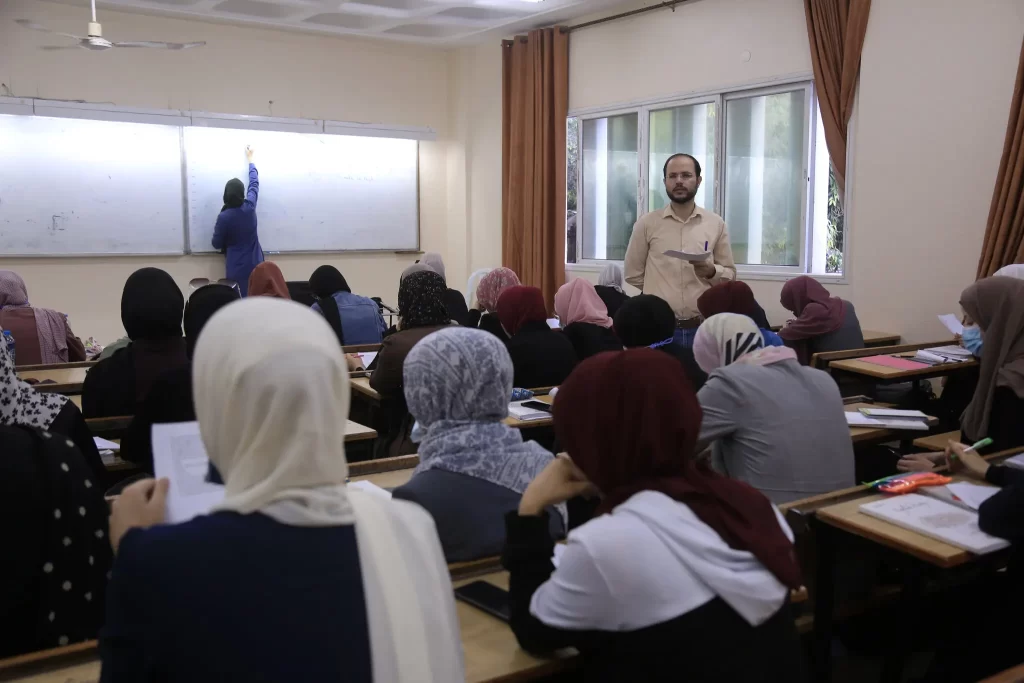
Alareer was a champion of stories. He encouraged the telling and retelling of stories to keep Palestine alive in the hearts and minds of its people. In “Gaza Writes Back,” Alareer stated, “writing is a testimony, a memory that outlives any human experience, and an obligation to communicate with ourselves and the world, we lived for a reason to tell the tales of loss, and of hope.” He used stories to show that Palestinians were not just a statistic mentioned in reports of Human Rights organizations, but real people with a rich culture, history, and values. Furthermore, for Alareer, the key to liberation was through stories, “If the lions do not have their own historians, the history of the hunt will always glorify the hunters, will always glorify the occupier, will always glorify the colonizer, rather than the colonized, the oppressed, the indigenous, the rightful people of the land.”
Like Frankl, Alareer believed that freedom was an inalienable human right, and he stayed anchored to his inner freedom to the very end, as reflected in his last recorded words:
“I am an academic. Probably the toughest thing I have at home is an Expo marker. But if the Israelis invade, if they barge at us, charge at us, open door-to-door to massacre us, I am going to use that marker to throw it at the Israeli soldiers, even if that is the last thing that I would be able to do. And this is the feeling of everybody. We are helpless. We have nothing to lose.”
His response was not a turning of the cheek, but a sacred “No” in the form of a nothing to lose attitude. With a Lion spirit, his intention was to face death, standing his ground with integrity. To me, the Expo marker was a beautiful symbol, that for Alareer, education was his weapon of choice. If the pen is truly mightier than the sword, perhaps the Expo marker is mightier than a bomb, for words have power: they reach farther, last longer, and speak louder than any explosion of a bomb.
In the spirit of non-violent resistance, Alareer’s last poem was published about a month prior to his death, entitled “If I Must Die.”
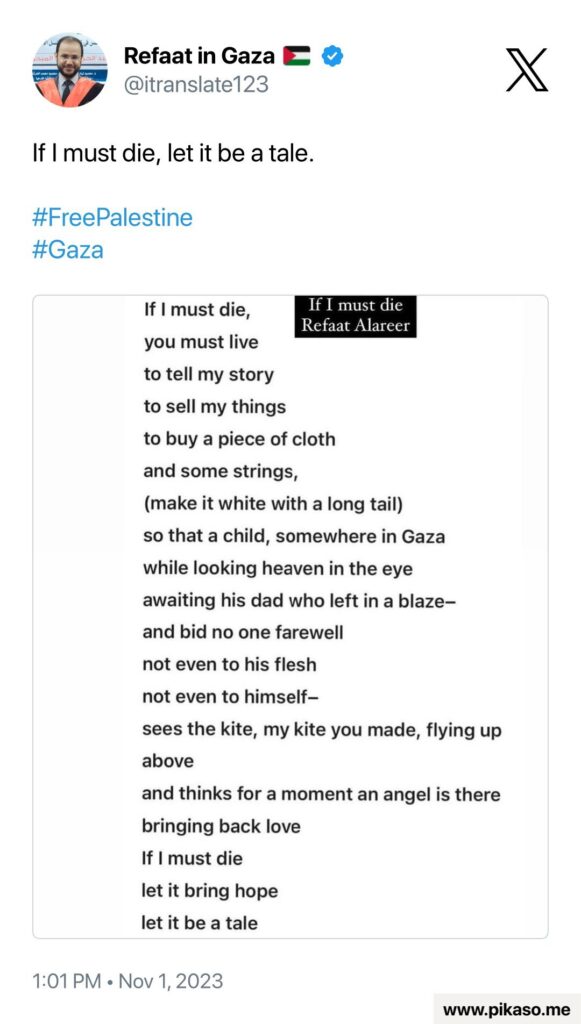
Like a Phoenix resurrecting from its ashes, Refaat Alareer’s spirit lives on in the hearts and minds of those he has loved and inspired throughout his lifetime and beyond. His words found a voice in Scottish actor Brian Cox, speaking to us beyond the grave, reaching distant strangers like myself. His poetry moved me to tears, as if his heart entered mine. His imagery evokes the Angels of our better nature, to “bringing back love” for his beloved children of Gaza. And his martyr spirit calls for the telling and retelling of his people’s story, tales of death and loss, of love and hope, so that one day Palestine can be recreated in accordance with the true spirit of its people.
Brian Cox recites Refaat Alareer’s “If I Must Die”
Timshel
Stories are not merely fairytales. Stories provide a bridge into worlds beyond our own. Stories can malign and dispossess, or they can redeem and humanize. Stories can be told and retold, preserving the spirit of a people and their culture. Stories are timeless, with myths and histories going back centuries and millennia. Stories can influence and determine what happens next. Stories can be re-interpreted, re-imagined, and re-created.
History depends on who tells what stories about whom. Large-scale events like war and conflict, and larger-than-life figures, often with big egos, make the headlines. However, what are the stories of regular people? Of Jews and Muslims breaking bread together? Of children on both sides wishing for a normal childhood, and the safety to “sleep comfortably at night, without the sound of rockets and ambulances?” Of people around the world hoping and praying for peace and reconciliation? More than ever, we need stories that inspire faith in humanity.
For Israel, such stories may be found within, by turning inwards to their own people. In the excellent food-travel show “Somebody Feed Phil, ” Jewish funnyman Phil Rosenthal visits Tel-Aviv and has a first-hand experience of peaceful co-existence:
Phil (narrating): The ancient port of Jaffa is a predominately Arab neighborhood in the oldest part of Tel Aviv. This is where the biblical stories of Jonah, Solomon, and Saint Peter were set….I happen to walk by a bakery, and I noticed that the Arab gentleman behind the counter had a shirt: “Jews and Arabs refuse to be enemies.”
Baker: The bakery has been here since 1870…My great-grandfather started this bakery, and we’ve always coexisted with Arabs and Jews before 1948, so we decided to make this shirt as a tribute.
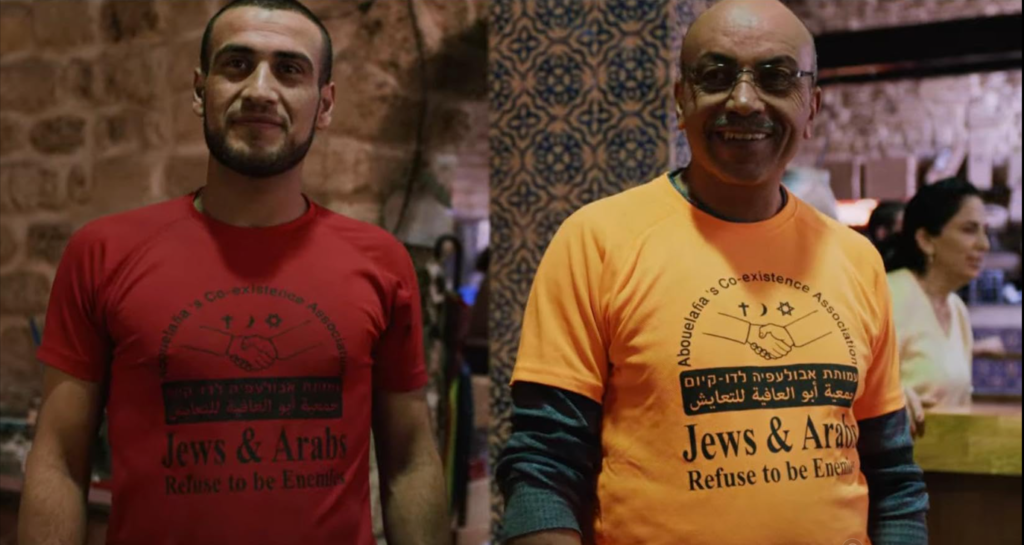
Another story comes from Akko, an Israeli coastal city along the Mediterranean’s Levantine Sea that was established over 5,000 years ago. Akko is one of the most integrated cities in Israel, populated by Arabs and Jews. There, Phil meets Uri “Buri” Jeremius, a restaurant owner and unofficial mayor of Akko:
Phil (narrating): So you see the influence of all these bits of history in present day…These rocks are from the Crusades, these rocks are from the Byzantine era, on top of them are from the Ottoman Empire and on and on until present day. Civilizations just built one on top of the other.
Uri: I was born as a Palestinian. I have a Palestinian birth certificate. We were very poor. But we didn’t have — we never had the feeling of being poor because everybody around was poor.
Phil: You didn’t feel the politics of the time, you didn’t feel the violence of the time?
Uri: Yes, sure we felt it. I mean, if there were bombings, we went to the shelter, you know? And this is throughout the years. But there is no aggressivity in the street, in the market. Eh, all around, you see very calm place.
Phil (narrating): Uri Buri said to me, “What don’t you see?” You know what the answer is?… Policemen. No need for them.
Uri: So many people can tell you about coexistence, but they never practiced it. And I can tell you that there is one main ingredient that makes it possible to live together and this is respect.
Phil: Amen to this!
Uri: L’Chaim!
These real-life stories provide a glimpse of peace and respect between Arabs and Jews, between Palestinians and Israeli. These stories prove that co-existence is possible, and provides a vision for a better future.
As stories show the way forward, they also provide insights into patterns and dynamics that addresses the question, “how did we get here?” Looking back at humanity’s origin story, it is more than mere coincidence that the current conflict in Gaza share similarities with the story of Cain and Abel, which shows up in both the Quran and the Torah. Both Islam and Judaism are sibling religions from the same Abrahamic tree of monotheism. If Muslims and Jews have the same God as their “Father,” genocide is equivalent to fratricide. Understanding what the Cain and Abel story reveals about our collective unconscious can help us find another way forward.
While Adam and Eve were created by God, Cain and Abel are considered to be the first full-humans born from the womb of a human mother. The first born Cain the “tiller of the ground,” was a farmer, and his younger brother Abel the “keeper of the sheep” was a shepherd. They both offered God a sacrifice from their respective vocations. Perhaps God is more carnivore than vegan because He much preferred Abel’s lamb over Cain’s “fruit of the ground.” In a fit of jealousy, Cain kills Abel. An omniscient God asks, “where is thy brother?,” to which a dodgy Cain famously replied, “Am I my brother’s keeper?” As punishment for murder and deceit, Cain was condemned. For Cain, the Earth would no longer yield crops, banishing him from his own Garden of Eden. And the mark of a fugitive was placed on Cain, who was exiled to wander the world for the rest of his natural life, as God forbid Cain from ever being killed by another. Whether this immunity was mercy or punishment is up for debate.
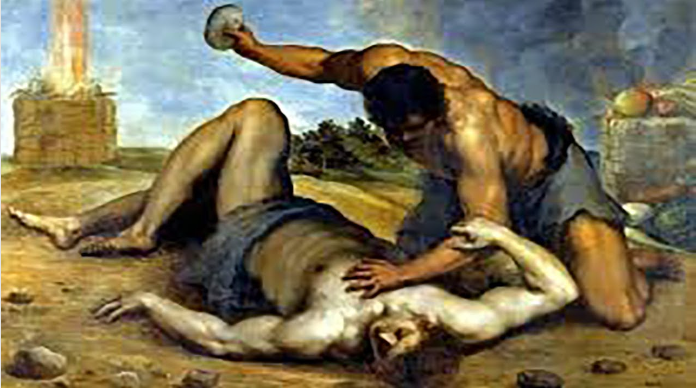
In Steinbeck’s East of Eden, the story of Cain and Abel is re-imagined through the brothers Adam and Charles Trask. Mirroring Cain and Abel, both characters offer a birthday gift to their father, with Charles gifting a German knife which he worked hard to save up for, while Adam gifted a stray puppy without giving much thought. The father favored Adam’s gift, which infuriated Charles. Overcome with anger, Charles attempts to murder Adam; however, Adam survives. In this twist of fate, it is Adam who is “exiled” into joining the army followed by a period of directionless wandering. A reformed Charles becomes a hard-working farmer, writing fond letters to his wayward brother, and living a quiet life. Upon Adam’s return from his travels, the two brothers reconcile and co-exist in peace, albeit begrudgingly.
Like many human affairs, Adam falls in love with a girl and eventually moves away to have a family with her. Tragedy strikes and Adam is betrayed by his ill-fated lover, abandoning him to raise two newborn twins as a single father with the angelic help of his Chinese servant Lee. A traumatized Adam loses his will to live, neglecting his responsibility to name his children even after fifteen months. His neighbor, Samuel Hamilton, has compassion for the unnamed children and without invitation, visits Adam to rectify the situation. As a true friend, Samuel knocks some sense into Adam, and they proceed to identify fitting names for the toddlers. Considering Adam’s Biblical namesake, the trio of Adam, Samuel, and Lee go off on a tangent (like this God-forsakenly long essay) and discuss the Cain and Abel story. They take turns giving interpretations, but the most profound re-interpretation came from Lee, the outsider from the East:
“Lee answered Samuel. I think this is the best-known story in the world because it is everybody’s story. I think it is the symbol story of the human soul…The greatest terror a child can have is that he is not loved, and rejection is the hell he fears. I think everyone in the world to a large or small extent has felt rejection. And with rejection comes anger, and with anger some kind of crime in revenge for the rejection, and with the crime guilt—and there is the story of mankind.”
It is unwritten what happened to Cain in the aftermath of his exile. Did Cain live the rest of his life in guilt and shame? Or did he find redemption for his crimes? If Cain was the father of humanity, how he dealt with the dark legacy of terror, rejection, anger, revenge and guilt is tantamount. What is not transformed is transmitted. Are we still paying for the sins of the father, or of the Father? Whether Cain or God is to blame, Lee suggests that this dark legacy is a tale as old as time.
Ten years after the naming of the twins, Caleb and Aron have grown up. With the next generation, a new opportunity to recreate the “story of mankind” is made possible. Over the past decade, Lee apparently did a ton of research on the Cain and Abel story: consulting experts, deciphering different translations, and contemplating the story’s deeper meaning. He gets stuck on the following verse in the Bible:
“If thou doest well,
shalt thou not be accepted?
And if thou doest not well, sin lieth at the door.
And unto thee shall be his desire,
and thou shalt rule over [sin].”
Upon reviewing different translations, Lee discovers that the phrase, “thou shalt” was the word “timshel” in the original Hebrew text, which means “thou mayest.” This was a light bulb moment for Lee:
“Don’t you see?” he cried. “The American Standard translation orders men to triumph over sin, and you can call sin ignorance. The King James translation makes a promise in ‘Thou shalt,’ meaning that men will surely triumph over sin. But the Hebrew word, the word timshel—‘Thou mayest’— that gives a choice. It might be the most important word in the world…Any writing which has influenced the thinking and the lives of innumerable people is important. Now, there are many millions in their sects and churches who feel the order, ‘Do thou,’ and throw their weight into obedience. And there are millions more who feel predestination in ‘Thou shalt.’ Nothing they may do can interfere with what will be. But ‘Thou mayest’! Why, that makes a man great, that gives him stature with the gods, for in his weakness and his filth and his murder of his brother he has still the great choice. He can choose his course and fight it through and win.”
“Thou mayest” means we have a choice, whether we use that choice wisely is up to us.
With the current conflict, some have unwisely chosen to fight terror with terror, which only begets more violence perpetuating the dark legacy of Cain. Such is the case with the attacks in the Red Sea where ships affiliated with Israel are being targeted by the Houthi in Yemen, threatening to continue attacks until there is a ceasefire. This violence has been costly, with disruptions to global supply chains and international trade between Europe and Asia. Or the military regime of Iran training, funding, and arming so-called “terror” groups that resist the spread of U.S.-Israel’s hegemonic power, potentially engulfing the entire Middle East region in war and destruction. Although from the perspective of these resistance groups, they are the freedom fighters and the U.S. and Israel the terrorists, with the U.S. training, funding, and arming Israel with billions of dollars worth of modern warfare, enabling genocide with no regard for international law, and potentially escalating the conflict to a global scale.
Einstein once said, “I know not with what weapons World War III will be fought, but World War IV will be fought with sticks and stones.” Ignoring Freud’s claim that humans possess a self-destructive death instinct, the “balance of terror” strategy that fueled a nuclear arms race during the Cold War era was a madness that may foreshadow a self-fulfilling prophecy of Mutually Assured Destruction, unless the world changes course.
Another choice may be to “turn the other cheek.” If the absence of love gave birth to terror, perhaps love should be part of the solution. And love does not harm. The principle is captured in a story told by Joseph Campbell in the excellent PBS series, “Joseph Campbell and the Power of Myth.” Campbell recounts a friendship with a young Tibetan monk, who survived the Chinese assault on the palace of the Dali Lama, with “five thousand, six thousand monks all wiped out and tortured.” Despite the “terrific violence” they have suffered, including the destruction of over 6,000 monasteries all over Tibet, Campbell shared that he has not heard one word of incrimination or condemnation of the Chinese from this friend, or from the Dali Lama for that matter.
However noble this response, practicing this principle in real-life may be overly idealistic and even dangerous. Regular people have not renunciated their attachments and undergone rigorous spiritual training like Tibetan monks, let alone the Dali Lama, to achieve the seemingly impossible task of turning the other cheek. Nor would they want to. It would be quite insensitive to ask victims of October 7th and the Gaza genocide to bear no animosity for their enemies.
A middle ground may be peaceful, non-violent resistance. An inspiring example of this happened recently in New York City where a Jewish-majority crowd gathered to protest on behalf of peace and freedom for Palestine in the true spirit of Passover, which commemorates the liberation of Israelites from slavery in Egypt. At the event, Naomi Klein, a Jewish journalist, author, and activist, gave a stirring speech, applying the story of Moses to the current state of affairs, and speaking to an Exodus of Jewish people from the “false idol of Zionism.”
Even though a surface view sees Israel, and specifically Zionism, as the victors of the current conflict, Klein recognized that any form of oppression enslaves not only the oppressed but also the oppressor, imprisoning Jewish people in a never-ending pattern of hate and violence that is corrosive to their souls. Thus, true liberation for the Jewish nation is freeing itself from the false ideology of Zionism that has shackled both sides of the conflict. From this perspective, a free Israel is dependent on a free Palestine.
These stories exemplify different choices made in response to atrocities in the world. With the current conflict, we can choose to do nothing, or even delay making a choice. However, Holocaust survivor Elie Wiesel urged the world, “We must take sides. Neutrality helps the oppressor, never the victim. Silence encourages the tormentor, never the tormented.”
We must choose our destiny.
With the spirit of “Thou mayest,” I hope the world chooses a different path than our dark legacy of terror. We can refuse to be enemies for the sake of co-existence. We can choose to forgive and let go of revenge. We can choose to “Love thy neighbor as thyself.” Beyond any religion, the Golden Rule is humanity’s moral of the story. And if we were to create a story based on this moral, set in the true promised land where God’s children peacefully co-exist, with angels bringing back love and hope, what a tale that would be.
L’eggo My Ego
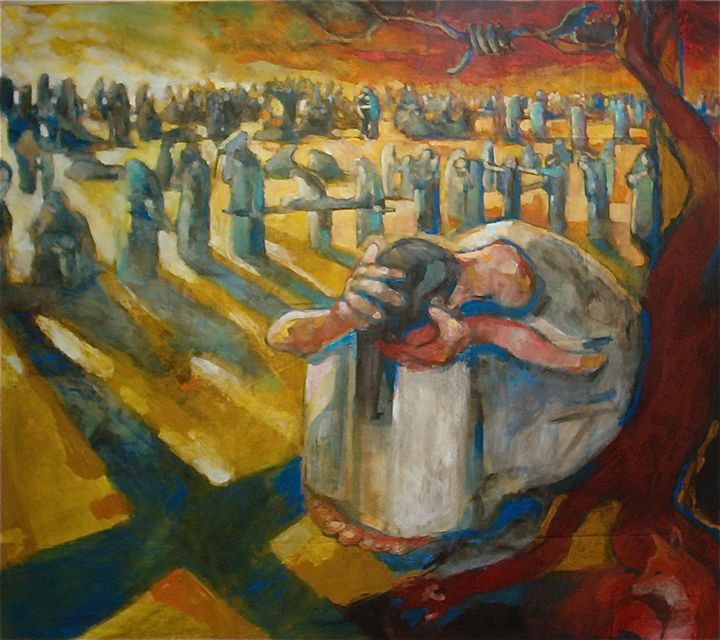
Every morning is a rebirth. Isn’t the posture of sleep like death? During sleep, the ego recedes into the unconscious, letting go of waking life. The ego slumbers, until a morning light awakens the mind and body to new beginnings. Naturally, the body fasts while asleep at night, which is often followed by breakfast in the morning. During Ramadan, breakfast is a sacred ritual called the Suhur that takes place before sunrise, consisting of a balanced and healthy meal that nourishes the body until the next sunset. Through this morning ritual, it is said that God bestows blessings and mercies for the new day.
Far from the sacred and nutritious Suhur, as a child, one of my favorite breakfast items were Eggo’s. A waffle with an identity crisis, shaped like a pancake and toasted like a slice of bread. For me, they were the best of both worlds. It didn’t matter that they were mass-produced, cheap and fast; I still loved them. There were many ways of eating one. My favorite was creating different patterns by squeezing syrup into its honey-comb compartments, providing a modicum of play before starting the school day. Most of all, my love for them stem from the context in which I regularly had them, the nostalgia for my childhood home.
Eggo’s were great for food fights. And on one fateful day in grade school, my cheeky side was called into the principal’s office for playing “Eggo frisbee” with a fellow classmate. Whether it was an Eggo or a sacred apple that was thrown, what got me in trouble was my disobedience of a teacher who had warned me to stop. My accomplice disappeared into thin air, and I had to face the principal alone. After a few stern words, I was most relieved that my parents would not be notified, and so this incident became my little dark secret. It may not sound like a big deal, but this was the first time I got in trouble outside of home. Even though I got away scot-free, the fear of getting found out and the guilt for breaking the rules haunted me for weeks and months. The secret was worse than the misbehavior. And in the fertile grounds of a lie, the seed of a “bad kid” was planted, an image that grew into a rebellious monster during my teenage years and my personal Devil in adulthood.
As a flashback to simpler times, my dear sister made Eggo’s the other day, but they didn’t bring the same joy I remembered from childhood. Its not that Eggo’s have changed. These days, I don’t have much of an appetite, even for Gods blessings and mercies.
At the time of this essay, I have been going through a personal crisis. My suffering pales in comparison to what Palestinians and others are going through in the world; however, in the context of my life, this dark night of the soul has been the most difficult struggle. Before anyone offers pity or compassion, please know that I am the villain of this story. All the wrong turns of my life had finally caught up with me. Crushed under the weight of guilt and shame, the suffering literally brought me to my knees and shredded my heart wide open.
My wounded heart made me more sensitive to the suffering of others. Watching the news as part of my morning routine, I cried often witnessing the heart-breaking images and stories of what Palestinians have been going through. I became compassionate to their plight, and developed an appetite for learning more about the Israel-Palestine conflict. I learned that since ancient times, Palestinians have persevered through countless occupations and persecutions. Same for Jewish people. Both groups have endured so much. This common ground of suffering can be a basis for compassion for both sides of the conflict, and provide a road map for a way back home.
L’eggo my ego, of guilt and shame!
On a villain’s journey, guilt is a close companion, which is a natural emotion when we inflict harm or violate our moral code. In the right amount, guilt can be constructive, motivating us to repair and make amends. However, excessive guilt makes a person feel unworthy and undeserving of love, especially from themselves. It can fuel self-loathing, and a guilty conscience can be quite punishing, robbing a person of their peace of mind and a sense of inner goodness.
Furthermore, guilt does not stay contained within a guilty party, it can spread like a plague. Guilt can be transmitted person-to-person through such dynamics as guilt-tripping, gas-lighting, and scapegoating. There is also guilt by association, when a person or a group is complicit with or a beneficiary of a crime.
With regard to the current conflict, even though it is Israel’s military regime committing genocide, its people may have to bear the collective guilt of this heinous crime, as any version of Israel “from the Sea to the Jordan” would be built on the mass graves of innocent Palestinians. The incredible guilt that comes from genocide, whether complicit or not, can make ones inner world an inhabitable Hell.
And if that collective guilt were to be repressed inward and projected outward, what danger could that pose to the world? Ancient wisdom has warned against this collective shadow as far back as the Tao Te Ching in 6th century BCE, “He thinks of his enemy as the shadow that he himself casts.” A principle in Jungian Shadow work is that when a projection is made conscious, it is the ego’s duty to withdraw and return the projection to its original source, to oneself. This involves an honest self-examination that brings awareness to the hypocritical ways we judge and blame others for the things we are guilty of ourselves. However, the search for the ugly truths of oneself is often riddled with obstructions and dead-ends.
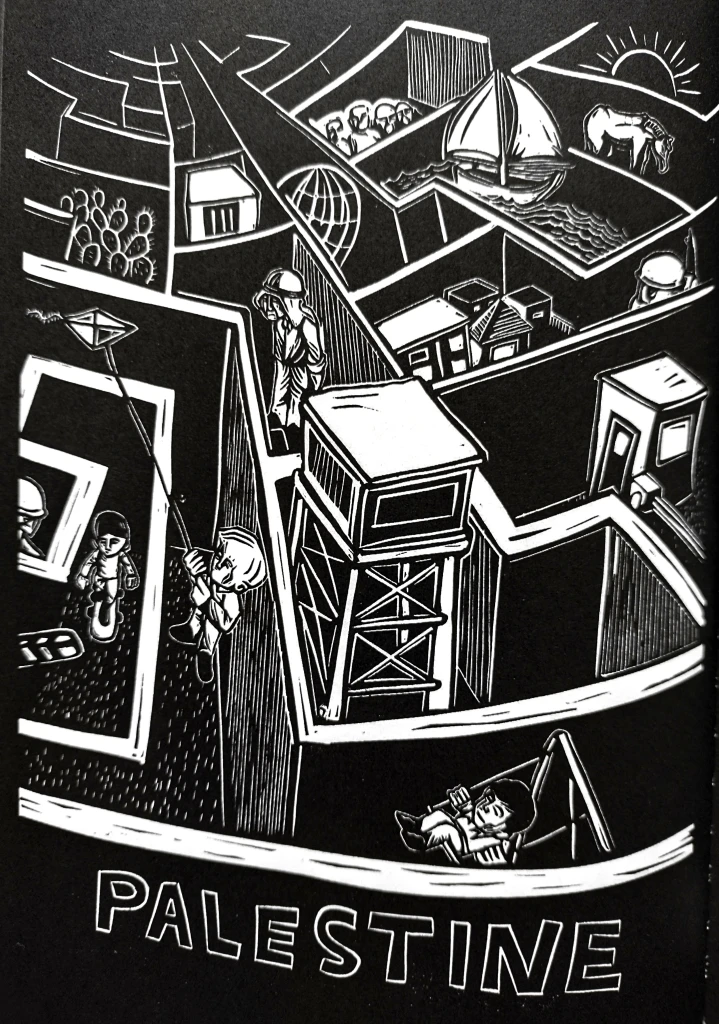
Freedom from a guilty conscience is like trying to escape an inner maze. Each crossroad presents a choice for the ego, with each choice leading to more choices, that can either take someone deeper into the maze or towards liberation. We inevitably hit dead-ends that require us to trace our steps back to when the wrong turns were taken. The tracing back is not a regression, but a forward movement, as each step of a journey provides an opportunity for growth and gets us closer to our karmic destination. The wrong turns force us to take an honest look at ourselves, which can be quite threatening to the ego.
A common defense against guilt is denial of reality. The ego has an arsenal of defense mechanisms to protect itself against ugly and inconvenient truths about oneself. However, it is only a matter of time before an overly defended ego loses itself in the labyrinth of its own lies. At the crossroads of facing reality, the ego has a choice between the blue pill of self-delusion or the red pill of painful truth. Blissful ignorance is often short-lived; all lies are revealed in time. While painful, only the truth will set the ego free.
The truth makes the ego conscious of its wrong-doings, triggering guilt and shame. An ego that is over-identified with guilt believes it deserves punishment. However, self-flagellation is often selfish, more to relieve ones guilt than actually making things better. Have you ever had a partner, who in response to negative feedback, went on and on about how bad they felt? This woe-is-me self-centeredness helps nobody.
An inability to resolve guilt can transform an “I did a wrong thing” to “I am a bad person.” This is the dead-end of shame. As a defense, the ego may disguise shame with pride, projecting and hiding behind a pristine image of oneself as opposed to an honest one. Whether expressed as pride or shame, the feeling of unworthiness is the same. And a person who feels unworthy is unable to truly love themselves.
By turning back from the dead-ends of guilt and shame, and taking the path of empathy and compassion, the focus shifts from self to the other. Understanding the harm from the others’ perspective transforms the guilt into remorse, which then motivates the ego to make amends and repair the rupture. And when repair is not possible, the ego may consider “paying it forward” to others in their life. Furthermore, healing the narcissistic wound of shame through self-compassion allows the ego to accept its failures, weaknesses, and blind-spots, while still feeling good enough for a second chance. This second chance goes beyond relief from guilt and shame, towards taking responsibility and making amends for the wrong turns of life. How else do we redeem ourselves?
In the true spirit of Democracy, college students from universities across the U.S. have called on Washington to take responsibility for funding genocide by divesting military aid from Israel. Despite this demand, U.S. Defense Secretary Lloyd Austin stated on April 9th, 2024, “We don’t have any evidence of genocide being [committed] by Israel in Gaza,” which directly conflicted with a report published weeks earlier from the UN Human Rights Council that presented clear and convincing evidence for genocide.
Furthermore, on April 29th, 2024, the U.S. Secretary of State, Antony Blinken, stated “Hamas has before it a proposal that is extraordinarily, extraordinarily generous on the part of Israel…The only thing standing between the people of Gaza and a ceasefire is Hamas.” This statement was made less than a week after the Senate passed a military aid of $95 billion to their allies, including Israel. Rather than de-escalating the genocide by cutting military aid, our leaders say one thing and do another.
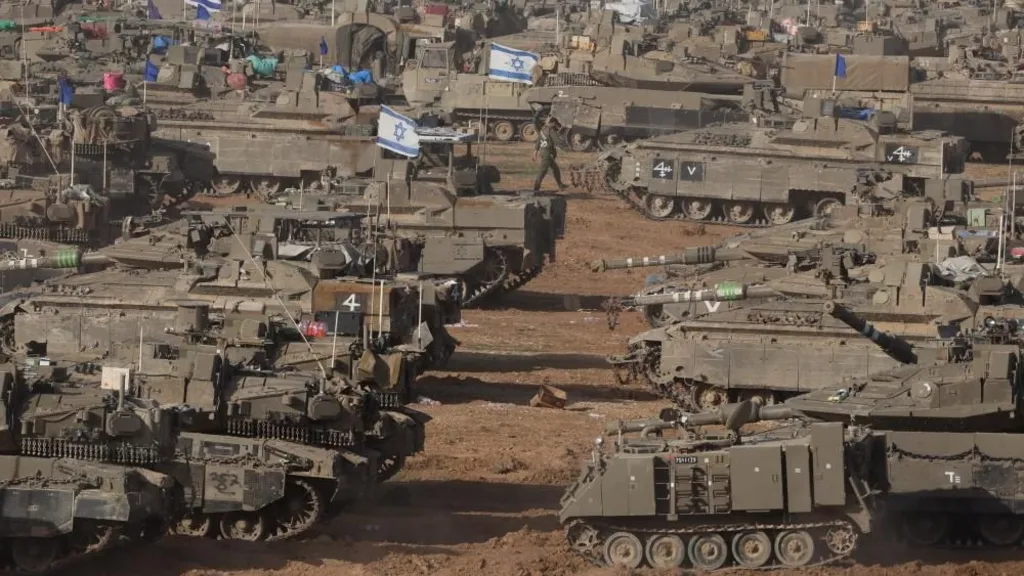
Even though the U.S. says their commitment to Israel is “iron-clad,” their military aid that only fuels the conflict is not how a true friend would respond. For lack of a better word, a true friend “calls out your bullshit,” to prevent the misguided friend from falling deeper into the maze. A true friend would mediate a peaceful resolution by having both sides lay down their arms, not adding to it. A true friend would hold Israel accountable, out of respect for their sovereignty, because if Israel is truly independent, they are responsible for their choices and actions.
Taking responsibility calls for a reformation of character because the old patterns are what got us here, or else we keep hitting the dead-ends of repeated mistakes and poor choices. These old patterns must be disrupted, unlearned, and stripped away to make way for a new character to arise.
The process of reformation is beautifully captured in the Swedish fairytale of the “Princess and the Dragon,” which Buddhist psychologist Jack Kornfield writes about in his book, “After the Ecstasy, the Laundry.” In this story, the Princess is betrothed to marry a powerful Dragon as a result of parental mishaps. Fearful, she consults the kingdom’s Wise woman who tells her to wear multiple layers of clothing on the night of her wedding. The Princess and the Dragon get married, and on their wedding night, they get ready to consummate the marriage. However, as instructed by the Wise woman, the Princess tells the Dragon that she will take off a layer of clothing, only after he removes a layer of his. The Dragon agrees, and starts with the “outer layer of his scaly armour,” taking turns with the Princess. For the Dragon, the shedding of each successive layer is excruciatingly painful, however he starts to become softer, lighter, and tender, revealing at the end, “a fine prince whose eyes sparkle like a child’s.” Naked and vulnerable, the Princess and the Prince are left to the “pleasures of the bridal chamber.”
In summary of this story, Kornfield writes: “What this story reveals from the start is that the journey is not about going into the light. The forces of our human history and entanglement are tenacious and powerful. The path to inner freedom requires passing through them. Receiving grace, opening to illumination, becoming wise has not been easy even for the masters. It is described as a difficult purification: cleansing, letting go, and stripping away.”
Remember the Israeli soldier who stripped the brave Palestinian boy of his shirt? To give him a taste of his own medicine, what if we were to imagine this soldier as a subject of this “purification” process. Imagine for the first layer, the soldier lays down his arms and removes his gear. Next, taking off his uniform, shedding his identity as a soldier, as well as his undergarments, revealing his naked body. The inner scales are next. Expunging any ideologies of oppression from his conscious mind, and releasing anger and hate from his heart, revealing vulnerable emotions like fear and hurt. Next, de-programming his unconscious mind of propaganda, implicit biases, and deeply rooted beliefs that has him see Palestinians as less than human. Deeper still, letting go of his ego defenses that prevent him from seeing the monster he has become. And then, burning away his old character in the purifying fire of suffering, exorcising the demons of guilt and shame that have plagued his soul and stole away his inner freedom. No longer a soldier, what remains of this human being? Could there be any goodness left saving?
L’eggo my ego, of power and control!
A soldier’s life is not mass-produced, cheap and fast, nor is it an expendable plaything to be thrown around. Soldiers are often ignorant to the reasons behind the orders they are given, as military hierarchy demands unquestioning obedience. However, ignorance is not an excuse for harming others and everyone has to face the consequences of their choices and actions. Punishment needs to fit the crime; however, we have a choice whether the punishment serves the purpose of revenge or reformation. With regard to Hamas’ attack on October 7th, the punishment appears to be driven by revenge, perpetuating the dark legacy of Cain. There is no reformation in genocide, only death and destruction for both sides.
Insights into a reformative “punishment” can be found in a beautiful ritual from South Africa that Jack Kornfield describes in The Art of Forgiveness, Lovingkindness, and Peace:
“In the Babemba tribe of South Africa, when a person acts irresponsibly or unjustly, he is placed in the center of the village, alone and unfettered. All work ceases, and every man, woman, and child in the village gathers in a large circle around the accused individual. Then each person in the tribe speaks to the accused, one at a time, each recalling the good things the person in the center of the circle has done in his lifetime. Every incident, every experience that can be recalled with any detail and accuracy, is recounted. All his positive attributes, good deeds, strengths, and kindnesses are recited carefully and at length. This tribal ceremony often lasts for several days. At the end, the tribal circle is broken, a joyous celebration takes place, and the person is symbolically and literally welcomed back into the tribe.”
More than guilt or shame, reformation is sought because there is something worth redeeming. For pro-Palestinians, it may be difficult to find any goodness in Israel right now. However, it is helpful to realize that governments do not necessarily reflect the true interest of their people. Even though there is little to redeem of Israel’s current military regime, there is goodness in its people. On March 31, 2024, tens of thousands of Israelis took to the streets of Jerusalem to protest the war, including relatives of the hostages from the October 7th Hamas attack. These protestors called for immediate ceasefire and the resignation of Netanyahu, including one protestor proclaiming, “I’d like to say to the government that you’ve had your time, you ruined everything that you can ruin. Now is the time for the people to correct all the things, all the bad things that you’ve done.” These good souls refuse to see the Devil when looking upon themselves in the mirror.
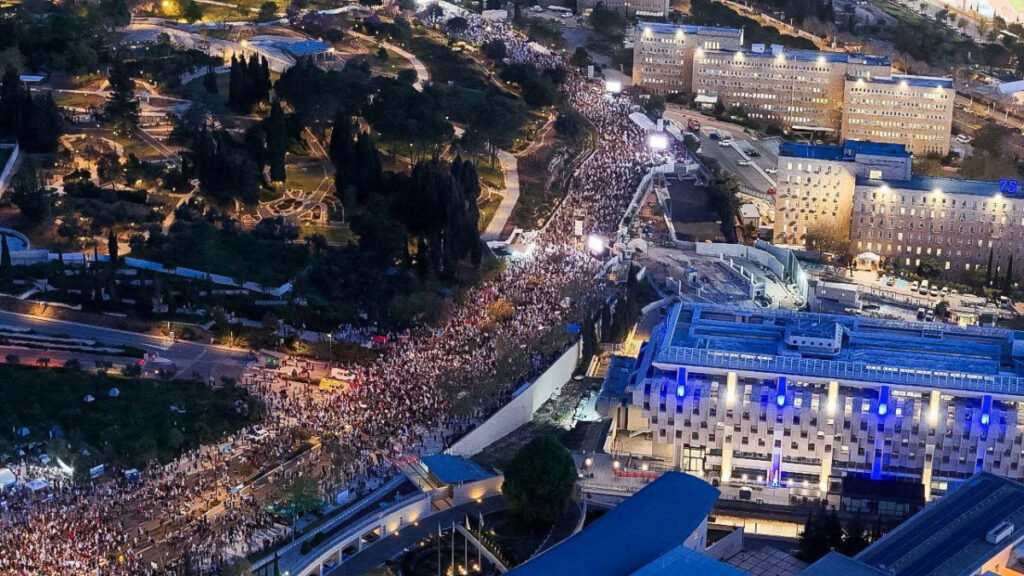
Genocide is a zero-sum game, everybody loses including those on the “winning” side. For Israel, winning is the total annihilation of Hamas. It does not matter how many innocent civilians and children get in the way. Even though Israel may be winning the military war, it may be a pyrrhic victory if they lose their souls in the process.
Netanyahu and his military regime refuse to turn back despite hitting the dead-end of genocide; instead, they are bulldozing their way through, collapsing the maze and trapping Israel under the rubble of guilt and shame. This inevitable collapse is not only metaphorical. In a poll conducted by the Israel Democracy Institute on January 2024, only 15% of Israelis were in favor of Netanyahu staying in power. And in a more recent poll on April 2024, the majority of Israelis called for resignations of those “responsible for the failure of October 7.”
Despite calls for an early election, Netanyahu has been obstinate about staying in power, as he rationalized, “The last thing we need right now are elections and dealing with elections, since it will immediately divide us.” The inflated ego of Netanyahu refuses to let go of power, and whomever disagrees is villainized as anti-Semitic, leveraging cancel culture to shutdown dissent.
His over-sized ego knows no bounds, even taking time away from his busy schedule of genocide to give his input on the rise of pro-peace protests at American universities, “So what’s happening on America’s college campuses is horrific. Anti-Semitic mobs have taken over leading universities. They call for the annihilation of Israel; they attack Jewish students, and they attack Jewish faculty. This is reminiscent of what happened in German universities in the 1930s.”
Based on this logic, even Jewish students who participated in these protests are anti-Semitic. These responses reek of DARVO (denial, attack, reverse victim and offender), which is a tactic used to blame-shift and deflect responsibility. In a recent tweet, Senator Bernie Sanders (I-VA) called out this manipulation tactic:

Politics is a a topic many people try to avoid at the dinner table. However, it is difficult to leave out politics when discussing the current conflict. Politics determine, “who’s the boss?,” and in a democracy the boss is supposed to be the People.
In the U.S., for the past few decades, the Left and Right appear to be embroiled in a political war where they seem to disagree about everything, with the exception of unfettering support for Israel, despite the majority of Americans disapproving Israel’s actions in Gaza according to a March 2024 Gallup poll. In the upcoming Presidential election on November 2024, there are no pro-peace candidates. If We the People are truly in charge, something is wrong with this political picture.
Not even common sense seems to make a difference. Highlighting this craziness, Senator Bernie Sanders (I-VA) delivered a prepared statement on the Senate floor, stating among other things, “…we’re now in the absurd situation where Israel is using U.S. military assistance to block the delivery of U.S. humanitarian aid to Palestinians. If that is not crazy, I do not know what is.”
America needs to wake up!
Like an ego waking from slumber, the alarm clock is ringing loud and clear for the American people to rise up. To Netanyahu’s dismay, the snooze button appears to be breaking down. In my own backyard at USC, the snooze button was pressed on this year’s Valedictorian speech for so-called “safety” reasons; however, protestors claimed that the cancellation was a suppression of free speech, as the chosen speaker, Asna Tabassum held pro-Palestinian views and was accused of anti-Semitism. As a Muslim-identified student who studied “Resistance to Genocide,” her perspective on current issues would have been very pertinent. Regardless of USC’s decision, the truth cannot be suppressed, and the controversial cancellation inadvertently gave Asna a much wider platform, such as her interview with Democracy Now!, in which she clarified her views:
“…a university and students have the responsibility to engage in productive and meaningful discussion. And we’re allowed to learn from one another’s ideas and express those ideas so that we can all grow. And I think that that’s the beauty of an academic institution…ultimately, what I want people to take away is for people to inform themselves, come to their own conclusions, and then advocate for what they believe in. And so, in no way am I advocating for hate. I am only advocating for human equality and for the sanctity of human life when I say that Palestinians, as well as Jews, as well as Muslims and Armenians and anyone else who is invested in this conflict, has the equal right to life and the equal privilege of the fullest extent to life.”
If Asna’s interview is indicative of her Valedictorian speech, its a shame she wasn’t able to deliver it, as her values around meaningful debate, freedom of choice, human equality, inclusivity, and the sanctity of life are very American. If these values are “anti-Semitic,” we truly are living in a post-truth society littered with fake news that manipulate the truth to propagate dangerous agendas. Even the University is not immune, which is supposed to be a bastion of intellectual freedom and debate. More than ever, the People need to wake up and be fully aware of the manipulative forces that are taking away our freedoms, such as our right to free speech and peaceful protest.
Embodying the Lion-Child spirit, protestors around the world are challenging the level of consciousness that have enabled and enacted genocide, as Einstein put it, “no problem can be solved from the same level of consciousness that created it.” These protestors include our precious college students, who risk their future for a better today. Their choices and actions are based on humanitarian principles as opposed to self-interest. This new generation embraces diversity like no other, deconstructing age-old categories like race, gender, and sexuality so that the world can be a more inclusive place. To them, social categories are mass-produced, cheap and fast.
Consistent with the progression of human evolution, this new generation is more globally minded, technologically advanced, and cognitively flexible compared to the old guard that fails to accept that a “might is right” mentality does little to advance the human condition. It is the responsibility of the old generation to let go of its power and control, to make way for a new generation that embodies the change in consciousness needed to the solve the problems of today.
L’eggo my ego, of pain and suffering!
For Palestinians, their alarm clocks won’t stop ringing, as their traumatized bodies keep them in heightened states of fear and vigilance. Our body’s alarm system, which alerts us to potential danger, gets stuck in the “ON” position during traumatic events, resulting in such PTSD symptoms as intrusive images and thoughts, flashbacks, hyper-vigilance, and hyper-reactivity for months or even years on end. With no guarantees of peace, the possibility of trauma recovery is a pipe dream, as healing can not begin unless basic survival needs of food, shelter, and safety are met.
Beyond their control, genocide has stripped Gazans of their agency to meet these basic needs for themselves, having to depend on humanitarian aid to stave off death by starvation or disease. Even when aid is provided, deadly risk is involved, as was the case for 12 Palestinians who died by drowning in a brave attempt to retrieve aid packages dropped into the Mediterranean sea off the coast of the Gaza Strip. The world must continue doing its part in safely providing for these survival needs, as Gazans are doing their part in surviving to see another day, as Elaf’s father from the “A Child of Gaza” documentary put it,“…but we keep smiling and thanking God. It will pass. I swear it will. We can’t be broken no matter how tired we get.”

Like Elaf’s father, this indestructible spirit was present in Viktor Frankl. While only human, Frankl had a God-like capacity for pain and suffering. Against all odds, Frankl chose not to give up, but rather to give in to a higher purpose. Frankl sought to be worthy of his suffering, for a greater good to come from it, which manifested in the publication of “Man’s Search for Meaning.” This higher purpose became the boss of his life, ordering him to make meaning out of his suffering so that one day he can write books and give lectures on the power of the human spirit to survive the worst of conditions. Whether death or freedom befell his fate, for Frankl, this higher purpose illuminated the way forward.
Our higher purpose awakens from suffering. To get through dark times, the ego must reach deep within to find the Nietzschean “why” for bearing the incredible “how” of suffering. More often than not, suffering chooses us than the other way around. Resistance to this suffering sees a devil behind ones higher purpose, while acceptance sees an angel. Whether judged as devil or angel, our innermost part, also known as the soul or true self, communicates its calling to the ego, often through whispers of an inner voice or pulls of a heart string. It is the ego’s responsibility to quiet the mind and open the heart to hear the soul’s calling.
When a person is worthy of their suffering, the ego becomes subservient to the soul’s higher purpose, putting aside self-interest, self-centeredness, and even self-preservation for the sake of a greater good. In response to this global crisis, this higher purpose has been manifested by the brave souls who have put their lives and livelihoods at risk, such as humanitarian aid workers, doctors without borders, journalists, photographers, human rights activists, pro-peace protestors, and countless other Lion-spirits who are “fighting like hell for the living.” This higher purpose can be found in Gazans who have become martyrs for the greater good of an independent Palestine free from occupational tyranny, because as MLK put it, “injustice anywhere is a threat to justice everywhere.” And for those watching from the sidelines, like myself, who are privileged with food, shelter, and safety, the least we can do is open our eyes by educating ourselves and having empathy and compassion for the incredible suffering the Palestinian people are going through.
Suffering teaches humility, which has been a key lesson for me with regard to my personal crisis. Left to my own devices, I had made a mess of my life and the lives of others. Rather than the pride of standing tall, the emotional weight of hurting my loved ones forced me to my knees. With acceptance, I embraced the fall by channeling these emotions into a morning ritual of bowing down to those I harmed, getting on my knees and placing my forehead on the ground, embodying the act of humbling my ego. With a humbled ego, there was no longer a strong need to preserve a good image. Since childhood, this good image was false in its incompleteness, keeping me in the dark to the lesser parts of my character that needed attention, growth, and reformation. Redemption has been a daily grind.
Letting go of ego allowed me to take an honest account of all the wrong turns in my life, which took me back to my earliest memories of getting in trouble. Looking back, I regret not facing the consequences of the Eggo incident by keeping secrets from my parents, which in hindsight, would have been better than the isolating hell of lies that ate away my innocence. And rather than getting fixated on fear and guilt, I wish I had taken to heart what the Principal said about respecting food and being grateful for having something to eat, which is more than an aphorism given the serious issue of world hunger. Even a mass-produced, cheap and fast food like Eggos would be a God-send for starving Palestinian children who don’t know where their next meal will come.
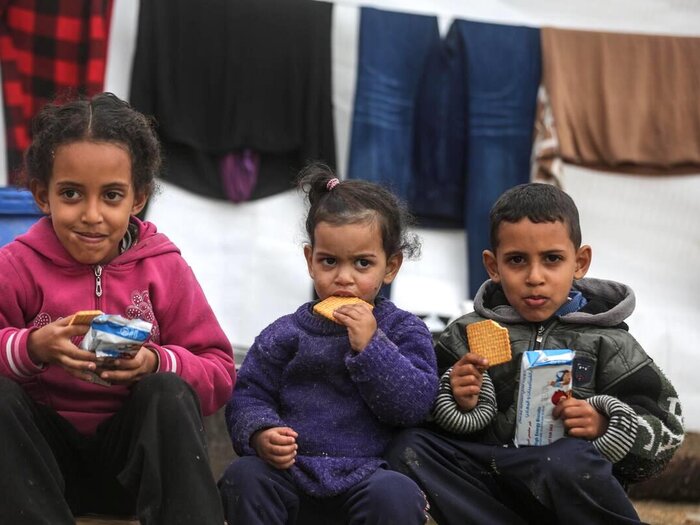
Putting down ego defenses opened my heart to experience the fullness of my suffering, which reminded me of the following words from Victor Frankl:
“Yet it is possible to practice the art of living even in a concentration camp, although suffering is omnipresent. To draw an analogy: a man’s suffering is similar to the behavior of gas. If a certain quantity of gas is pumped into an empty chamber, it will fill the chamber completely and evenly, no matter how big the chamber. Thus suffering completely fills the human soul and the conscious mind, no matter whether the suffering is great or little. Therefore the “size” of human suffering is absolutely relative” (Man’s Search for Meaning, p. 64).
Like the chambers of the heart, the density of suffering and its intensity to overwhelm is relative to the size of our emotional capacity. Nietzsche wrote, “One must be a sea, to receive a polluted stream without becoming impure.” With an open heart as deep and wide as the Ocean, we can hold a wide range of emotions, such as terror, rejection, anger, revenge, and guilt alongside peace, acceptance, patience, forgiveness, and redemption, and most importantly love and respect. With an open heart, an emotional intelligence develops that circumvents reactivity and regulates our responses in accordance to our choices and values. As Frankl put it, “Emotion, which is suffering, ceases to be suffering as soon as we form a clear and precise picture of it.”
For those who believe in a higher power, only God has the emotional capacity as deep and wide as the Ocean to hold the immensity of pain and suffering that Palestinians are currently going through. I can only imagine the deluge of prayers God must be receiving with regard to the current conflict. If it is true that “God for so loved the world,” God must be in tears over the current atrocities. Her own children murdering and slandering each other to no end. What could be God’s suffering? Our empathy is inconsequential, however, I can’t imagine another practice that would open the heart as wide and deep as having compassion for God.
It does not take a saint to be compassionate; in fact, compassion comes naturally for the wounded and broken-hearted because they understand what its like to suffer. Compassion means to suffer with, a suffering-with that can break down the walls dividing Palestine and Israel by seeing each other not as monsters, but rather sisters and brothers, mothers and fathers, neighbors and friends, elders and most importantly children.
Compassion opens the heart, releasing the pain and suffering that torments from within, as C.S. Lewis wrote, “the doors of Hell are locked on the inside.” For Israelis and Palestinians, the Hellish maze of genocide has imprisoned them in a nightmare of terror and revenge. However, unlike a bad dream, traumas from real-life catastrophic events can not be easily forgotten, despite ego defenses that would have us not remember. Rather than forgetting, the ego must awaken to and fulfill its sacred duty to make a conscious choice on where it stands with the current conflict, to choose what it is fighting for and what it is fighting against. And when these choices are made, I hope the world chooses the path of sustainable peace, because the last door out of this Hellish maze can only be opened with Israelis and Palestinians working together, setting each other free in good faith.
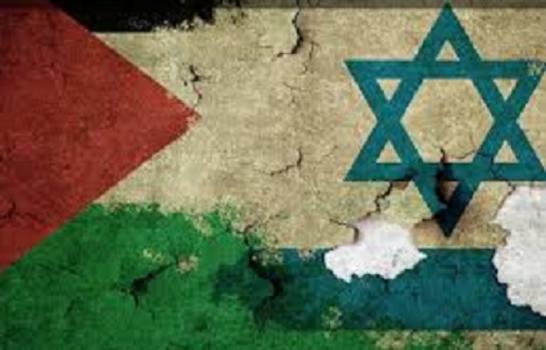
Until the world awakens to sustainable peace, humanity cries out for an end to this unjust war against innocent civilians and children, a genocide that has caused immeasurable pain and suffering to both sides of the conflict. Sustainable peace means Jews and Arabs refuse to be enemies. Perhaps even breaking bread together in a sacred act of atonement, hearing and holding each others’ sorrows, making amends, with talks of forgiveness and reconciliation. This may all sound like a pipe dream, however all things are possible as long as we choose love over revenge, because when all is said and done, to love and to be loved remains the highest form of human expression. And when it is finally safe for Palestinians to return home, I dream of joyous celebrations and compassionate memorials, with prayers and meals that nourishes the soul and body, bringing forth God’s blessings and mercies for the coming of a new day.
Way Back Home
My first exposure to genocide was watching “The Killing Fields,” a critically acclaimed film which documented the brutal massacre of two million Cambodians, roughly 25% of the entire population, by the Khmer Rouge in the 1970s. Decades later, for the first time in history, the United Nations assumed responsibility for an independent State, with the goal of transitioning Cambodia into a Democracy. To this end, the United Nations brokered a peace treaty in 1992, consisting of “unlimited ceasefire” and an end to “military assistance,” which made it safe for refugees who had survived genocide to return to their homeland.
During this transition, an important figure was Maha Ghosananda, a Buddhist monk known as the Gandhi of Cambodia. Despite the fall of the Khmer Rouge, Ghosananda recognized that an inner war of suffering will persist until “people can walk down the street with peace in their minds.” To this end, he organized annual pilgrimages called the Dhammayietra, which consisted of a 16-day, 125-mile inter-faith, peace walk starting from the Thai border, passing through war torn parts of the country, and ending at the Cambodian capital of Phnom Penh. The walk started with hundreds of Buddhist monks and grew with each village they passed.
Assisting the peace walks was Jack Kornfield, who in a Dharma talk recounted an enormous gathering of over 25,000 refugees who eagerly awaited Ghosananda’s address. After a moment of silence, Ghosananda lead a sacred Buddhist chant from the Dhammapada, “Hatred never ceases by hatred, but by love alone is healed.” United in spirit, the crowd chanted along in unison, reciting this “ancient and eternal law” over and over again, with tears in their eyes, releasing the sorrow from their hearts.
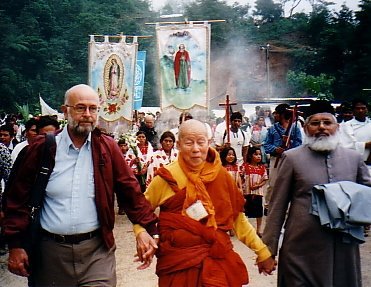
For Palestinians, the way back home seems so far away. Before returning home is even remotely possible, sustainable peace between Palestinians and Israelis needs to be established first. While the geo-politics of the Gaza conflict is grossly different from the killing fields of the Khmer Rouge genocide, Cambodia’s decades-long peace and reconciliation process provides some semblance of a blueprint, as outlined by the United Nations.
The first step of this process involved Cambodia becoming a member state of the United Nations. Even though “peace starts with Palestine’s UN membership,” on April 18th, 2024, the United States was the sole nation that vetoed Palestine from joining the U.N., even though 142 out of 193 U.N. countries recognize Palestine as a State. Despite roadblocks from the U.S., the United Nations remains a friend to Palestine. In 2022, they designated May 15th as the official date to commemorate the anniversary of the Nakba, with the statement:
“The Nakba anniversary is a reminder not only of those tragic events of 1948, but of the ongoing injustice suffered by the Palestinians. The Nakba had a profound impact on the Palestinian people, who lost their homes, their land, and their way of life. It remains a deeply traumatic event in their collective memory and continues to shape their struggle for justice and for their right to return to their homes.”
On the political front, Palestinians are beholden to world powers. However, their spiritual fate has always been in the jurisdiction of their inner freedom. Like their Cambodian counterparts, Palestinians may need to let go of hate and revenge, so that their new home after genocide is not poisoned by these destructive energies. The spiritual practice of letting go of vengeance is forgiveness, which is easier said than done for survivors of genocide. To this end, Jack Kornfield in his Dharma talk, The Ancient Heart to Forgiveness, describes the resolve needed to overcome the challenges of forgiving ones enemies:
“It’s not easy. ‘Love and forgiveness is not for the faint-hearted,’ wrote [the Indian mystic] Meher Baba. But someone has to stand up and say, ‘It stops with me. I will not pass on to my children this sorrow.’ Whether it’s in Ireland or Israel, someone has to say, ‘I will accept the betrayal and the suffering, and I will bare it, but I will not retaliate. I will not pass this onto the next generation, and to endless generations of grandchildren.”
The moral authority to forgive resides in the wronged, not the wrong-doer. For Palestinians, the mere idea of forgiveness may be unfathomable and even insensitive to bring up at this point in time. How can one forgive the cruelties of genocide that decimated their society and murdered their children? However, decades or centuries from now, I hope Palestinians, for their own sake, find some semblance of forgiveness.
Despite this Herculean task, there are benefits to forgiving beyond reconciliation, even when the offending party is not apologetic. Nelson Mandela, said “resentment is like drinking poison and then hoping it will kill your enemies.” Resentment only harms the person carrying it, while the one resented may be oblivious to or defended against the harm they have caused. Resentment continues to give power to the wrong-doer long after the transgression has passed. Through forgiveness, the poison of resentment can be kept from tainting the hearts of future generations.
Forgiveness is about moving on, without forgetting or condoning the bad behavior. Forgiveness can’t be forced, it has its own timeline; a choice a person makes when they are ready. Forgiveness is a process, not a one-time deal. Forgiveness breaks the cycle of revenge. It is a step towards peace and reconciliation, letting go of a past that can’t be changed for the sake of a better future.
For Palestinians, the future is uncertain, with many barely surviving to see another day. For those who survive, there is no returning to their old lives nor is there even a home to rebuild. What shape and form their society takes next will have to be a new beginning. Throughout their history, Palestinians have been no stranger to starting over again. They have endured countless occupations from ancient Egypt, Israel and Judah; the Persian, Roman, and Ottoman Empires; conquests by Alexander the Accursed and the crusaders; British rule, and now modern Israel. Despite changing occupations, over generations after generations, Palestinians have called the Southern Levant region of West Asia their home.
It did not matter if they owned this land. To this point, Refaat Alareer, in his TED Talk “Stories make us,” recounts a story of an American colonizer telling a Native American elder, “We own the land. We are dividing the land among ourselves,” to which the elder replied “If this is your land, tell me your stories.” From this perspective, the land does not belong to who owns it but to the indigenous people who have lived to tell stories of that land. Despite countless dispossessions, Palestinians carry the stories of their homeland in their hearts and minds wherever they go.
This spirit of a displaced sense of home is captured in one of my favorite sculptures at the Huntington Library, entitled The Gambler (2010) by Enrique Martine Celaya, whose plaque reads:
“We all carry the memory and experience of “home” with us; here, a boy carries his, while resolutely moving forward. His crutches refer to his determination. According to the artist, the title speaks to ‘the wager we make as we assume our journey. Proceeding is a gamble, we do it with trust that there is something ahead and conviction that what we have been must be accounted for, regardless of its burden.”
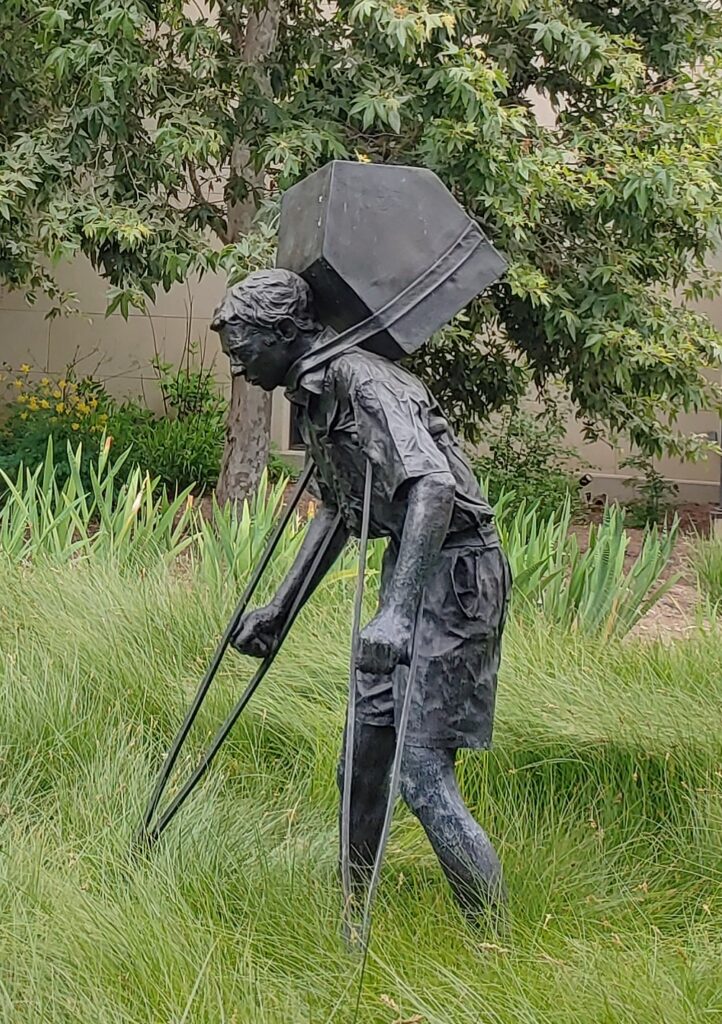
For Palestinians, what are the memories and experiences of home that they carry with them? One such image of home is captured beautifully by Palestinian journalist, Eman Alhaj Ali, as she reflects on what Gaza was like during the holy month of Ramadan:
“The streets would be bustling with people, decorations would be going up, cheerful Ramadan songs would be played. The atmosphere of anticipation would be like no other. Then on the eve of the first day of Ramadan, Gaza’s neighbourhoods would be filled with the sound of tarawih prayers. The kids would be out until late, playing in the streets, holding lanterns, chanting, singing, and setting off fireworks to mark the beginning of the holy month. Families would come together to share al-suhur meal and pray al-fajr together. Then some may nap, others would go out for school and work. By the afternoon, all would be back home and it would be time to read the Holy Quran. Kids would read and memorise the verses at home or in mosques. Parents and grandparents would tell stories of prophets to children and grandchildren. Then the time would come to prepare food for the iftar meal. The hour before sunset, the whole neighbourhood would be filled with the delicious smell of various foods. The kitchen in every home would be full of people working hard: one would be doing the maqlouba (a meat dish with rice and vegetables), another – the musakhan (a chicken dish), and still another – the mulukhiya (jute soup). Meanwhile, a neighbour may drop by and bring a platter full of the food his family had just made; he, of course, would not be allowed to go home empty-handed. With sunset approaching, the iftar table would be laid and everyone would sit down. Soon the call from the mosques to break fast would come, accompanied by the melody of takbirat. Everyone would share the delicious food, chatting joyfully and laughing. After iftar, men, women, and children would head to the mosques to pray tarawih together, the sounds of the Holy Quran and prayers permeating every part of Gaza. Then the most joyous time of the day would come for children, as moms prepare qatayf, a popular dessert that is only made during the holy month. Once the qatayf is all gone, families would go visit each other or gather in front of the TV to watch their favourite Ramadan series. For the people of Gaza, Ramadan is indeed the most special time of year. Gaza during Ramadan is the most beautiful place on Earth.”
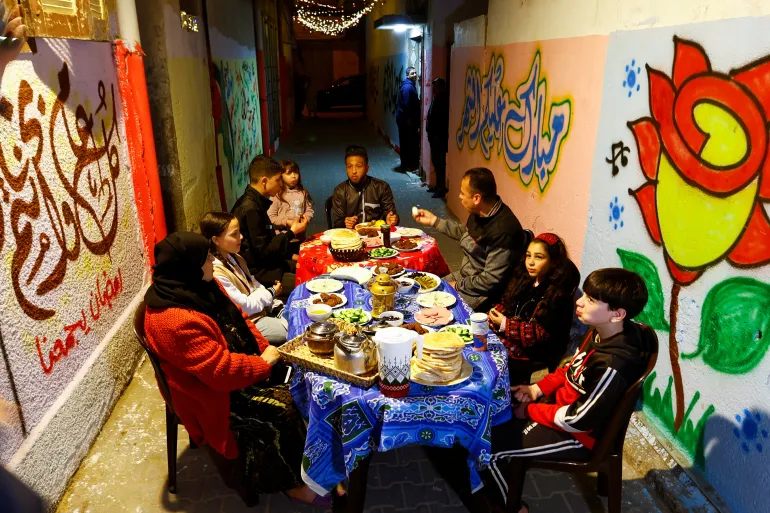
With each step of their Hero’s journey, home is with them. More than a place or a destination, home is wherever a person feels a sense of belonging with their loved ones. As long as Palestinians continue to love and be there for each other, they have a home wherever they go. The deepest sense of home can never be taken from them, as the stories, memories, and experiences of their beloved Palestine live on in their collective hearts and minds. And until the journey ends with a return to their ancestral land, I hope Palestinians can experience the sweetness of home wherever they are, however fleeting these moments may be.
In the concentration camps, Viktor Frankl shared that happiness was marked by an absence of suffering, and moments of “real positive pleasures” were very rare. However, when the “smallest of mercies” were found, he felt a deep sense of gratitude, such as this brief moment of serenity:
“One evening, when we were already resting on the floor of our hut, dead tired, soup bowls in hand, a fellow prisoner rushed in and asked us to run out to the assembly grounds and see the wonderful sunset. Standing outside we saw sinister clouds glowing in the west and the whole sky alive with clouds of ever-changing shapes and colors, from steel blue to blood red. The desolate grey mud huts provided a sharp contrast, while the puddles on the muddy ground reflected the glowing sky. Then, after minutes of moving silence, one prisoner said to another, “How beautiful the world could be…”
While Palestine is shrouded in darkness, the Sun will rise again for them. The sky is darkest when the Sun is farthest from the horizon; however, that’s when the light of the stars and the heavens reveal themselves most clearly, illuminating the way forward. And when “looking heaven in the eye,” the Child spirit of the Palestinian people may “think for a moment an angel is there bringing back love.” A love that accompanies each step of this spiritual journey filled with pain and suffering, carrying the souls of the Palestinian people until the faint light of a reborn Sun can be seen on the horizon. Having faith that the Sun rises every morning, a new day awaits Palestine, one that renews not only their sorrows, but also their hope for an end to suffering and a beginning of new life. When this moment arrives, how beautiful the world could be, like Gaza during Ramadan.
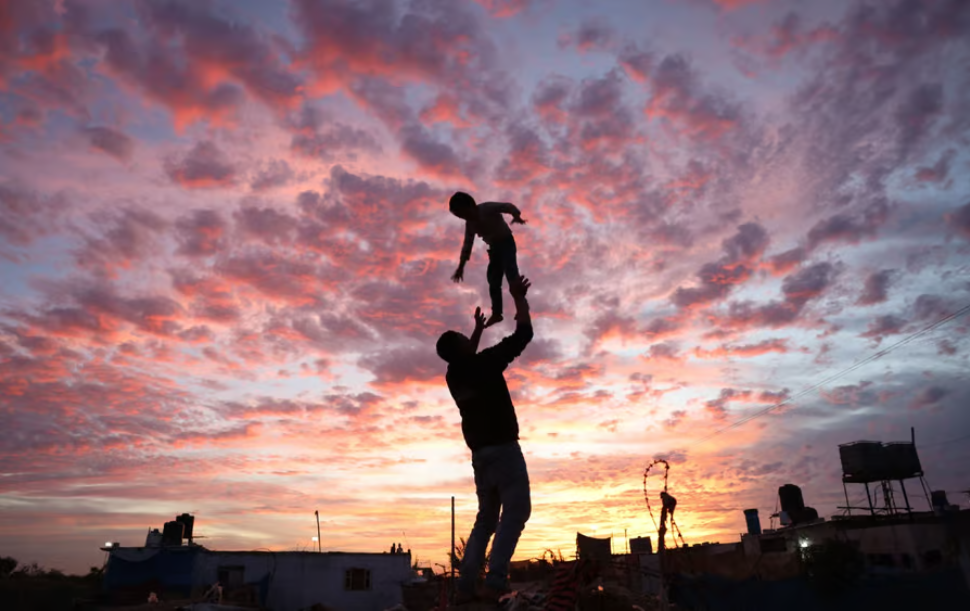
Posted by Y. Sue Park on May 15, 2024 in commemoration of the Nakbar. This essay is dedicated to sustainable peace between Palestine and Israel.