June 17, 2022
Hate begets hate; violence begets violence; toughness begets a greater toughness. We must meet the forces of hate with the power of love… Our aim must never be to defeat or humiliate the White man, but to win his friendship and understanding. -Martin Luther King Jr.
A concerning trend spreading across contemporary society is that of cancel culture. While the genesis of cancel culture may be rooted in political correctness and social justice, anything to its extreme creates imbalance and conflict, however noble its intentions. Like the cancellation of a TV show with poor ratings, cancel culture has manifested in many ways, such as individuals shamed, family members disowned, friends ostracized, employments terminated, entire groups villainized, institutions boycotted, reputations smeared, books banned, legacies erased, and statues torn down of disgraced heroes.
I am not alone in these concerns, as noted in the open letter published in Harpers magazine and cosigned by the intellectuals of our time, such as Cornell West, J.K. Rowling, and Noam Chomsky, warning our democracy of the perils of cancel culture to free speech and open debate.
A consequence of cancel culture is that it creates an environment of unsafety for all parties involved, based on the threat of cancellation when perspectives and attitudes are deemed politically incorrect, which is subjective to ones political view (e.g., left may see right as politically incorrect, and vice versa). Its up for debate whether cancellations make a positive difference, especially when the core issues are structural. Furthermore, the person or group that is canceled doesn’t just disappear. Some may receive the cancellation gracefully and make amends, but others may take their grievances underground resulting in marginalized individuals and a divided populace.
This is not to say that we should stay attached to those who harm us. We need to establish healthy boundaries and distance from real dangers, such as abuse, assault, and other traumas. However, it is important to note that while tolerating someone or something you dislike may be uncomfortable, it is not necessarily harmful. When cancel culture is taken to an extreme, discomfort can be the threshold for canceling the other, such as ghosting someone at the first “ick” feeling or quickly dismissing someone whose views don’t agree.
Cancel Culture
A recent example of cancel culture is that of former nurse, RaDonda Vaught, who made a costly mistake of administrating the wrong medication that resulted in the death of a 75-year-old patient. RaDonda immediately acknowledged her mistake and reported herself to her higher ups at Vanderbilt University’s Medical Center. Her apology appeared genuine, “I have lost far more than just my nursing license and my career. I will never be the same person…when Ms. Murphey died, a part of me died with her.”
From her response, it appeared that she had taken her lesson to heart. She cooperated in court, and was criminally charged and convicted for the felonies of negligent homicide and gross neglect. Even though RaDonda lost her license and by proxy her career and livelihood, many continued to condemn and criticize her. Behind the cover of anonymity and lowered emotional stakes, the Internet has made it so easy for us to put down one another. Despite what a Jewish preacher once said, “let him [sic] who is without sin, cast the first stone,” our society seems to cast a shit-ton of stones.
Another casualty of cancel culture is comedian Louis C.K., who got canceled after allegations surfaced around sexual misconduct by fellow women colleagues. To be clear about my personal stance, I support the underlying values of the #Metoo movement, and believe the women who came out against Louis C.K. While I disapprove of his harmful behaviors, if I were to be honest, I am still a big fan of his comedy. His self-deprecating humor has been a kind of therapy for me over the years, a nice antidote to the pressures of perfectionism that surround my life.
Cancel culture would have me disavow Louis C.K., which feels like a kind of betrayal to the levity and laughter his comedy has afforded me. My mere endorsement of Louis C.K. creates anxiety that I myself would be canceled for supporting someone who was cancelled. And this anxiety triggered by cancel culture is a problem. When it feels unsafe to not go along with a cancellation, a mob mentality can easily form. And when we globalize our judgment of a person’s mistakes to their whole personhood, we shame all of who they are, were, and will be. Their past contributions, the good parts of their character, and their humanity are disavowed.
A third example is a historical figure most people have never heard of, Robert Millikan, an American physicist who discovered the electrical charge of a single electron, for which he was awarded the Nobel Prize for Physics in 1923. Additionally, he was one of early founders and a long serving President of Caltech that used to have its administration building named after him.
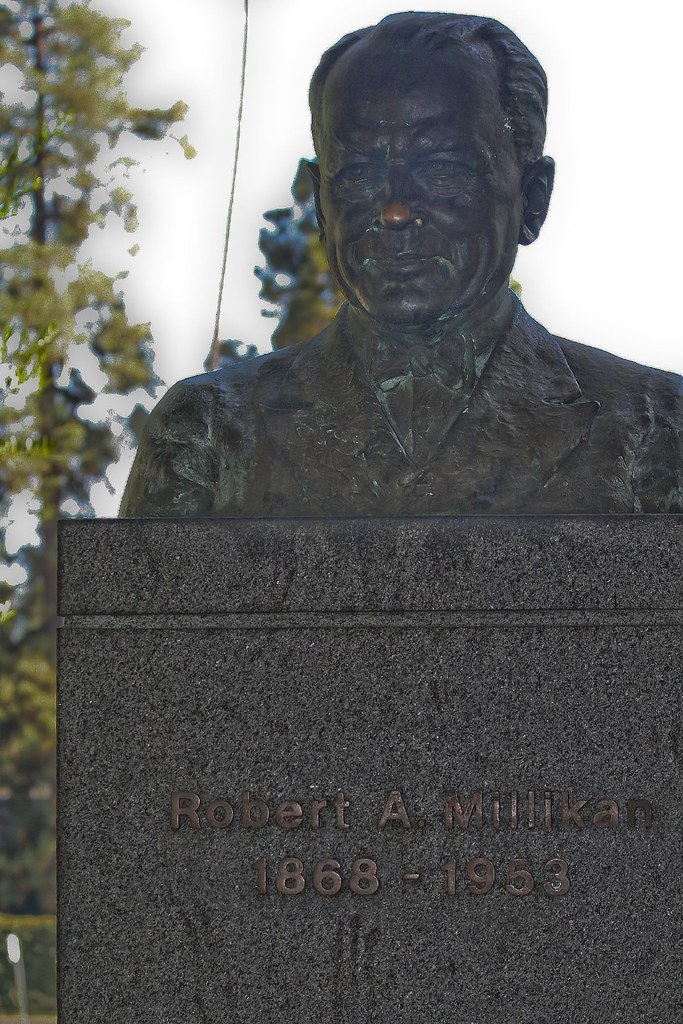
In 2021, despite his invaluable contributions to the field of Science, his statue and namesake was removed from Caltech lore due to his endorsement of the Eugenics movement circa 1920s. A personal aside, I am vehemently against the Eugenics movement. According to this philosophy, my ancestors would have been culled off and I would not exist today. And so I concur his views were problematic. I assume that Caltech also viewed Millikan’s views on Eugenics as problematic prior to 2021, yet his legacy was officially intact until recently, so what changed?
Cancel culture.
While there may be symbolic value in dishonoring Millikin’s views on eugenics, through educational means that raise awareness and critical thinking on these issues, I question the strategy of cancelling. If we erase the cultural memory of the “sins of our fathers,” how can we be reminded of and learn from them? Will future generations of Caltech students even learn about Robert Millikan, his contributions but also his problematic views? And to what extent is historical context considered?
Mi-Um Jeong
As expressed in MLK’s ageless wisdom that “hate begets hate,” when we answer centuries of social injustice with canceling whomever and whatever we disagree with, despise or feel threatened by, we play the same game of villainizing and marginalizing the other, perpetuating a cycle of conflict that eventually turn us into oppressors ourselves. It is the same pattern, this time with different actors playing the same roles. Only through the “power of love,” can we break free from this endless cycle of discrimination and exclusion.
One expression of this love is manifested in the Korean concept of “Mi-um Jeong,” which translates to an affectionate bonding (Jeong) with someone you dislike or hate (Mi-um). Consistent with collectivistic nature of Korean culture, Mi-um Jeong connotes the sentiment of getting along with whomever is in our lives regardless of whether we like them or not. Simply put, I don’t like you but I still care for you.
While I grew up hearing about Jeong from my Korean family and community growing up, I did not take professional note of it until I had the honor of meeting Dr. Luke Kim, who has now passed. Dr. Kim was a clinical professor of psychiatry at UC Davis known for working with the prison population at the California Department of Corrections in Vacaville, and pioneered the approach of Jeong-based therapy, as described in his autobiography, Beyond the Battle Line: The Korean War and My Life.
From our personal communication, Dr. Kim defined Jeong as an “affectionate bond” that can form from the simple condition of co-existing with one another. Dr. Kim differentiated Jeong from Western forms of love, in that Jeong is more implicit and attachment-based, whereas love is more explicit and emotion-based (e.g., “I love you,” hugs and kisses). The two are not mutually exclusive. Jeong can be seen as a pre-condition to love, in that Jeong is the bond from which love grows, flourishes, and renews itself. From this perspective, while all love has Jeong, not all Jeong has love. For example, while I may not always like or act lovingly towards my wife, there is always an undercurrent of Jeong that is unbreakable even when we are at each other’s throats. It is Jeong that makes me sad and guilty after a fight, and Jeong that pushes me to re-establish love in the relationship.
It is important to differentiate Mi-um Jeong from trauma bonding, which is an emotional dependency that can form between individuals caught up in a cycle of abuse or violence, in which individuals can get addicted to the euphoria that arises from the reconciliation and honeymoon stages that follow the tension building and incident stages of this cycle. Trauma bonding is not Mi-um Jeong, because Jeong like love does not seek to harm or threaten.
While it is difficult to love somebody we hate, Mi-um Jeong cultivates tolerance, inclusion, and connection with those who we may dislike due to individual differences or conflicts. Mi-um Jeong is not a surface level, fake politeness or pretend friendliness to those we despise. From this perspective, Mi-um Jeong is a “both-and” of an acknowledgement that a Mi-um (dislike) exists and yet still caring for the other person. It keeps us from cutting off or “canceling” people because of the bond that connects us.
It is a slippery slope when we cut off those we dislike. The more we do this, our world becomes smaller and insulated, and this has the effect of us becoming narrow minded and rigid in our thinking. Furthermore, we miss out on the opportunity to reconcile differences and repair ruptures when we excessively employ avoidance strategies to deal with disagreements, tensions, and conflicts.
Judge the Behavior, Not the Person
A common trope in therapy is, “judge the behavior, not the person,” such that when a person makes a mistake, their behavior is judged as maladaptive but not their whole personhood. It is my belief that this principle is at the root of Mi-um Jeong, that I can dislike a person’s beliefs and attitudes, behaviors and choices, and even their personality, but still respect the essence of their personhood. For example, I can disapprove of Louis C.K.’s bad behavior, but still enjoy his comedy, and yet still be in support of the #Metoo movement. Marsha Linehan, the founder of Dialectical Behavioral Therapy, states that one aspect of the Wise Mind is its ability to hold two of more conflicting views at the same time.
The emotional impact of judging a behavior versus a person is vastly different, guilt in the former and shame in the latter. While excessive guilt is problematic, an appropriate dose of guilt can motivate someone to take an honest look at themselves and their values. Guilt precedes remorse (i.e., feeling sorry), which is the energy that drives a person to make amends. However, shame often drives a person to withdraw and hide, not just socially but also from themselves (e.g., depression). Shame makes it difficult for people to see themselves as redeemable, and attaches anxiety to the simple act of looking at oneself in the mirror.
It is important to remind ourselves that humans are complex, three-dimensional beings with good, bad and ugly sides, and when we view each other in strict black and white terms, we not only flatten their lives and experiences (seeing others as “all bad”) but also our own self. Seeing oneself as “all good” in relation to the other (e.g., not willing to admit faults) is a trap that inflates the ego, fueling a narcissistic sense of self that has many blind-spots (e.g., inability to see the other’s POV). Furthermore, human relationships are reciprocal, so that when we view and treat others as “all bad,” the other person will likely not see us in a positive light and react in negative ways to protect themselves, such that we get cancelled back, perpetuating a vicious cycle.
Transformative Power
Mi-um Jeong has the transformative power of turning enemies into friends, and despicable others into teachers. I can think of several meaningful friendships in my life that started off with either me not liking them or them not liking me. However, if I had cut off these people from the get-go, I would have sorely missed out.
Furthermore, the people who we have the most difficulties with, can be our most valuable teachers for patience, compassion, and humility. It’s easy to be kind to someone who is likeable, but a greater growth can come from the challenge of showing kindness to those we despise. When we face this challenge, it provides an opportunity to go beyond feelings of dislike and negative judgments, towards an empathic understanding for why someone is the way they are, which has a humanizing effect.
A story told by my favorite mindfulness teacher, Jack Kornfield, that highlights the transformative power of Jeong is about a monastery that was plagued by infighting amongst its fellowship of monks. Because of this conflict, the monastery recruited a mediator who assessed the situation and came up with the following recommendation. The mediator said that one among them is the living reincarnation of the Buddha, and that it was their job to discover who this was for themselves. In the days that followed, the monks, not knowing who exactly was the Buddha incarnate, treated each other with respect, kindness, and understanding, partly in fear but also in reverence of the Buddha among them. Seeing the Buddha in each other had helped them awaken the Buddha in themselves.
As exemplified in the monastery story, Mi-um Jeong not only drives the process of reconciling conflicts and differences with others, but also leads us towards self-redemption. It is helpful to recognize that conflicts are often co-created, in that both sides are responsible for contributing to the conflict. When we relinquish this responsibility, we may unintentionally disregard the power we have to impact change in our relationships, and makes ourselves to be the victims. Taking responsibility is a sign of maturity and growth. It takes self-awareness to recognize our wrongs, strength to take responsibility, and courage to admit our mistakes. Taking responsibility paves the way for an apology, a forgiveness, a reconciliation, and a moving on.
Mi-um Jeong drives us to stay with the process of reconciliation because we are bonded to the other person, we are each other’s keeper. Without this drive, we can stay stuck in blaming and resenting others, which is toxic not just interpersonally but also to our interior, “Resentment is like drinking poison and then hoping it will kill your enemies” (Nelson Mandela). This is not to say the resentment (Mi-um) is not valid, oftentimes resentment develops from past hurts, abuses, and traumas that need to be healed, reconciled with, and released. However, holding onto the resentment is like an injury to an injury, it spews toxicity into our hearts and minds, and perpetuates tension in the body.
On this note, I am reminded of a social justice townhall I attended while I was a graduate student at UCSB. I remember a young, White female student making a somewhat naïve comment along the lines of why we couldn’t all just get along. I remember the community coming down on her hard with criticisms and disgusted stares, including the White facilitator who urged her to just listen and not speak. I still remember the image of that student shutting down, and I can only imagine how she felt in that moment: unsafe, confused, and silenced. She disappeared the rest of event. I question the effectiveness of this approach to social justice, as learning simply does not happen when we are in state of fear. And if defensiveness is what is triggered by this approach, does it truly move the needle towards a just society?
When we see all human bonds as sacred, holding onto resentment towards another is akin to harming ourselves. Canceling may bring temporary relief or satisfaction, but it is rarely ever-lasting. The people in our lives, and parts of ourselves, we cut off from consciousness don’t just go away. Rather, they get split off from conscious view and communication, and these split off forces can make our inner realities a living hell. To break this cycle, we must find the Jeong in Mi-um so that love can grow in the areas of our lives that have been devastated by fear, hate, and confusion.
It’s interesting the various images that symbolize justice in our society. In the legal world, there is the image of blind lady holding the scales of justice. In the realm of social justice, the image of a clenched fist prevails, which connotes both solidarity and strength but also aggression. When I imagine Mi-um Jeong, the image that comes up for me is a limp and reluctant hand-shake. Yet overtime, the Jeong in the Mi-um can transform this handshake into one that is firm and connecting, the conditions needed for actualizing MLK’s vision towards winning the “friendship and understanding” of the disliked other.

Posted June 17th, 2022 by Y. Sue Park. This essay is dedicated to Dr. Luke Kim.