February 5, 2021

One of my favorite quotes is from the movie White Men Can’t Jump, a story about a down on his luck, former college basketball player, Billy, who hustles to make ends meet playing street ball. After a successful hustle, Billy rationalizes his actions to which his wise girlfriend, Gloria, responds:
“Sometimes when you win, you really lose, and sometimes when you lose, you really win, and sometimes when you win or lose, you actually tie, and sometimes when you tie, you actually win or lose. Winning or losing is all one organic mechanism, from which one extracts what one needs.”
Our society is obsessed with winning. Vince Lombardi, a hall of fame football coach, once said, “Winning isn’t everything, it’s the only thing.” Sometimes winning is winning, as in the case of a person or team achieving a goal that truly adds value, such as earning a college degree, winning a fairly-fought sports competition, or securing an investment bid to start a company that benefits society. Small and large victories matter.
Sometimes, however, the “winning spirit” can be misapplied and result in unintended consequences. For example, we often argue more for ego and less on the logic and merit of a particular viewpoint, resulting in a battle-of-the-wills that can escalate into a conflict. In this case, even though argument is won, it is a pyrrhic victory. You win, but the relationship loses.
Despite its pitfalls, one reason why people are so pre-occupied with winning and so averse to losing may be due to the painful feelings associated with losing. Depending on the nature of the loss, losing can trigger feelings of disappointment, frustration, helplessness, self-doubt, anger, resentment, and grief. Some people go through great lengths to avoid their emotional pain, such as detaching themselves through workaholism or substance use.
When we are resistant to the emotional pain associated with losing, we become less open to learning the lessons that teach us what does not work so we don’t repeat the same mistakes. One definition of insanity is repeating the same thing over again, expecting different results. Thus, we need to view losing as an important part of learning and growing, as opposed to dismissing losses without examination. Even the pain has a purpose, it attaches an emotional weight to the lesson so that the learning is not easily forgotten.
Losing also helps us be more resilient by way of humility. Losing is often a humbling experience. A population that endures incredible losses are immigrants. Upon leaving their home country, they lose what is familiar to them, their old attachments, routines, and previous identities and roles. It is common for immigrants to be underemployed in their new country as their education, work experiences, and skills may not transfer over, forcing them to engage in work that is beneath their qualifications. In this situation, while pride keeps us stuck in past glories, humility can help immigrants be more adaptive with regard to doing “whatever it takes” to survive and make way for the next generation to thrive.
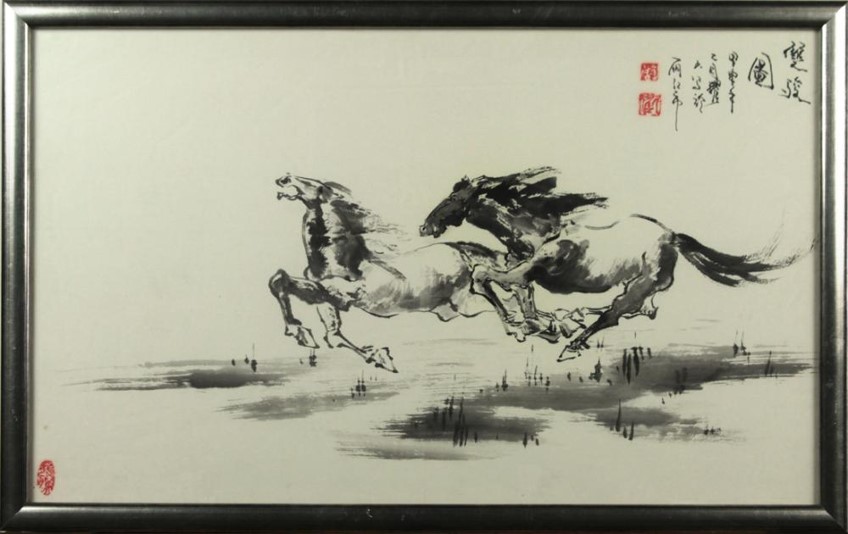
The true value of a loss may not reveal itself until later in life. To this point, I am reminded of an old Chinese proverb. In a rural village in ancient China, there lived a family with a prized horse that was the envy of the town. Villagers remarked how fortunate this family was to own such a horse. One day, this horse ran off into the forest and went missing. “How unfortunate,” the villagers said. Several days later, the missing horse returned with a wild, magnificent stallion as her partner. “How fortunate,” the villagers backtracked. To capitalize on their good fortune, the first-born son of this family set out to train the wild horse, only to fall in the process and break his leg. “How unfortunate,” the villagers backtracking again. A few weeks later, the emperor’s army came to town recruiting able-bodied men for a deadly war, but the first-born from this family was exempted due to his injury and so his life saved.
Life is full of twists and turns. You never know how things are going to turn out in life. If you think about good things in your life, your path to get there was likely filled with losses, teaching us the value of letting go in order to make room for change. For example, the windy path of finding your significant other may involve a series of unrequited loves and heart breaks from failed relationships. Discovering your true self may involve a process of shedding identities and false personas that once served you but no more. Personally, a major loss in my career was the precipice for soul searching that eventually paved the way for letting go of previous work commitments and create Park LA.
Lastly, losing may strip us of any falsehoods and attachments to that which is impermanent. The greatest loss in my life was the death of my father while I was in college. His death brought upon many secondary losses, such as losing financial security as my father was the main breadwinner, losing the last remnants of my childhood dependency, and losing any chance of creating new memories with my father. Although fear and pain filled this time period, these emotions eventually came to pass. Dependency was lost, but independence was gained. And while my memories fade with time, what remains is our loving bond.
Sometimes losing something, even temporarily, is what helps us realize what we take for granted in life, it reminds us of what is important, true, and long-lasting. Sometimes when we lose, we really win.
Posted February 5th, 2021 by Y. Sue Park.