June 20, 2021
My entire world changed after my father passed away. My father was the bedrock of our family, the main breadwinner, and the moral compass. He was a gentle but firm man of a few words. Despite his quiet nature, he was a respected leader in the Korean church community. Family came first for my father above everything else.
The story goes that my parents immigrated with a small amount of money to start their new life in the States. His college degree in engineering did not translate to anything in the U.S., and he humbled himself working day and night shifts as a gas station attendant to raise enough money to start his own business. My mother later shared that those initial years post-immigration took a grave toll on my father’s health, which may have resulted in the health problems that eventually took his life. Throughout my life, my father worked tirelessly so that my sister and I could grow up in a safe neighborhood with a good school district.
His dedication and steadfast love for family may have stemmed from the fact that he was fatherless growing up. My grandfather died in the Korean War, leaving my grandmother widowed with two children and another one on their way. I learned from my aunt that my father never got in trouble as to not worry my grandmother, and took on extra responsibilities to support the family, including working alongside my grandmother in the fields to make ends meet.
While my father was too young to remember my grandfather, it was evident that he always had my grandmother in mind, visiting her in Korea whenever he could and sending money back to her so she could live out her years in comfort. During one of our visits to Korea, I remember driving hours into the countryside to confront some great-uncles who had tricked my grandmother into giving up her money. It was the first time I saw my father angry despite his gentle nature. His anger was protective, and this was first of many times that I witnessed my father standing up for what was right.
It is my belief that my father growing up poor from the ashes of post-war Korea made him compassionate towards those going through tough times. Numerous times he was taken advantage of financially, yet he never stopped giving and trusting people. A yearly tradition during winter season was my father taking my sister and I to skid row to pass out socks to homeless people. And while he grew up with little, he provided us with a safe and secure childhood he never had himself.
Despite my father’s good nature, I remember feeling intimidated by him. I felt small growing up in his shadow. His black-and-white morality did not mesh well with my penchant for living in the moral gray. While I struggled with insecurities and many worries, he seemed self-confident and secure in his spiritual faith that everything would work out. While he never put too much pressure on me, I felt like I could never live up to his standards. He was just built differently, whereas I grew up pampered and soft. And so when he passed away due to years of health issues, I was filled with intense fear of how our family would survive. Feeling pressure from the patriarchy of a Korean family structure, I felt ill-equipped to take on the role of being the man of the family.
I vividly remember getting the phone call from my mother on that fateful day of July 19th, 2001. She was concise, trying her best to stay composed over the phone stating that I needed to come home immediately. I remember asking if Ahpa was OK, and whether I should go to the hospital directly given that he had been in and out of the hospital due to problems with heart disease. When she told me to come home instead, I knew in that moment that something really bad had happened. I can still remember what it felt like on that drive back home from my college apartment, seeing the church elders outside my house as I pulled in, and sounds of my mother and sister wailing as I climbed the stairs to the room where the lifeless body of my father lay. I collapsed on the floor, overwhelmed by grief, and holding his body onto mine. This was one of the most traumatic moments of my life.
The days and weeks after his death was a turbulent time. Both my sister and I moved back home, and divided our time to help my mother keep the family business afloat while we continued our studies. For whatever reason, it never occurred to us to take time off from school. My family was in survival mode and took on a “all hands on deck” mentality. I remember the three of us hunkering down, waking up super early every morning and working tirelessly as a team to keep things from falling apart. And we made it work. I was so proud of my sister getting into medical school, which paved the way for her to become a gyn-oncologist. For me, I wasn’t much of a student prior to my father passing away, but started taking my studies more seriously with the desire to make him proud.
Although we found a way to survive, the grief of losing my father had taken away the joy from our lives. Food lost its taste and pleasure, and the absence of my father’s table setting had us breakdown in tears. To find reprieve from our grief, we went on trips that did not bring any sense of awe and wonder or escape. I remember believing I could never be happy again, and the thing I wished for most in my life, to have my father back, was impossible. Nothing else mattered.
Yet “the show must go on.” And it was this song from Queen that I would play on repeat over and over again. When Queen worked on this song, Freddie Mercury was facing his own mortality in his battle with HIV/AIDS that took his life just weeks after the song was released. His bandmates worried that Freddie was too ill to perform the song, but consistent with Freddie’s larger than life spirit, he responded, “I’ll fucking do it, darling.”
And the show went on for my family. Starting with putting the pieces of my father’s business back together and then rebuilding our lives. My mother who was primarily a housewife prior to my father’s death demonstrated a sharp business acumen and a ferocity in the face of condescending business men, and grew the business to be more successful than it had ever been. My sister continued to be stellar and made great strides in her career. And I matured, cleaned up my act, and broke free from the fears and insecurities that held me back. The three of us made a mighty team.
During this time period, there was a story I read from a self-help book that had a big impact on me. The story was about a widow who had lost her husband and child. Engulfed by unrelenting grief, the widow went to the village wise person for help. She was asked to retrieve a mustard seed from a household that knows no suffering. She first decides to go to the most well-off family she knows, only to find out they had their own form of suffering. She proceeds to other families, only to find more suffering. With each visit, she shares her grief, listens to their suffering, and provides her support. While she never acquires the mustard seed, she realizes that it was the process of helping others that healed her, giving her a sense of meaning and purpose, and helping her feel less alone in her grief.
Inspired by this story, I engaged in a weekly regimen of packing sack lunches and going to the nearby MacArthur Park to pass them out to homeless people. At first, I just handed out the lunches and left right away, but with repeated visits, these strangers eventually became familiar faces. As I got more comfortable, I would stay a bit longer, have a cigarette with them, and hear their stories of misfortune and trauma as well as learn of their values and aspirations. They shared about their past lives and attachments, the dynamics with gangs and drug dealers, and the bonds they formed helping and protecting each other. I was inspired by their “will to carry on” despite their immeasurable pain and suffering.
Furthermore, the next summer after my father passed away, I aimed to honor my father’s wish to go on a medical missions trip together. I felt sad because we were supposed to go together, but I felt his spirit throughout the trip. A group of doctors, nurses and support staff flew out to Oaxaca, Mexico, where we drove for hours in beat-up and cramped vans into a mountain region to provide medical services to native Oaxacans living in a secluded, rural village. I bonded with our guide and translator, Gabriela, during the trip who spoke proudly and lovingly of her culture and people. Despite our role as missionaries, I realized on the trip that they had more to offer us than us to them. There was a true sense of community and togetherness, the children seemed so curious and joyful despite a lack of material playthings, and our patients responded in kindness and gratitude. For me, what I learned from them had greater spiritual value than our medical provisions. Despite their meager conditions, their “will to carry on” was not even a question.
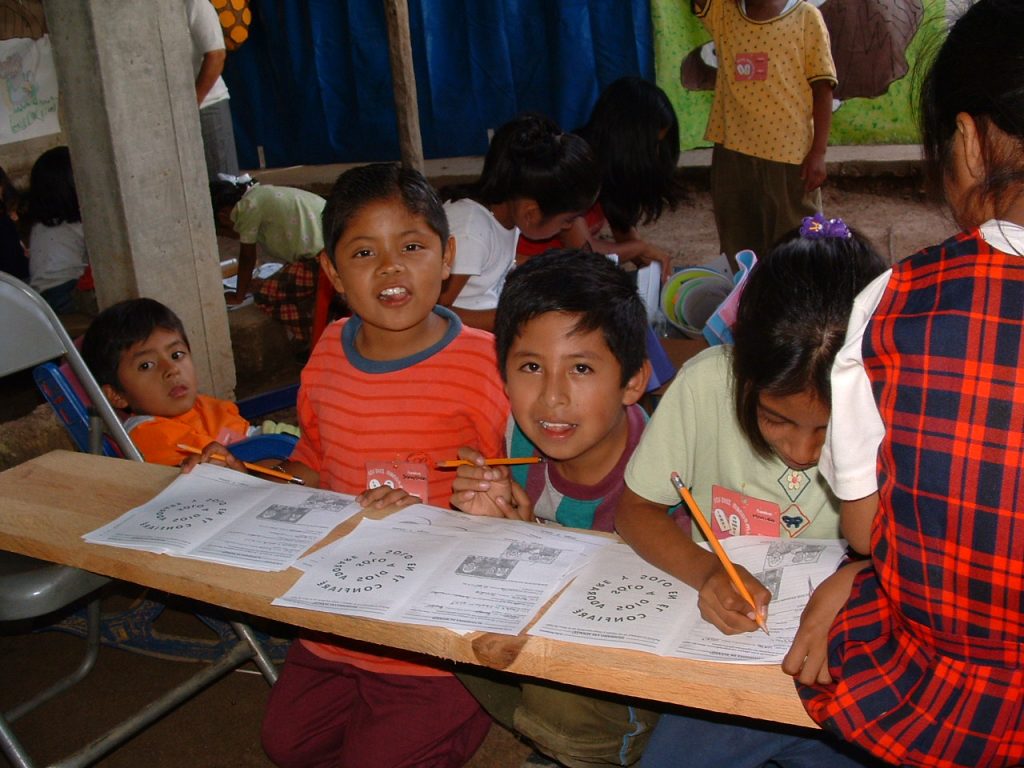
Despite my privileged position, I let go of the delusion and ego that I had much if any lasting impact on their lives, but what they taught me was invaluable and has stayed with me. I gained perspective on what’s truly important in this life. What is of value to the soul is not our scientific superiority or material wealth, but it is the heart that endures immeasurable pain and suffering and a love and kindness that thrives in the sparsest of conditions.
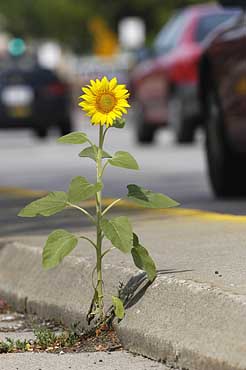
These experiences helped me know the heart of my father. In some ways, I didn’t really know my father until he passed away. The foundation he created for our family allowed us to feel secure and stable in the face of uncertainty. The values he instilled drove me towards living life in the service of others. His resiliency growing up poor and fatherless in post-war Korea, and as an immigrant facing discrimination and unhealthy work demands showed me what it takes for the show to go on.
I was not an easy kid to love. Spoiled by an easy life that was handed down to me, I was a self-centered, trouble-maker during my rebellious teen years, breaking my father’s heart many times over. A large part of my grieving process was working through the guilt, regret, and remorse for how I had treated my father and taken him for granted. Even though it was no longer possible to reconcile with him in real life, I learned that one way to resolve my guilt was to “pay it forward” by helping and being kind to others, not taking loved ones for granted, and living out the values he taught me.
While helping the family business, I noticed he posted next to his desk the words “sarang-un ohrae chamko” (“love is patient”). I knew right away those words were for me. Even in his death, his love was very present and easily felt. It is strange that I felt closer to my father after he passed than when he was alive. It reassures me that when a loved one passes away, we do not say we don’t love them anymore. A loving bond persists beyond death.
On this note, there is a quote that I love from Mitch Albom’s Tuesdays with Morrie…
“All the love you created is still there. All the memories are still there. You live on – in the hearts of everyone you have touched and nurtured while you were here…Death ends a life, not a relationship.”
From this perspective, I realized that my father’s love lives on through me. The love I have for my loved ones, the care I have for my clients and others, and the compassion I feel for the less fortunate, is a continuation of the love my father bestowed upon me.
Like Freddie Mercury, who performed his music until the very end, there is a force that drives us to carry on despite the the most difficult of circumstances, a force that transcends even death. For me, it is the love that I inherited from my father, the same love I hope to pass on to my son and others in my life. For this reason, the show must go on.
Posted on Father’s Day, June 20th, 2021. Happy Father’s day, Ahpa! I love you always.