May 6, 2021
“I can’t breathe,” pleaded George Floyd repeatedly as former police officer Derek Chauvin kneeled on his neck for 9 minutes and 29 seconds, resulting in death by asphyxiation. Caught on video, the world watched in horror.
It is a tragedy that Black deaths at the hands of police are disproportionately high compared to other racial groups. Amongst the countless cases, the George Floyd incident was particularly egregious. The footage clearly showed that the transgression was done in cold blood. There was no mistaking the incident for an accidental misfire done in the heat of the moment or in the “fog of war.”
Breathlessness
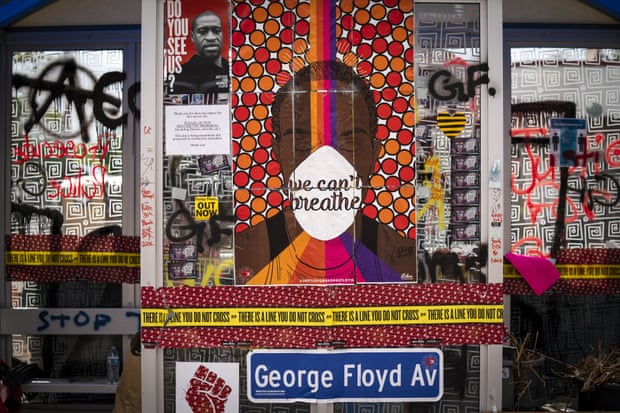
George Floyd’s famous last words became the rally cry for racial justice movements. “I can’t breathe” became “We can’t breathe.” While these words capture the suffocating feeling of despair felt by the populace, this expression may also be true in a literal sense.
“Breathlessness” is a common physical symptom of grief and loss according to J. William Worden, the co-Director of the Harvard Child Bereavement Study. Furthermore, hyperventilation is a common symptom of anxiety and panic attacks, which can arise when people experience trauma, directly or vicariously.
The unlawful stifling of George Floyd’s ability to breathe occurred during height of the pandemic, in which the lungs of millions were ravaged by the COVID-19 virus which caused respiratory problems ranging from shortness of breath, pneumonia, and acute respiratory distress syndrome. For a different reason, many can relate to the feeling of losing their breath, for those who survived infection as well as those going through the grief of losing a loved one to coronavirus.
Oxygen is one of the most basic of human needs. According to the Survival Rule of Threes, a human being can survive for 3 weeks without food, 3 days without water, but only 3 minutes without oxygen. Thus, breathing is not only critical to our basic survival, it is our life support. For this reason, in many cultures, the breath is ascribed great spiritual meaning, equating the breath as a giver of life. The breath is sacred, and thus it is sacrilegious to forcibly rob someone of their breath.
The Trick is to Keep Breathing
While contemplating the meaning of the breath, I was reminded of the song, “The Trick is to Keep Breathing,” by Garbage, a band that meant a lot to me as a teenager. In an ideal world, to go on living life would be as simple as to keep on breathing, yet for those whose breathing is compromised by inner and outer dangers, the act of breathing can be tricky.
Shirley Manson of Garbage meant the song to be hopeful, “it is that general feeling of just keep pushing and you’ll get through it. I think everybody can connect with that feeling.” In this spirit, cultivating a breath practice may be the counterforce needed to ward off the forces that aim to take our breath away.
The Power of the Breath
Like a constant companion, it is easy to take the breath for granted, despite how intricate and extraordinary the process of breathing is. Breathing is a function of our respiratory system to supply oxygen to our body, and remove waste in the form of carbon dioxide. The breath is a constant from the moment a person is born. It works tirelessly and humbly in the background, without drawing much attention to itself.
The breath has a special role in the autonomic nervous system, whose two branches are reciprocals of one another, the “fight or flight” sympathetic branch associated with arousal and the “rest and digest” parasympathetic branch associated with calmness. Most functions of the autonomic nervous system operate on an unconscious and automatic level, such as heart rate, blood pressure, and digestion. However, breathing is both automatic and a function that we have voluntary control over.
From this perspective, breathing is a like a “manual override button” that affords us voluntary control and access to autonomic nervous system that is normally involuntary. This is vital when we face traumatic situations that dysregulate these automatic functions. Specifically, engaging in a pattern of breathing that is slow, deep, and steady can return a dysregulated autonomic nervous system to a state of calm and balance.
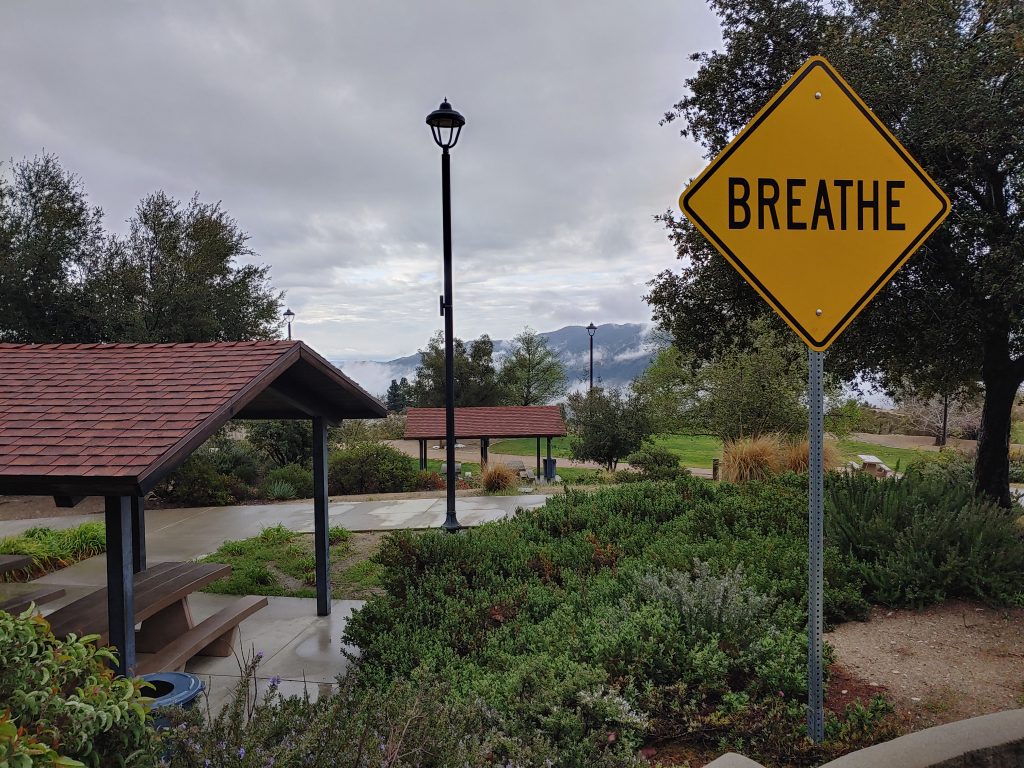
Beyond the physical, the breath is also a gateway to the here and now. Because the breath is always with us, focusing on the breath can help us stay anchored to the present moment, which is the only moment in time in which we have true freedom and ability to effect change in our lives, whereas traumas keep us stuck in the past, and anxiety traps us in dreadful fantasies of the future. According to Jack Kornfield, awareness of the breath is the “home base” of any mindfulness practice and has the power to “quiet the mind and open the heart.”
Lastly, the breath connects us to the world around us. Like a fish in water, we often don’t notice the air we breathe because it is invisible and always around us. Breathing allows us to take in the life-giving energy of air, the same air that not only sustains you and I but all other lives, past and present. While this may sound like new-age fluff, this notion is endorsed by Noble Prize winning physicist, Arthur Comptom, who said, “At your next breath each of you will probably inhale a dozen or so of the molecules of Caesar’s last breath.” In this statement Caesar is just a narrative device and irrelevant, but the notion that the breath of air connects us to all living beings, past and present, is pretty incredible.
Breathe for Ruby
I feel most in touch with, and appreciative of, my breathing during my mountain hikes. The high altitudes require me to breathe more heavily and rapidly to deliver enough oxygen to my body. Amidst the quietness of nature, I can hear my breath working hard, huffing and puffing, and the internal felt sensations of my breathing are very palpable.
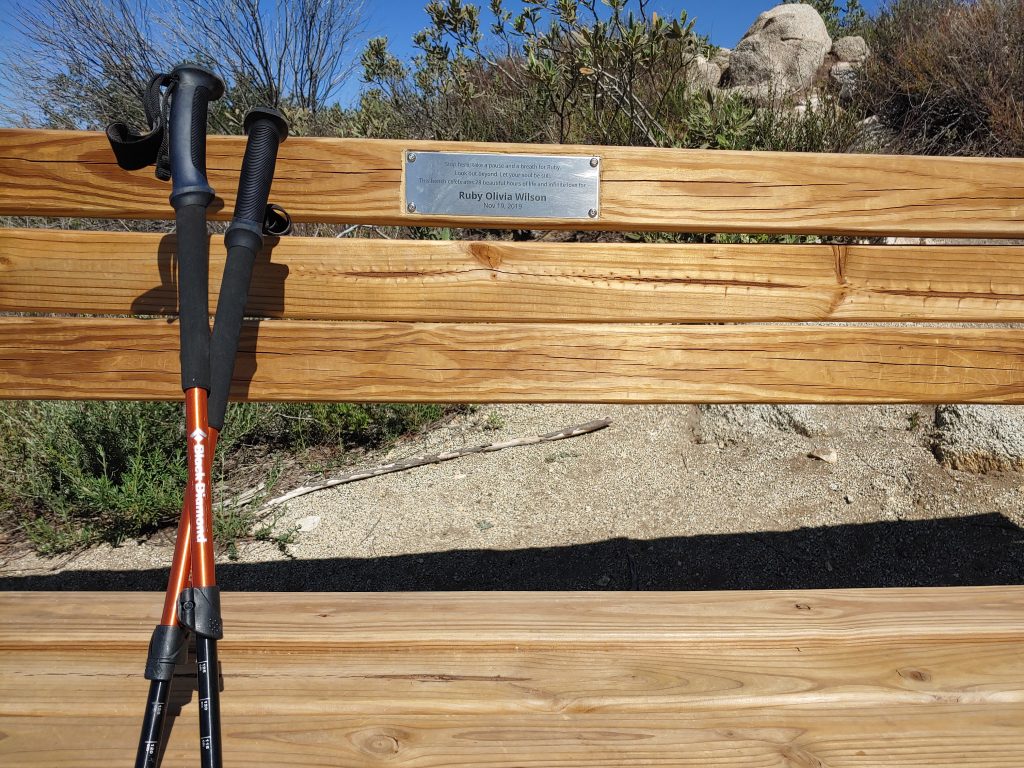
And it was during one of these moments, high up on a mountain, where I felt an emotional connection with my breath that I’ve never experienced before. I had taken the Jones Peak detour en route to the Mount Wilson summit when I came across a bench in the middle of nowhere, and there inscribed was a plaque that read:
Stop here; take a pause and a breath for Ruby.
Look out beyond. Let your soul be still.
This bench celebrates 28 beautiful hours of life and infinite love for
Ruby Olivia Wilson
November 19, 2019
While uncommon, inspirational quotes like this can be found in unforeseen places on hiking trails, often marking memorial sites of avid hikers, trail runners and nature lovers, most of whom lived full lives. Yet, it was the third line that broke my heart, “28 beautiful hours of life.”
Instantly, I was overwhelmed by emotions. I can’t even imagine what it was like for Ruby’s parents, the despair, sorrow, and breathlessness from the grief of losing their child. While sitting on this bench, I broke down sobbing, flooded with tears. I felt breathless.
I find it interesting that there is a similar breathless quality when we love someone deeply. I am reminded that the intensity of grief and the length of the mourning process is proportional to the depth of love in a relationship. Whether it be 28 days or a full life-time, love is “infinite,” and a loving bond of this kind is unbreakable, even in death.
When my emotions calmed, I heeded the sagely words inscribed on the bench, and took a slow, deep breath for Ruby. And again, and again. Inhaling and exhaling nice and slow. Gentle and loving breaths for Ruby, as if I was breathing for her. And I looked beyond, onto the horizon, and felt the vastness of that spacious horizon holding and soothing my emotional pain, providing a stillness to my soul.

At that moment, a valuable lesson came to me. Breathing for Ruby opened my heart to caring for and feeling connected with a child whom I’ve never met. I felt her parents love for her but also their pain. I realized that breathing is a microcosm of life. We take it all in, the good and the bad, the pleasant and painful, and then we let it all go. And this became the inspiration for me to write this essay.
Breathing for Ruby brought me back from breathlessness. And perhaps this is the way we heal from the pain brought upon by the traumas and losses that have infected our hearts and bodies.
To breathe for Ruby.
To breathe for George.
To breathe for the breathless.
The Trick is to Keep Breathing.
Posted May 6, 2021 by Y. Sue Park.